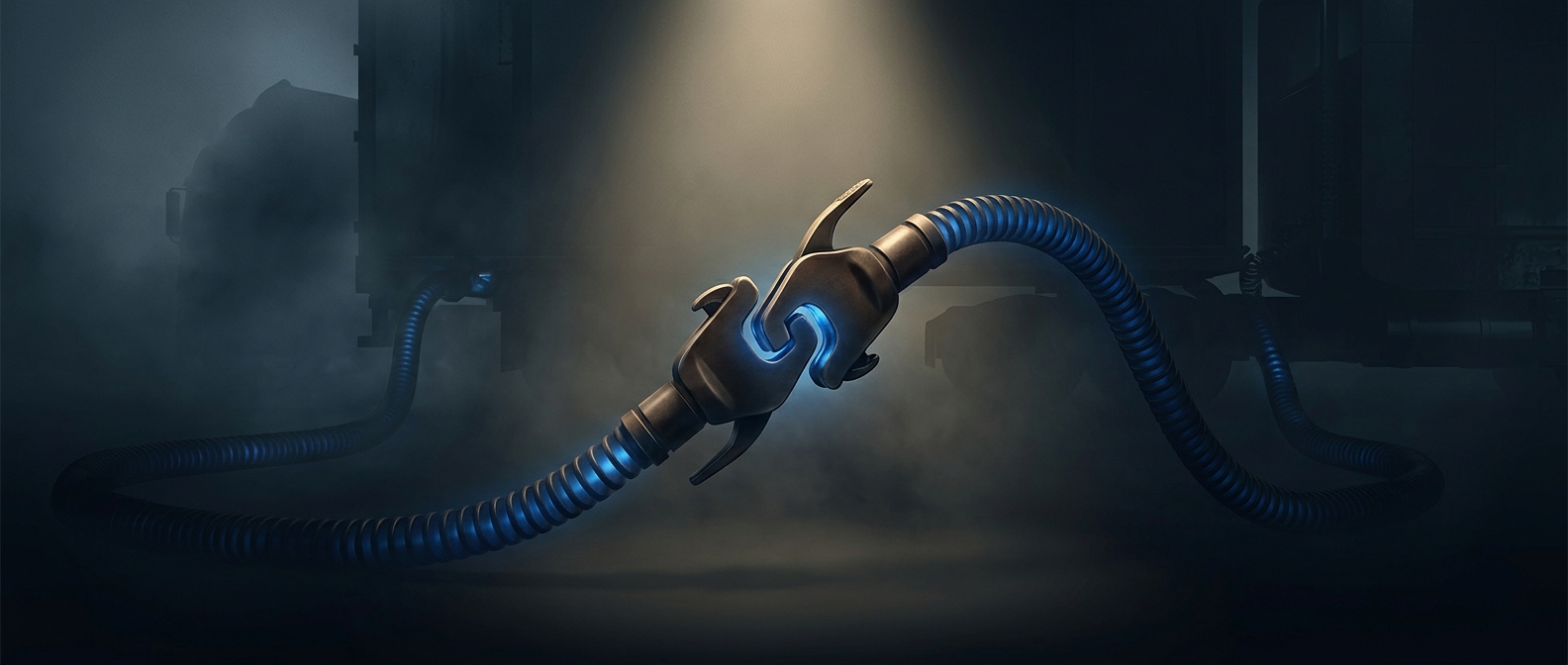
One coupling, two jobs
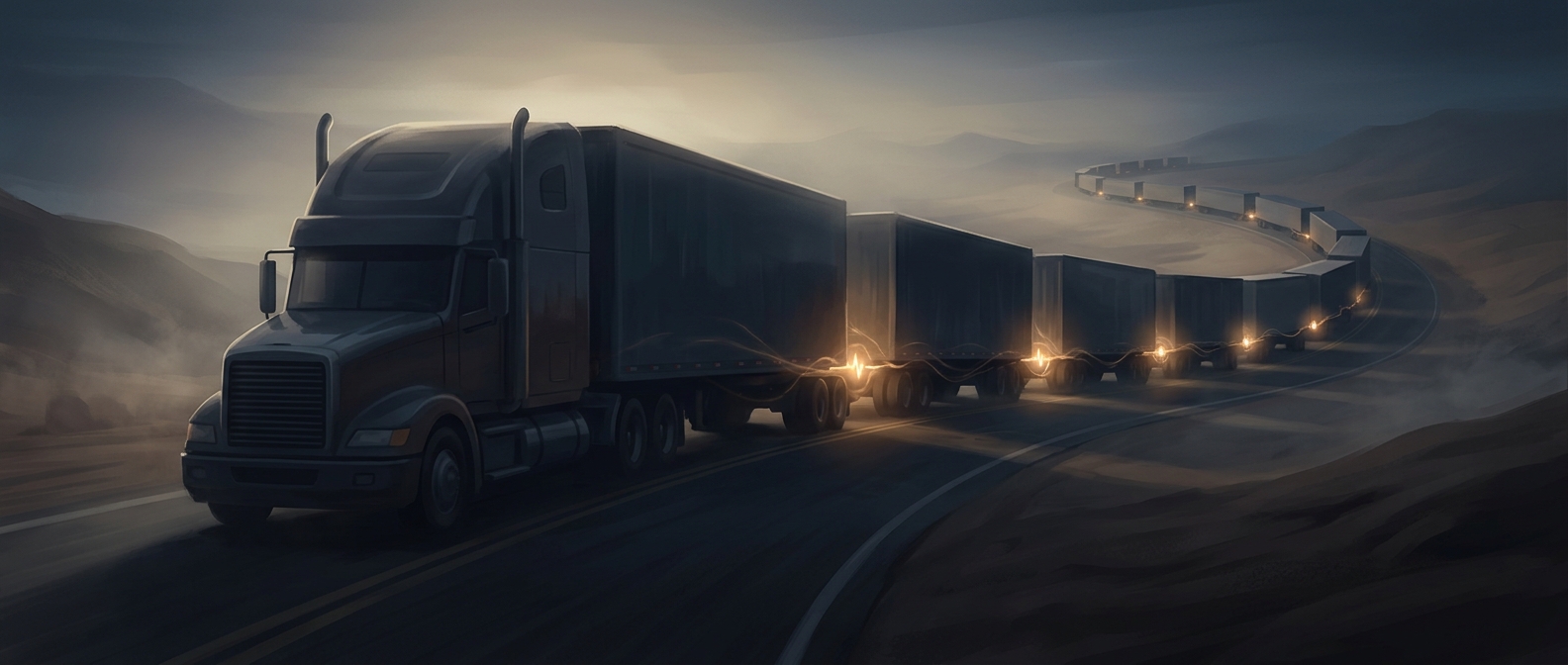
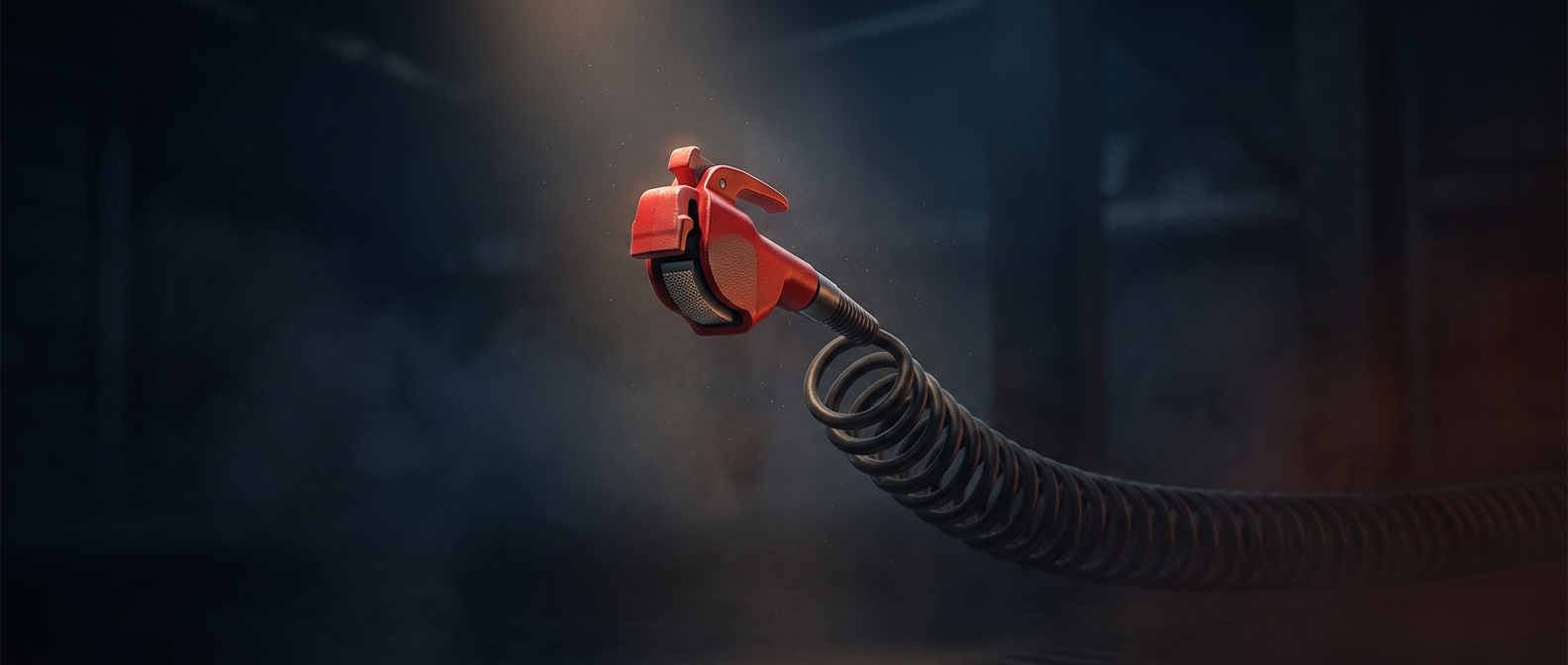
A tractor-trailer usually needs more than one air connection because air does two different jobs in its brake system. One line supplies compressed air to the trailer’s reservoirs; another carries the control signal that tells the trailer brakes when the driver presses the pedal. The gladhands make those connections across the moving joint between tractor and trailer.
Keeping the lines separate matters: the trailer stores air so it can apply its brakes, while the control line lets the tractor’s pedal command them. Air pressure also helps hold the trailer’s spring brakes released. If supply pressure is lost, those powerful springs can apply the brakes, helping prevent a runaway trailer.
A seal that must survive the road
The twist-lock does more than keep the hoses from falling apart. Its rubber gasket has to contain pressure despite vibration, dirt, weather, and repeated coupling and uncoupling. A damaged or poorly seated seal can leak air, making it harder for the system to maintain pressure. Drivers therefore check that the couplings are secure and that the hoses are not damaged before heading out.
The connection is also part of a daily handoff: when a trailer is changed, the driver must reconnect both air lines before the trailer’s brakes can work as intended. That small, exposed joint carries the air on which a much larger braking system depends.