Why the fifth wheel needs grease that holds its ground
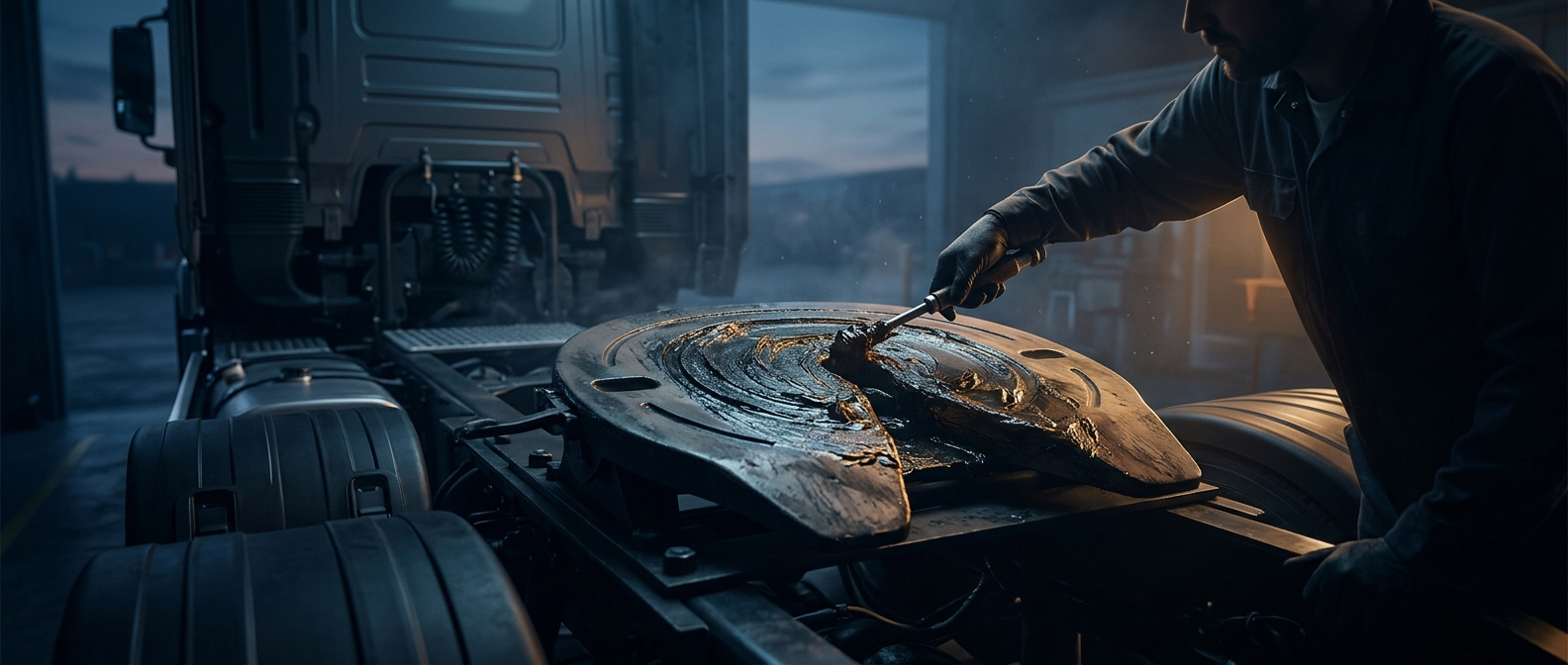
A tractor-trailer’s fifth wheel is a greased, moving connection—not a rigid weld. The trailer’s kingpin locks into the truck’s coupling, while the trailer’s plate bears on the fifth-wheel plate. Those broad steel surfaces support heavy vertical load and slide against one another as the rig turns and moves over uneven roads.
That load makes the lubricant’s behavior crucial. A thin oil can be pushed away from the contact area, leaving the plates to rub directly. Fifth-wheel grease is thick enough to cling to the surfaces and stay in the joint, while still allowing the plates to move. As the truck turns, the grease shears—its layers shift past one another—so the steel can slide without the same dry, grinding contact.
The joint has to move, but not wear away
The coupling must allow the trailer to pivot behind the tractor; preventing movement would make turning impossible. But repeated movement under load can wear the plates if their protective film disappears. Grease reduces that direct friction and helps limit the damage, though it does not make the surfaces maintenance-free. Dirt and road debris can contaminate the lubricant, so the working surfaces need to be checked and kept properly greased.
The practical tradeoff is simple: the connection must be strong enough to carry the trailer, yet slippery enough to let it articulate. In a turn, the trailer’s weight stays on the steel plates while a stubborn film of grease lets them slide instead of grind.