Why runway rubber has to come off
The first seconds of a landing put unusual stress on tires. A tire arrives spinning more slowly than the airplane is moving, then must speed up to match the runway. That brief skid scrubs rubber onto the pavement, concentrating residue in the touchdown area where aircraft repeatedly land.
The deposit matters because pavement is designed to give tires grip, including when rain covers the surface. Rubber can fill the tiny grooves and roughness that help water escape from beneath a tire. With less texture available, braking and steering can become less reliable, particularly on a wet runway.
Cleaning without damaging the runway
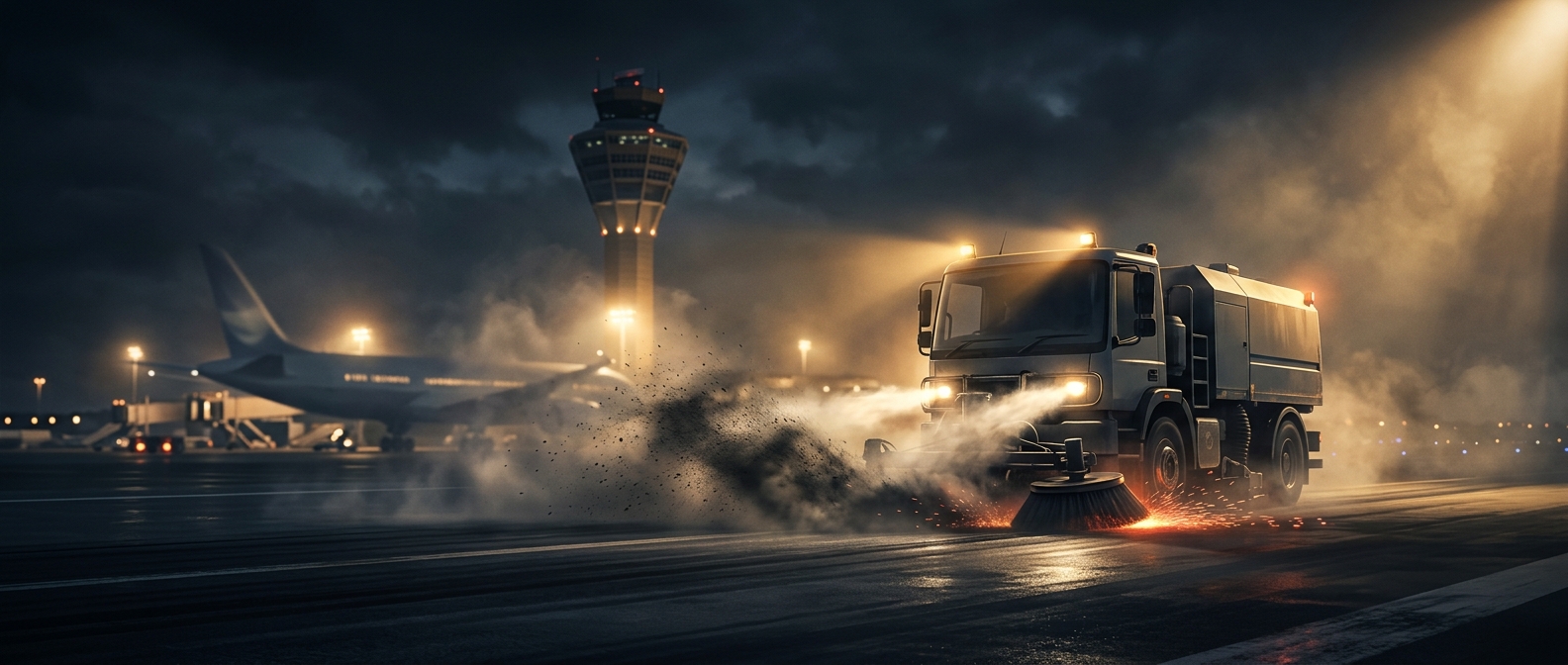
At JFK, crews use high-pressure water to dislodge the rubber. The goal is not simply to make the pavement look clean: the surface needs to regain its texture while remaining intact. Too little force can leave residue behind; poorly controlled cleaning could damage the pavement itself. Specialized equipment lets crews target the contaminated surface, and the runway must be taken out of service while the work is done.
This is a recurring maintenance job, not a one-time repair. Landings keep adding rubber, so airport crews monitor the pavement and remove buildup as needed. A runway may look solid and unchanged from the air, but its grip depends on a surface that has to stay open and textured—especially where aircraft first touch down.