Why Airports Build a Patch of Grass Indoors
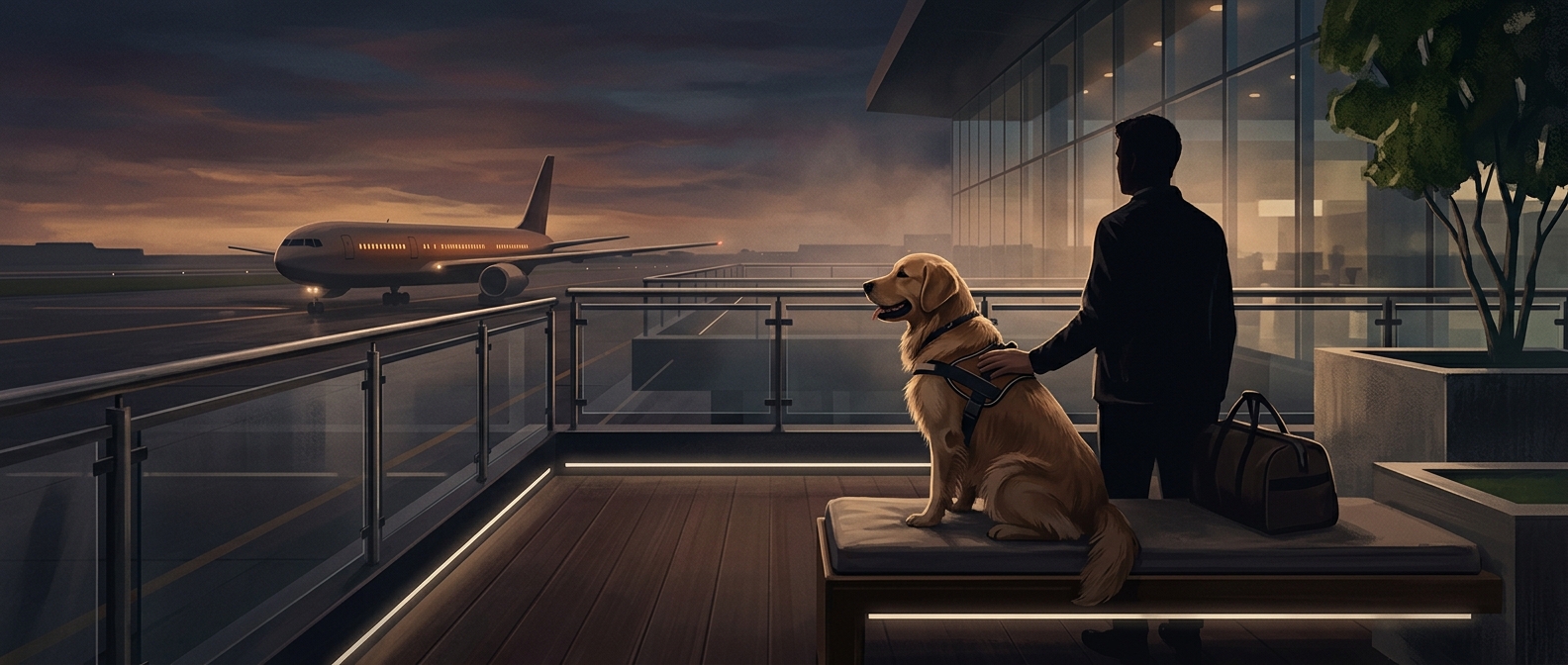
Once a dog and its owner pass through airport security, stepping outside is no longer a simple option: leaving the secure area may mean going through screening again. Yet a flight can involve a long wait before boarding, and dogs cannot reliably postpone bathroom needs to match an airport schedule. An indoor pet relief area puts a usable spot on the secure side of that boundary.
The Turf Is Only the Visible Part
A patch of grass has to work more like a small, heavily used restroom than a decorative lawn. Some airports use real grass; others use artificial turf or another washable surface. Beneath it, the important job is to direct liquid into a drain or collection system, while keeping the surface manageable to clean. If waste sits on the turf, odor and hygiene become problems quickly.
That makes upkeep part of the design. Staff need access to clean the area, and owners are generally expected to pick up solid waste. The room also has to be easy for a dog to enter and use, even in a busy terminal where space is limited. A modest indoor enclosure can solve the immediate need without requiring a trip back outside.
A Small Facility With a Travel-Sized Job
Relief areas are especially useful during delays, connections, or waits that stretch beyond what an animal can comfortably manage. Their location matters: a facility before security may be little help to a traveler already past the checkpoint, while a post-security one can spare the owner from leaving and being screened again.
The practical achievement is not that an airport makes travel feel like the outdoors. It is that a carefully maintained patch of turf turns an otherwise awkward interruption into a stop a dog and its owner can fit into the journey.