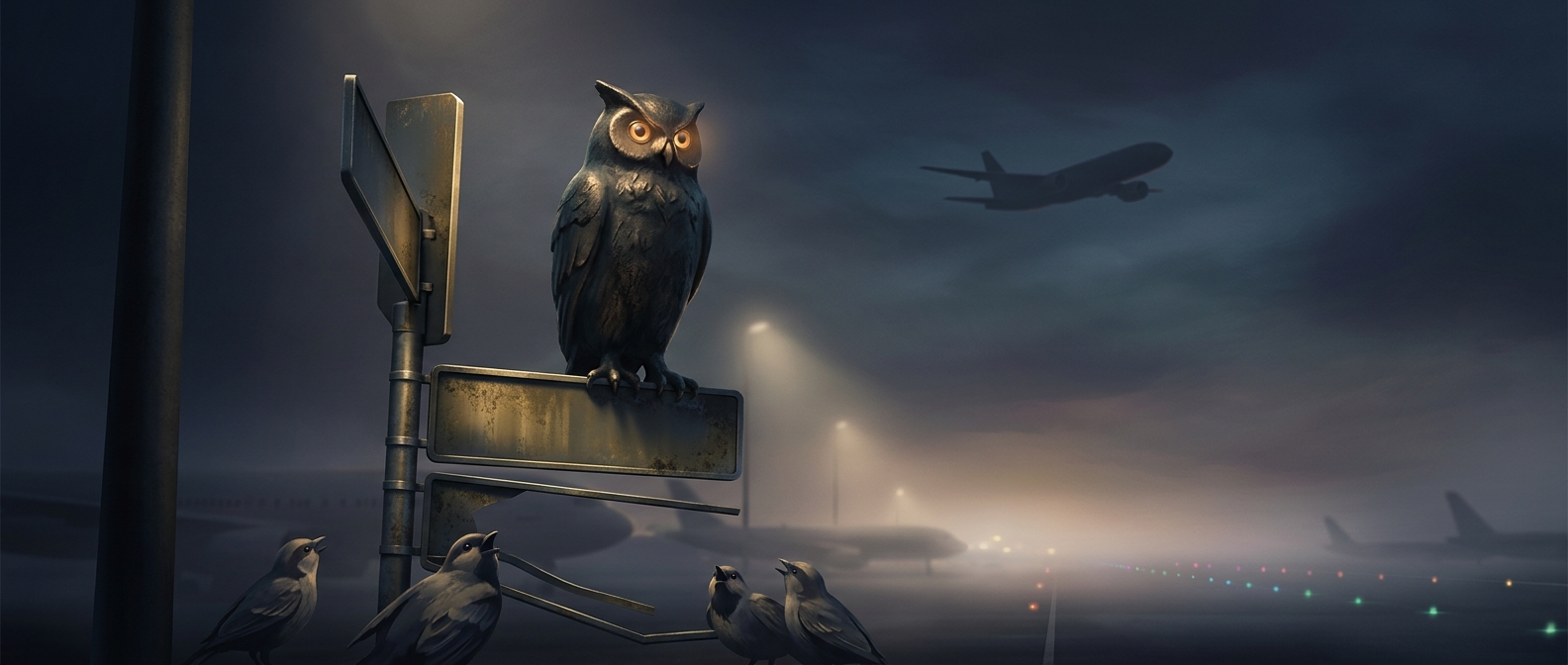
Why a Plastic Owl Can Clear a Runway
Birds gather where food, water, and shelter are easy to find—including the grassy edges and drainage areas around airports. A runway is a dangerous place for them: an aircraft striking a bird can damage engines or other parts, especially during takeoff and landing, when planes are close to the ground.
A fake owl is meant to make nearby birds treat a patch of airport as risky. Its shape and forward-facing eyes resemble a predator, prompting smaller birds to keep their distance. The prop is a low-tech way to influence where birds settle, rather than a barrier that physically blocks them.
The Trick Works Best Before Birds Adapt
The key limitation is that an unmoving owl does not hunt. Once birds repeatedly see it without suffering any consequences, they can learn that the apparent threat is harmless and return. Airports therefore cannot rely on a plastic decoy as a permanent, stand-alone solution. Its placement and occasional movement can help preserve the illusion, alongside broader efforts to make the grounds less attractive to birds.
That makes the owl less like a guard and more like a temporary warning sign. It may help shift birds away from a particular spot, but the practical goal is not to scare every bird out of the airport. It is to keep birds from congregating where an aircraft needs a clear path through the air.