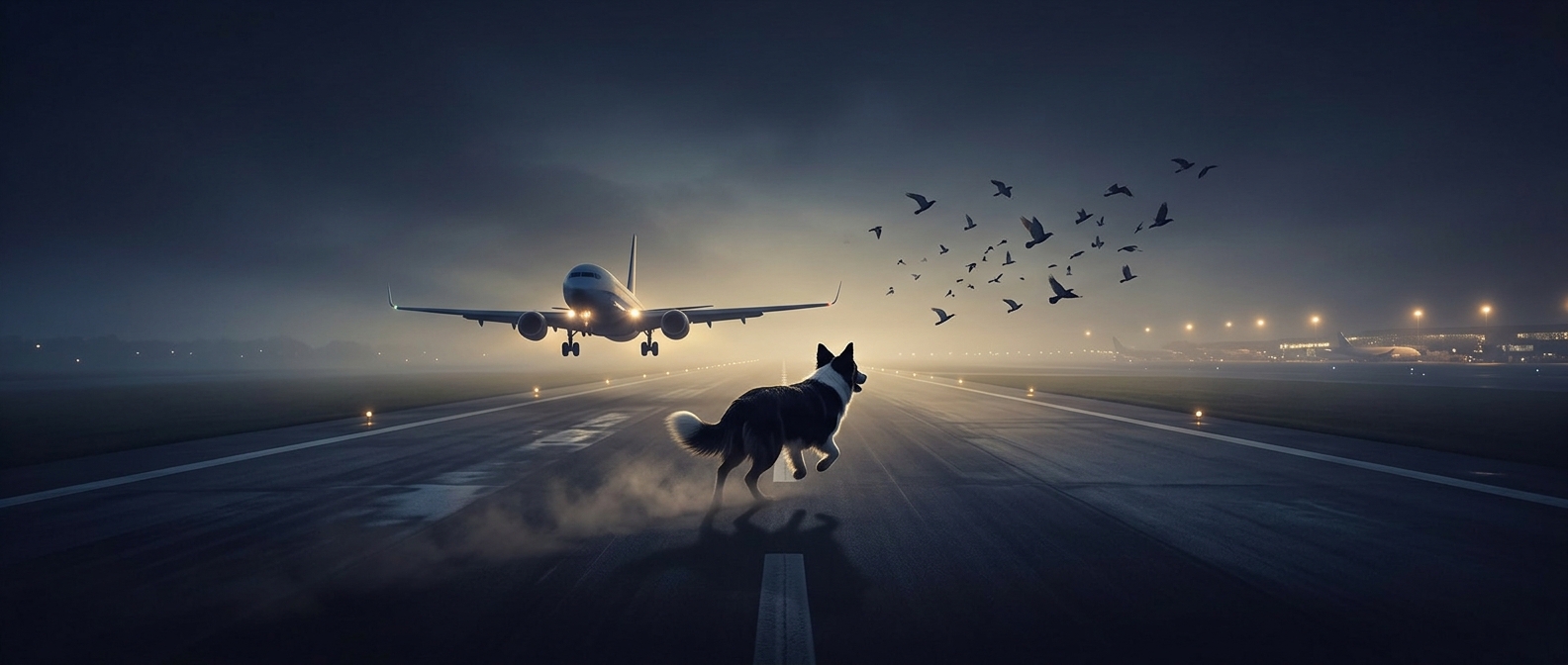
A Moving Predator Makes the Airfield Feel Unsafe
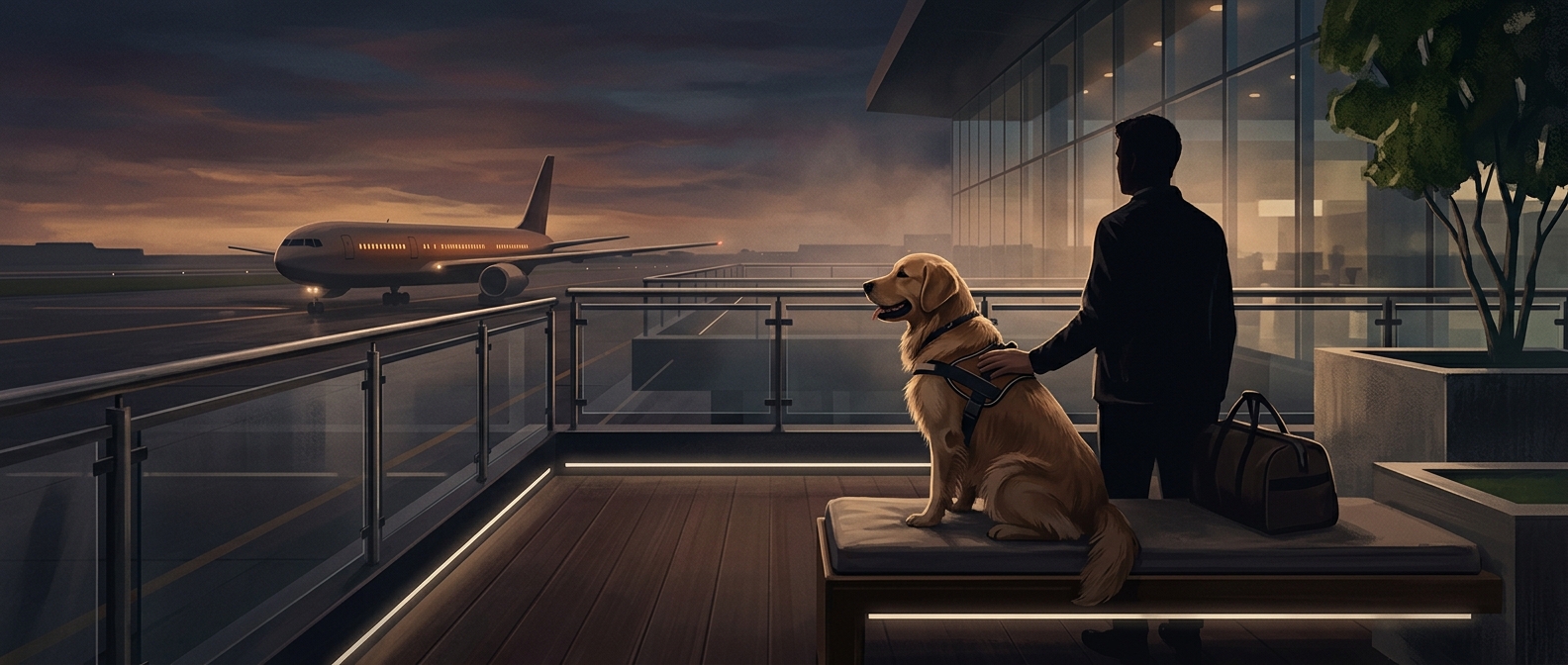
An airport’s open grass can look like inviting habitat to birds: it offers room to feed, nest, or rest, with few obstacles to hide behind. A dog and handler change that calculation. The dog’s presence and movement signal a nearby predator, prompting many birds to leave rather than settle in one place.
The effect depends on more than a dog running after a flock. A handler can patrol areas where birds gather and direct the dog’s approach, making the disturbance purposeful and repeatable. Because the threat moves, birds cannot rely on one familiar scare device being harmless. The aim is to persuade them to use a different area, not to catch them.
Why Airports Use a Handler, Not Just a Dog
Bird control is a safety task: a bird struck by an aircraft can damage equipment, especially if it is drawn into an engine. But the airfield is a large, working space, and birds may return after a disturbance. A dog-and-handler team can respond to where flocks are actually appearing and coordinate its patrol with airport operations.
That coordination matters. The dog must not interfere with aircraft or vehicles, and driving birds away is useful only if it does not push them toward another hazardous part of the airfield. Dogs are therefore one tool in a broader effort to make the airport less attractive to birds and manage their movement.
The Goal Is Fewer Settled Birds
A successful patrol does not have to keep every bird away forever. It can reduce the time birds spend gathering in a risky area and make that area less predictable as a place to rest. The useful shift is from reacting to a flock only after it appears near aircraft to routinely making the airfield feel like somewhere birds should avoid.