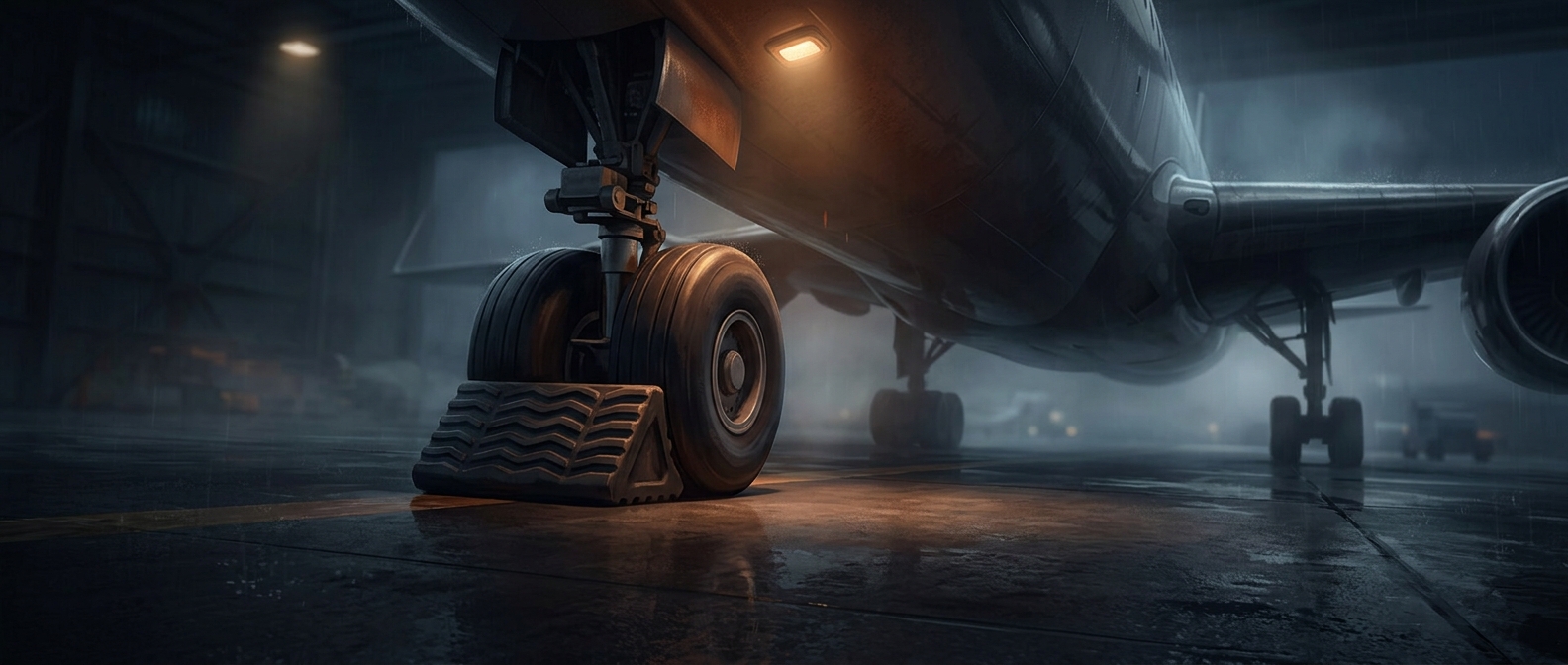
Why a small wedge can hold a heavy vehicle
A parked vehicle can still move because gravity pulls it downhill on a slope, and a bump or shifting load can add a shove. A wheel chock works by giving the tire a solid obstacle to press against before it can roll far enough to gain momentum.
The wedge’s sloping face meets the curved tire. If the wheel starts to turn, it pushes into that face; the chock, in turn, presses against the ground. Friction between chock and surface helps keep the wedge from sliding away. The chock’s shape and the grip of the ground matter together: a loose block on slick pavement may move rather than hold the wheel.
Why placement and surface matter
Chocks are set snugly against a tire, on the side it would roll toward. On a slope, that is generally the downhill side. A vehicle that could roll in either direction may need chocks positioned to resist both. The ground should be firm and stable, since gravel, mud, or a steep incline can undermine the contact that makes the chock effective.
A chock is a backup restraint, not a substitute for the vehicle’s parking brake or other required securing steps. That distinction matters during tasks such as loading: shifting cargo can change how weight bears on the wheels, while workers may be near the vehicle.
The force is concentrated at the wheel
The chock does not need to stop the entire vehicle by blocking its body. It interrupts motion at the tire, where rolling begins, and spreads the resisting force through the wedge into the ground. That simple arrangement is why a relatively small object can help secure a much larger vehicle—provided it is correctly placed and has enough grip beneath it.