Why a Small Leak Matters at Flight Altitude
An aircraft’s cockpit is pressurized, but a sudden loss of cabin pressure can leave pilots with only moments to protect their ability to think and act. Their oxygen masks are built for that emergency: they must deliver oxygen reliably even as the surrounding air becomes too thin to breathe safely.
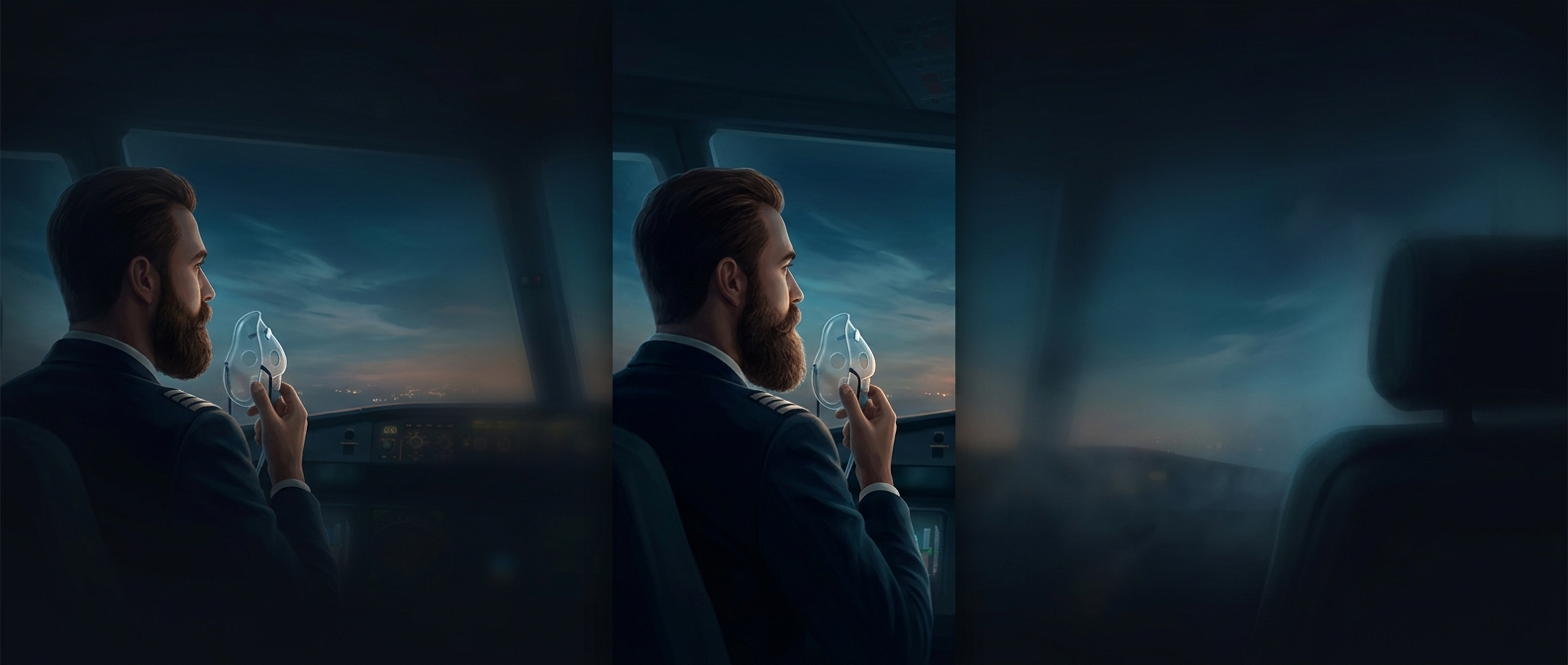
The mask works only if its cushion presses evenly against the face. Beard hair in that contact area can hold the edge away from the skin, creating tiny channels through which air escapes. The leak may be hard to notice in an ordinary room, but an emergency mask is not judged by whether it feels snug; it has to maintain an effective seal under demanding conditions.
Fit Is Part of the Safety System
That is why airline rules commonly restrict facial hair where a mask seals. The issue is not appearance, nor is every trace of stubble automatically equivalent to a failure. What matters is whether the person’s hair interferes with the specific mask’s fit. Mask designs and company policies can differ, and operators use fit requirements to make sure a pilot can use the equipment as intended.
A pilot’s mask is one part of a larger emergency response, alongside procedures for descending to breathable air. But those procedures take time. Keeping the sealing surface clear helps ensure that, in the first critical moments, oxygen reaches the pilot rather than leaking around the mask.