Why Passenger Jets Don’t Carry Parachutes for Everyone
A parachute seems like a simple backup: if an airplane is in trouble, open the door and jump. But a passenger jet in trouble is rarely in a condition where that sequence is possible—or safer than staying aboard.
At cruising altitude, the air is too thin to breathe, and the outside temperature is extremely low. Passengers would need oxygen and protective equipment, as well as instruction in how to put on and use a parachute. Even then, people would have to leave the aircraft in a controlled way. A typical cabin door is not a ready-made exit into calm air: at altitude, cabin pressure holds it shut, and the airflow around a fast-moving jet makes jumping hazardous.
A parachute needs a usable exit and a prepared jumper
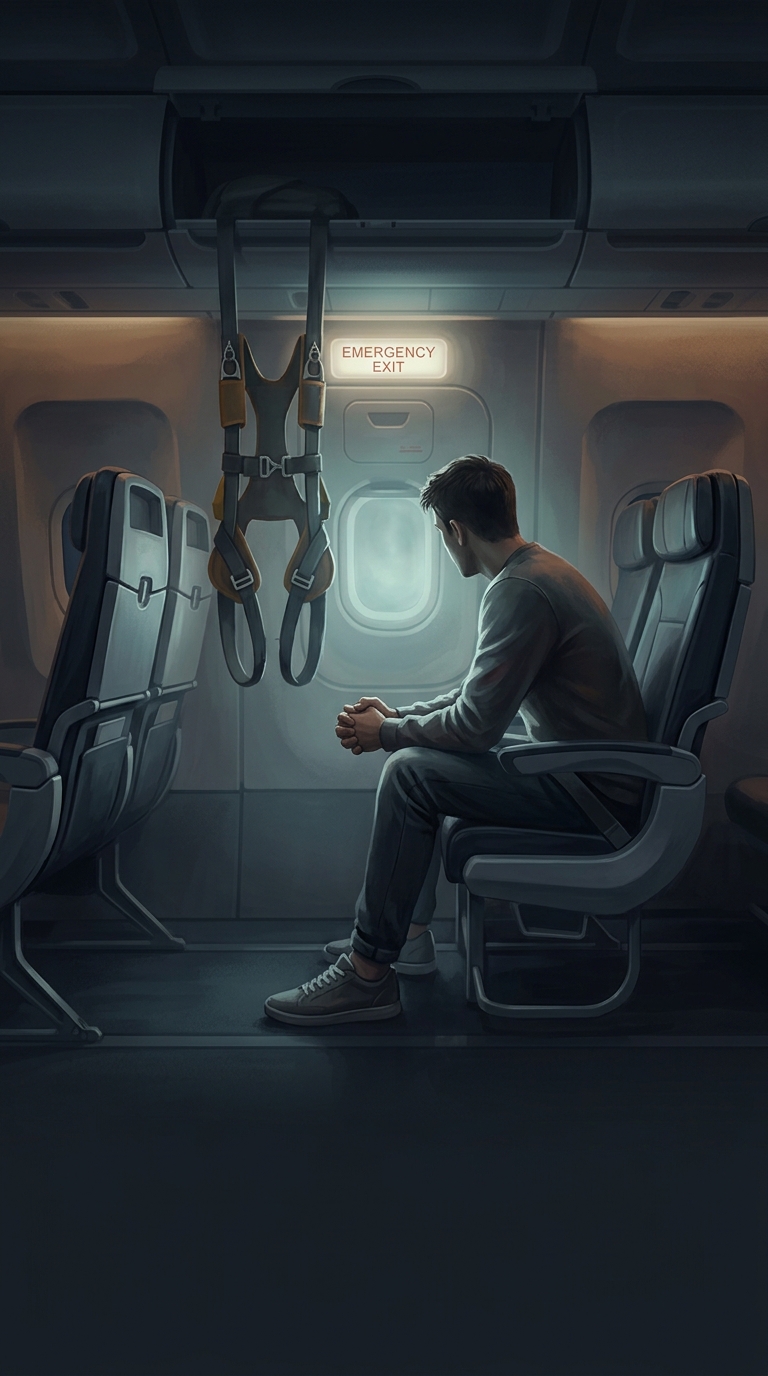
Sport parachutists jump from aircraft designed or configured for that purpose, usually at lower speeds and with a clear exit. They receive training and use specialized equipment. A crowded airliner has none of those advantages. Passengers would have to move through the cabin, reach an exit, and jump without colliding with the aircraft or one another. Many emergencies also leave little time to organize an orderly evacuation in midair.
The weight, storage space, inspections, and training required for thousands of individual parachutes would be added to every flight. Those costs would not solve the central problem: most passengers could not safely use the equipment in the conditions a serious emergency might create.
The airplane itself is the emergency plan
Airliners are built to remain controllable through many failures, and crews train to manage emergencies by landing the aircraft or, when necessary, evacuating it on the ground. That approach is far more practical than asking untrained passengers to jump from a high-speed jet. A parachute is useful only when a person can reach an exit, survive the conditions, and deploy it correctly; in an airliner emergency, those requirements rarely line up.