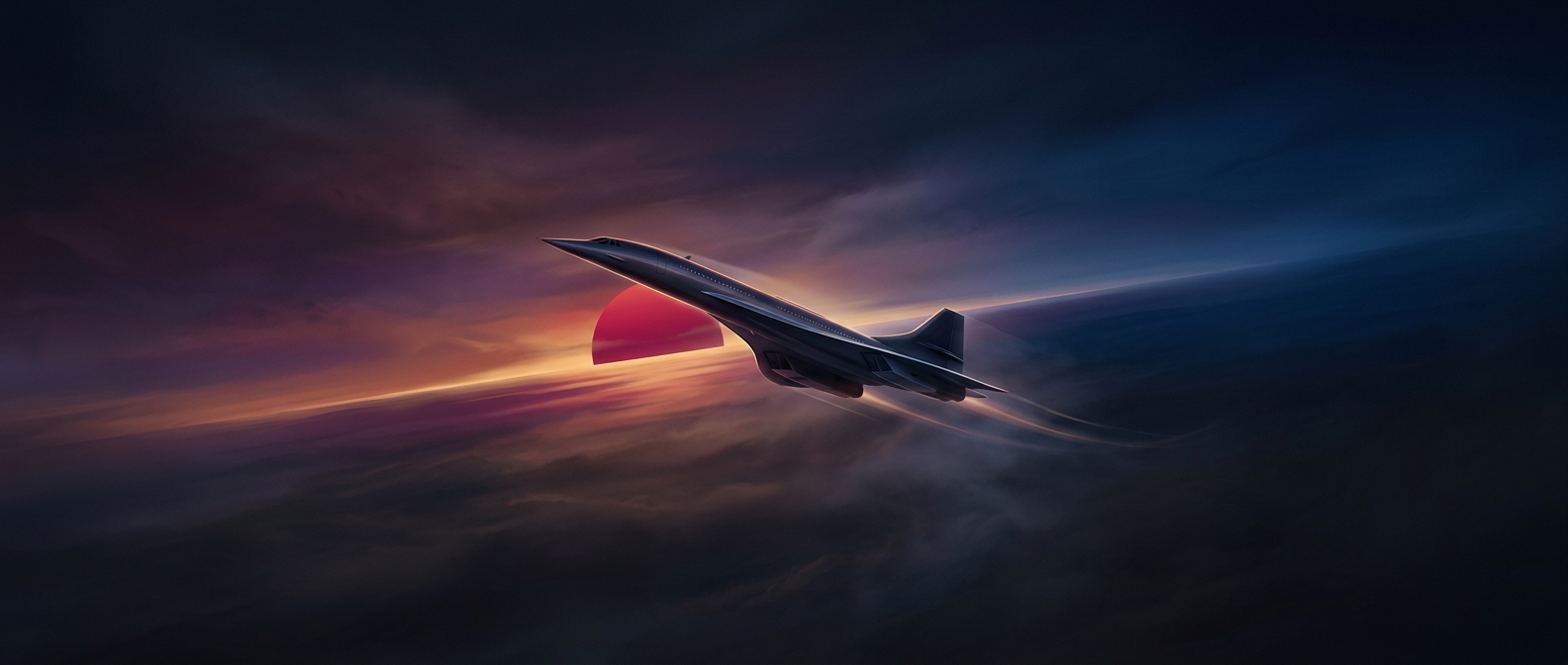
How Concorde could overtake the sunrise
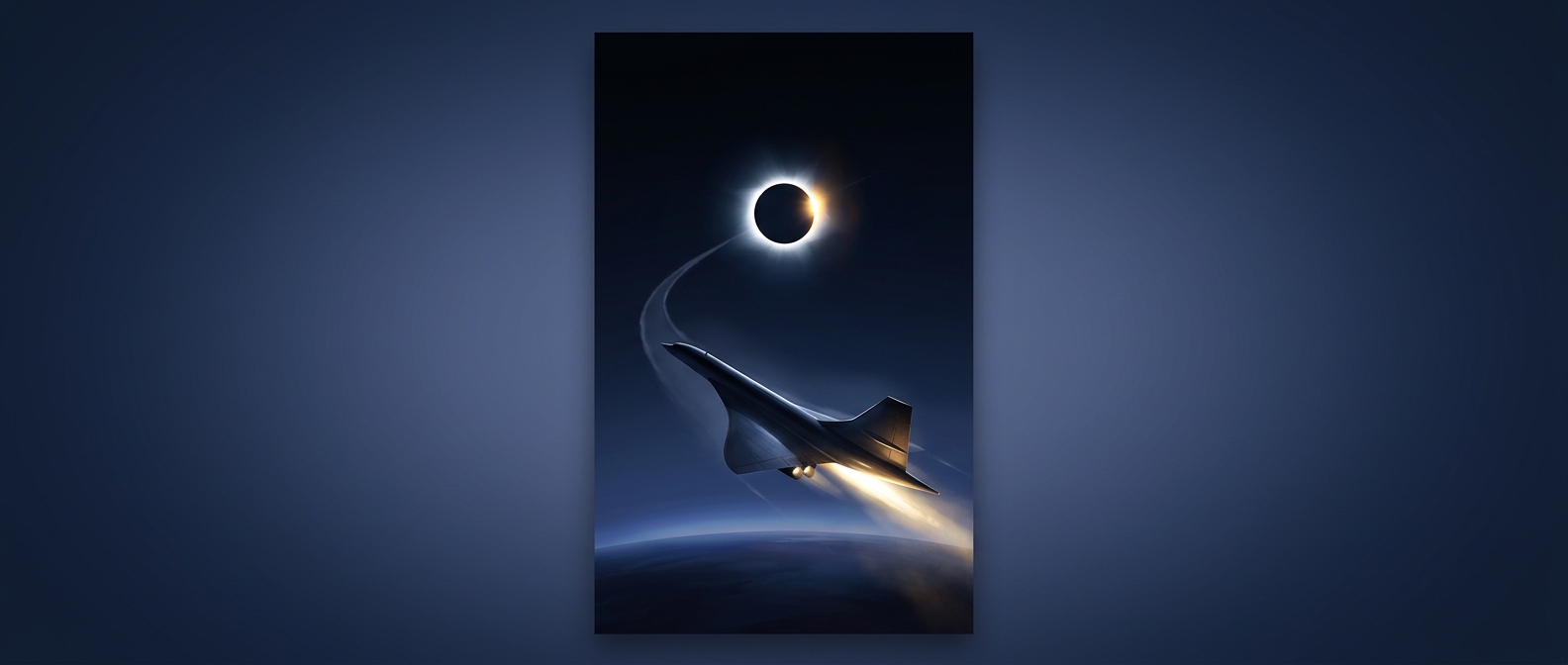
The effect came from combining two motions: Earth’s rotation and Concorde’s westward flight. Earth turns east, so the Sun appears to move across the sky from east to west. A westbound aircraft normally slows that apparent motion for its passengers. Concorde could do more: at cruising speed, it traveled west faster than the ground beneath it moved east because of Earth’s rotation.
In the right circumstances, that meant the Sun’s apparent motion reversed. Instead of continuing toward the western horizon, it seemed to drift back eastward. If it had already set for someone on the ground, passengers could see it reappear above the horizon—an apparent sunrise in the west.
Why speed changed the view
The comparison depends on where the aircraft is and how fast it is moving. Earth’s eastward surface speed is greatest near the equator and decreases toward the poles; Concorde’s speed relative to the air also varied with its route and conditions. The westward flight had to overcome the local eastward motion of the ground for the Sun’s apparent direction to reverse.
This was not a different sunrise caused by the aircraft changing Earth’s rotation. Concorde was simply moving quickly enough to carry its passengers into a different view of the same moving Sun. A westbound flight also stretched the daylight: by chasing the region where the Sun was visible, it could delay the sunset passengers would otherwise experience.
That made the “bonus sunrise” more than a novelty at breakfast. It was a visible reminder that, in a supersonic jet, the sky’s familiar daily motion depended on the speed and direction of the observer.