How a Hang-Glider Pilot Steers by Moving the Wing
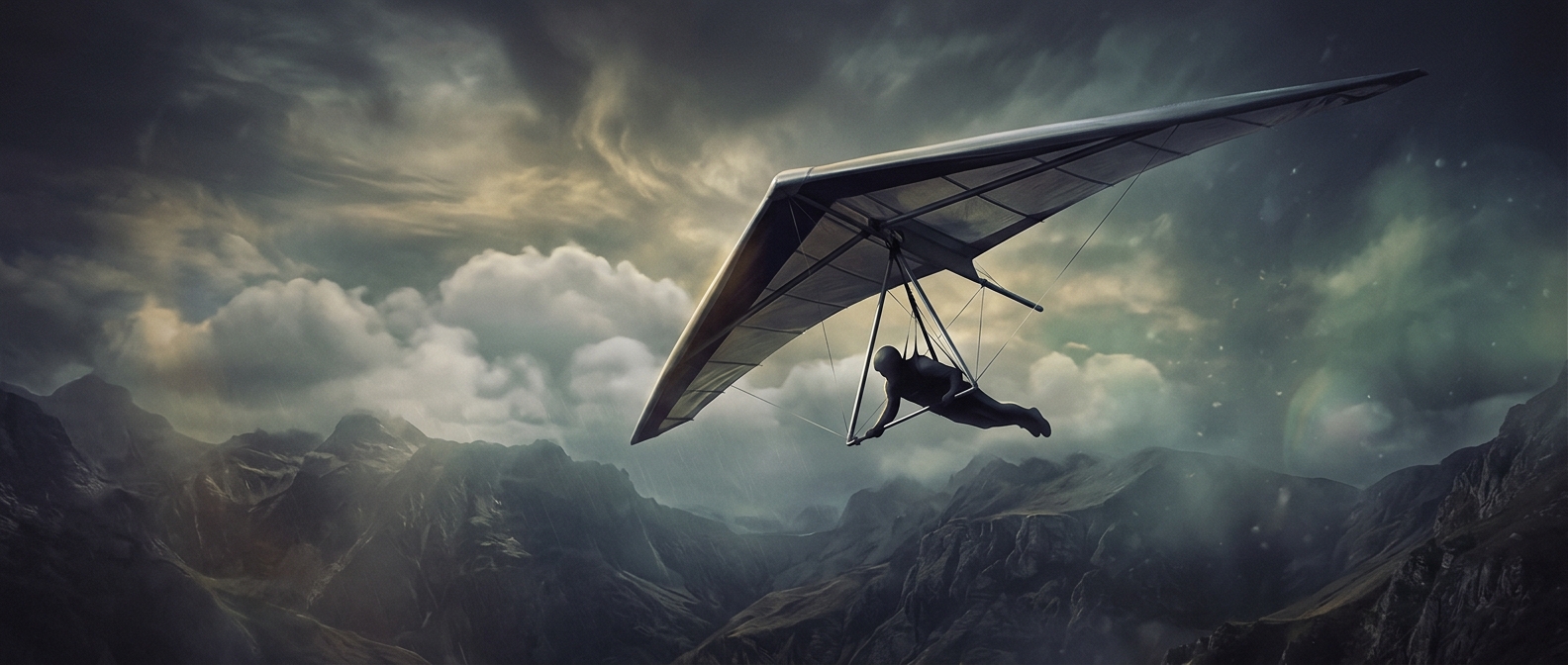
A hang glider has no rudder or cockpit-mounted steering wheel. Instead, the pilot hangs in a harness beneath a flexible wing and grips a triangular frame called the control bar. The wing is attached to that frame, so the pilot can steer by moving their body—and the frame—relative to the wing.
The key is the glider’s center of gravity: the combined balance point of the pilot and aircraft. When the pilot shifts sideways, that point moves off-center. The wing responds by rolling, much as a seesaw tips when weight moves to one end.
From Weight Shift to Turn
A roll tilts the wing, creating a bank. In a bank, some of the wing’s lift points sideways rather than straight upward. That sideways component curves the glider’s path into a turn. To turn the other way, the pilot shifts their weight in the opposite direction.
Moving forward or backward along the control bar changes the glider’s pitch—the angle of the wing relative to the airflow. Pitch affects how the glider climbs, descends, and speeds up or slows down. The pilot’s movements are small compared with the wing, but the suspended arrangement gives them leverage to change its attitude.
Why the Pilot Is Part of the Control System
The design makes the pilot more than a passenger: their body is the movable load that steers the aircraft. The flexible wing and control frame transmit that shift into a change in balance, without the separate ailerons or rudder used on many airplanes. A turn, then, begins not with a hand moving a steering wheel, but with the pilot repositioning their own weight beneath the wing.