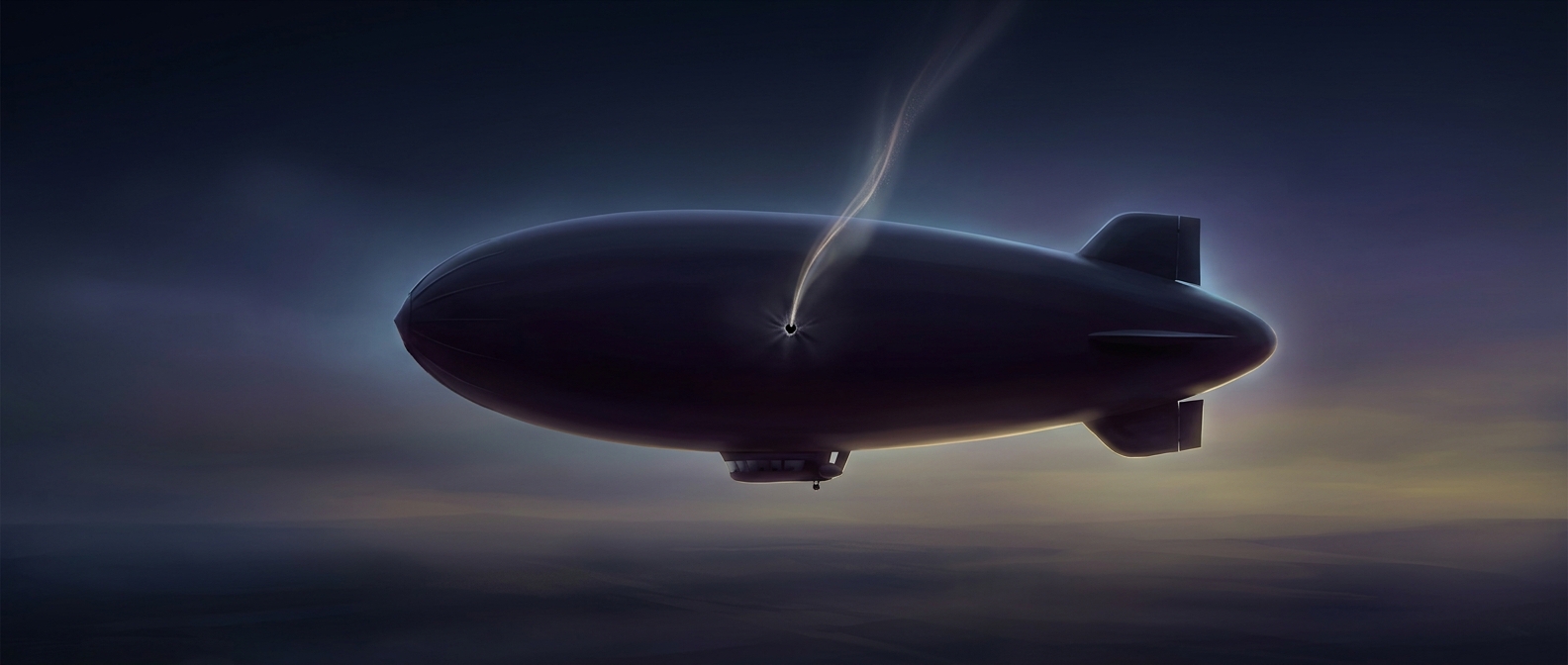
Why a Small Hole Doesn’t Make a Blimp Explode
A blimp is not a rigid tank filled with compressed gas. Its helium sits inside a flexible envelope—a large fabric shell—at only slightly higher pressure than the surrounding air. That small pressure difference is enough to keep the envelope shaped, but it does not store the kind of energy that drives a dramatic burst.
The Gas Escapes; the Envelope Loses Lift
A bullet hole gives helium a path out. The gas flows through the opening because the pressure inside is a little higher, but the leak is generally gradual rather than an explosive release. As helium leaves, the envelope slackens and the airship loses buoyancy: helium provides lift because it is less dense than the surrounding air.
The immediate danger is therefore not a fireball or a sudden blast. It is damage that worsens the leak, reduces lift, or interferes with the airship’s ability to remain controllable. The size and location of the damage matter, as does how much helium escapes.
Why the Outcome Differs From a Gas Tank
A pressurized tank holds gas under substantial pressure, so a rupture can release stored energy violently. A blimp’s envelope is designed to contain a vast volume of gas, not to withstand high pressure. Its shape and lift depend on keeping helium inside, but a puncture does not turn the entire envelope into a tightly wound pressure vessel.
That distinction explains the counterintuitive result: a bullet can damage a blimp without making it pop. The craft may still be in serious trouble, but the likely problem is a worsening loss of helium and lift—not an instant explosion.