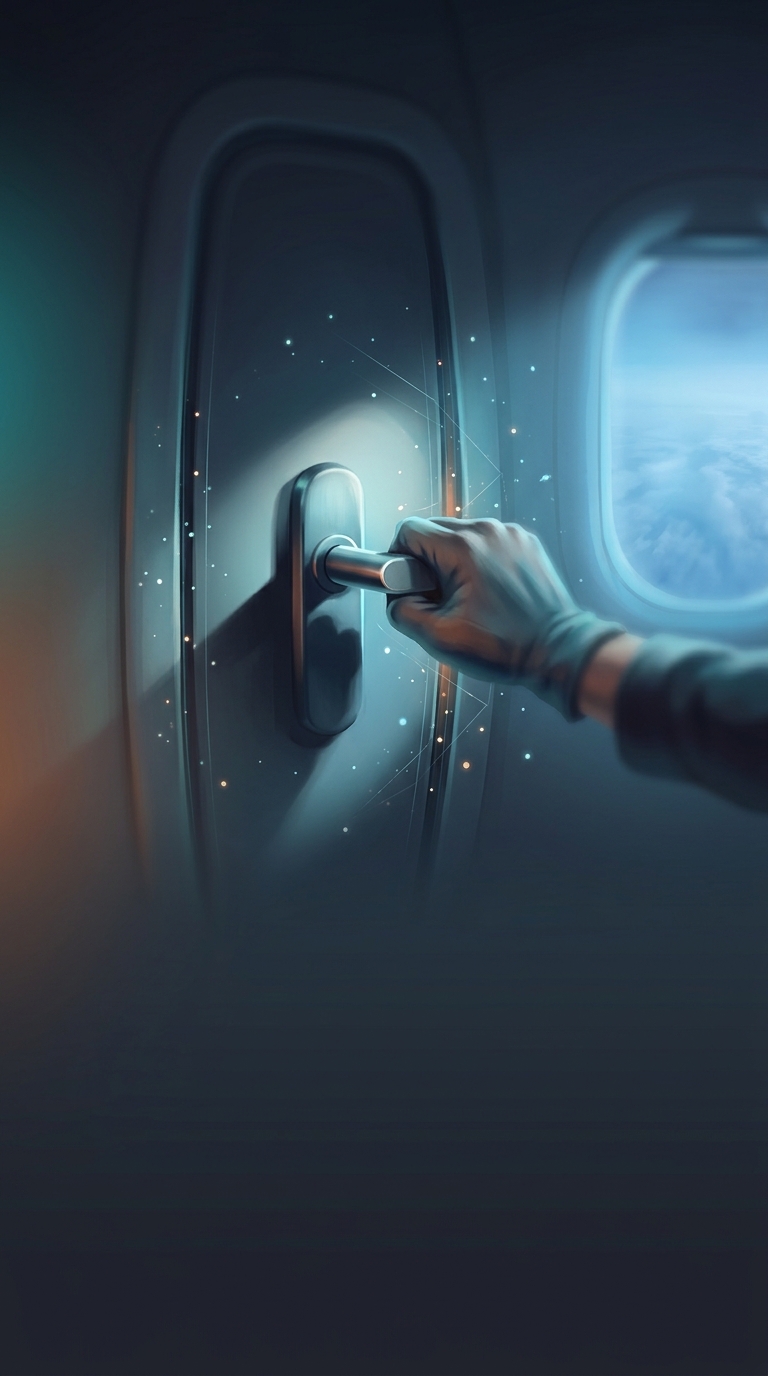
Cabin pressure locks the door in place
At cruising altitude, the air outside an airliner is far thinner than the air inside its cabin. The aircraft keeps the cabin at a more comfortable pressure, creating a pressure difference across the door. That difference pushes the door outward—against its frame and locking stops.
Many passenger doors are designed as plug-type doors: they must move inward before they can swing open. Because cabin pressure presses them outward, a person cannot simply pull one inward against the force. The door’s shape and frame turn the pressure difference into a kind of physical lock.
Why the handle is not enough
The handle operates a mechanical latch, but releasing a latch does not erase the pressure holding the door against its stops. At altitude, the load is spread across the door, not concentrated at the handle. Even a determined passenger would be pushing against the pressure acting on the whole door, while the aircraft’s structure keeps the opening sealed.
Door designs vary, so this is not a claim that every aircraft door works identically or can never be opened under any circumstances. On the ground, when cabin and outside pressures are nearly equal, a door may be opened if its mechanisms and operating procedures allow it. The dramatic midair version fails because, at cruising altitude, the very pressure keeping the cabin livable also helps keep the door shut.