How Concorde kept pace with the Moon’s shadow
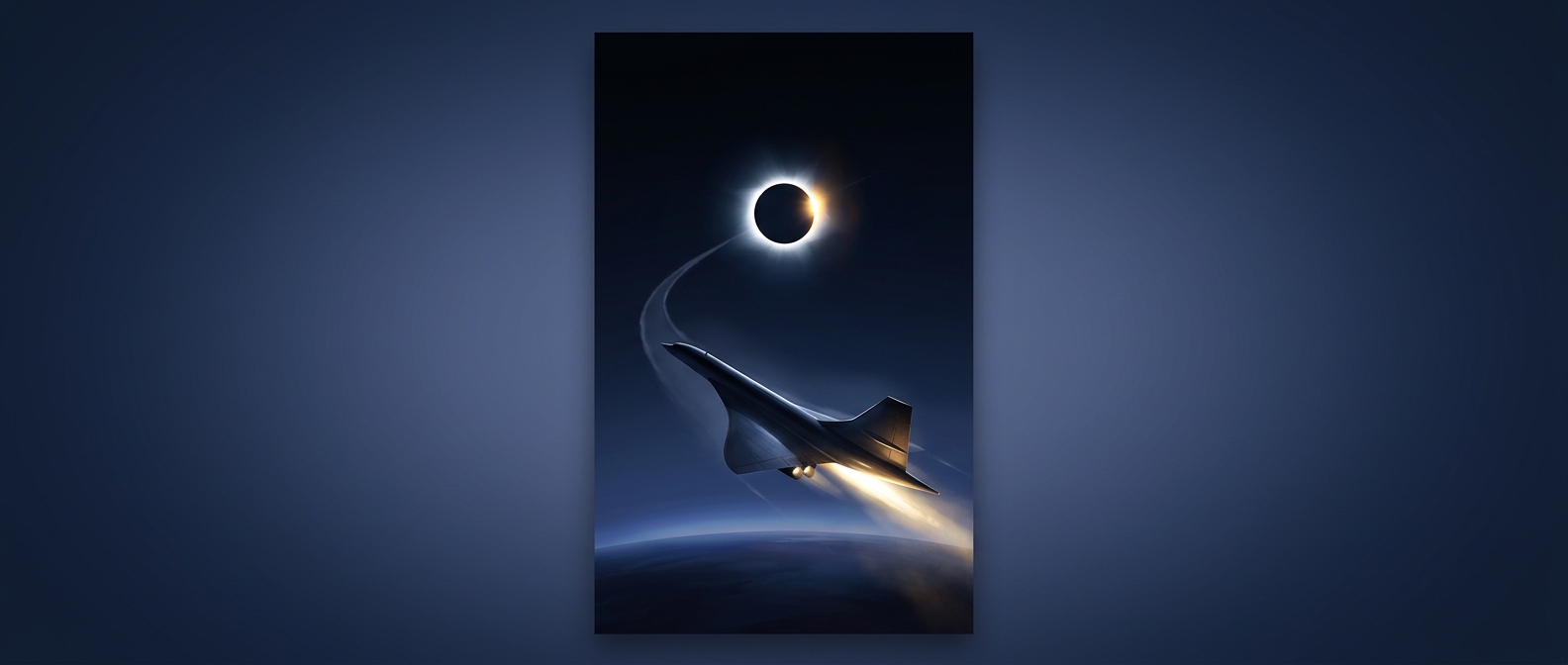
A total solar eclipse is brief at any one place because the Moon’s shadow sweeps rapidly across Earth as the planet turns. Concorde could turn that moving strip into a longer route: instead of watching from a fixed point, it flew in the same direction as the shadow, trying to remain within the narrow region where the Sun was completely blocked.
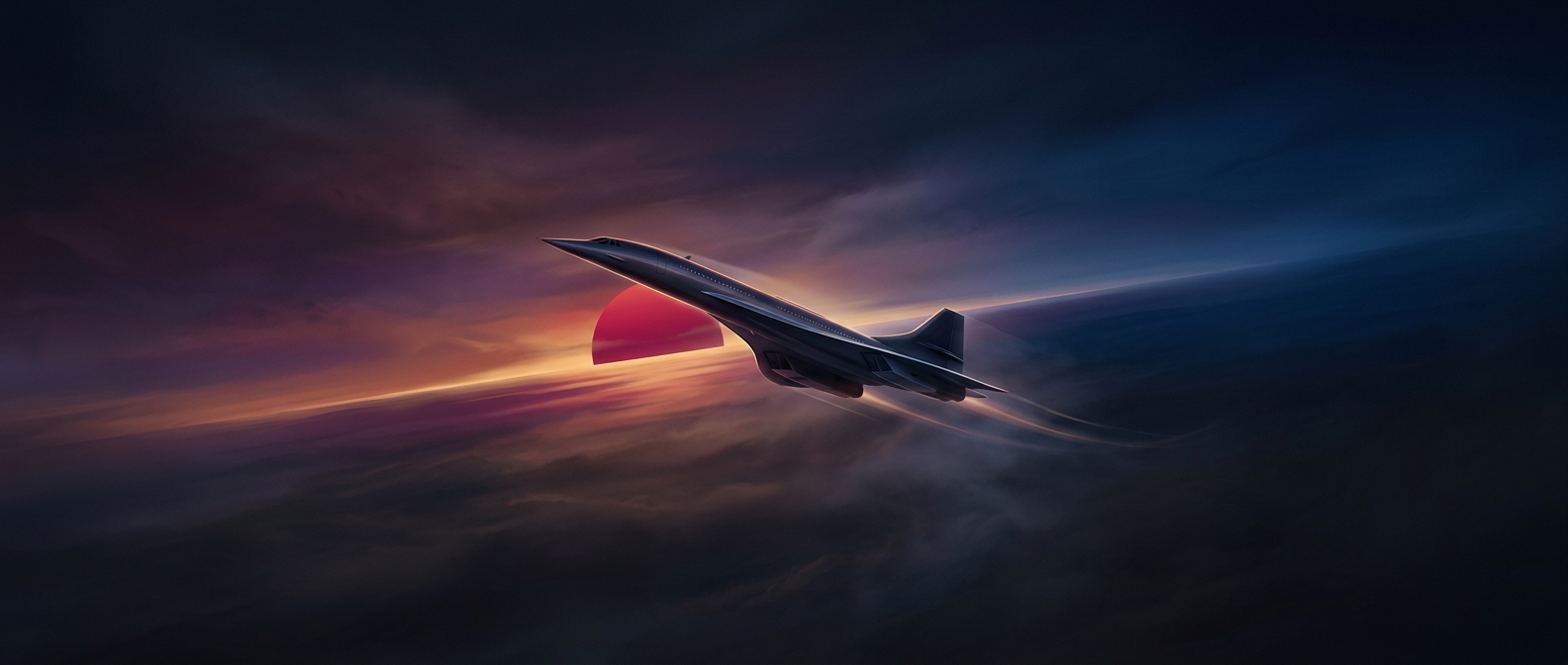
The crucial advantage was speed. Concorde cruised at roughly twice the speed of sound, high above the ground, where it could travel faster than the shadow’s progress along its chosen path. That did not make the Moon’s shadow stop; it let the aircraft keep moving with it, extending the time its passengers experienced totality—the short phase when the Moon fully covers the Sun.
A flight planned around a moving target
This was a navigation and timing problem as much as a speed record. The shadow is not a straight, fixed corridor: its position and shape change as the Moon, Earth, and aircraft move. Planners had to choose a route and schedule that would place the jet inside the shadow at the right moment, then keep it there as long as possible.
The cabin offered an unusual viewing platform. At Concorde’s cruising altitude, passengers could look down on the cloud tops and watch the eclipse from above much of the weather that can obstruct a ground view. The aircraft’s speed also meant the experience was not simply a longer version of standing beneath the same patch of sky; the jet was continually crossing new ground while matching the shadow’s motion.
Why the extra time mattered
Totality is the eclipse’s most striking stage, but it normally passes quickly for observers on the ground. Concorde’s celebrated 74-minute pursuit stretched that fleeting event into a sustained view. The feat shows how supersonic flight could do more than shorten journeys: by matching the movement of a natural phenomenon, it could change how long people experienced it.