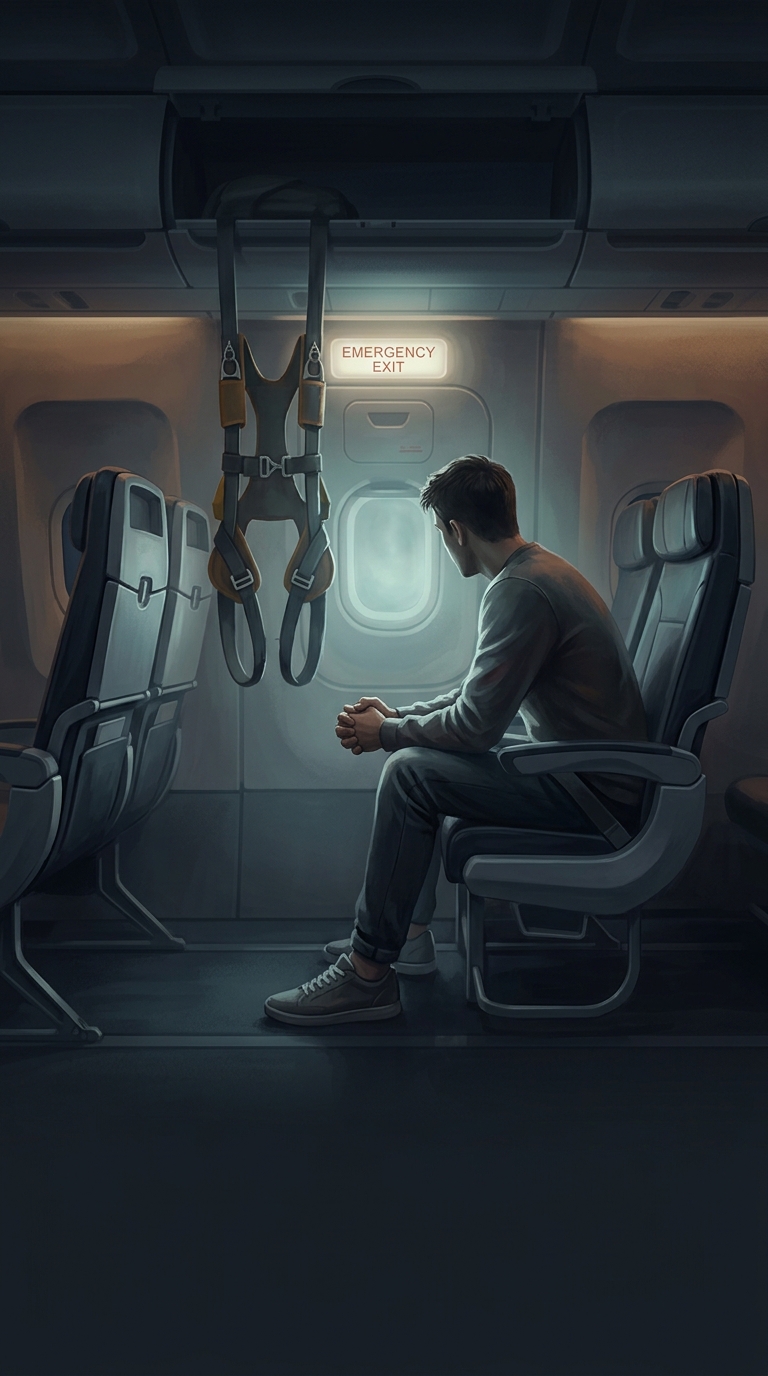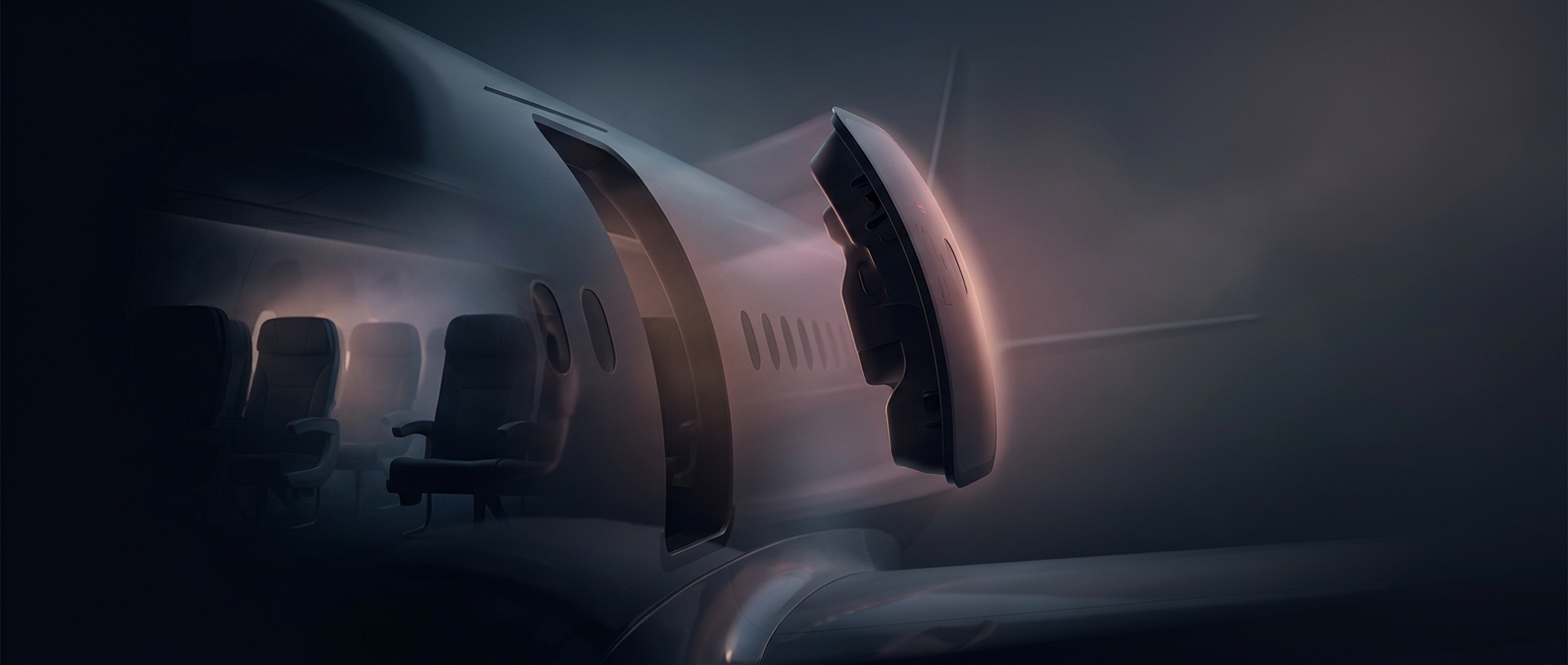
A darker cabin helps eyes adjust
At night, a bright cabin can make it harder to see outside. Your eyes adapt to the light level around you: after spending time in a brightly lit space, they need time to become more sensitive to dimmer surroundings. Dimming the cabin before takeoff—or landing—gives passengers and crew a head start on that adjustment.
That matters if an emergency forces an evacuation. The cabin could suddenly fill with smoke, lose its normal lighting, or require passengers to find an exit in darkness. Eyes already accustomed to a lower light level can make better use of whatever visibility remains.
The cabin’s lights are part of the escape plan
A dimmer cabin also makes emergency lighting and illuminated exit signs easier to notice. On aircraft equipped with floor-level escape-path markings, those markings can help guide people toward an exit when smoke makes it difficult to see farther ahead. The lights do not make an evacuation safe by themselves, but they can help preserve a useful visual contrast when normal lighting is unavailable.
The point is preparation, not power conservation: lowering the cabin lights before a nighttime takeoff or landing gives people a little more time to adapt before they might need to find their way out.