Why a Broken Cable Usually Doesn’t Mean a Falling Car
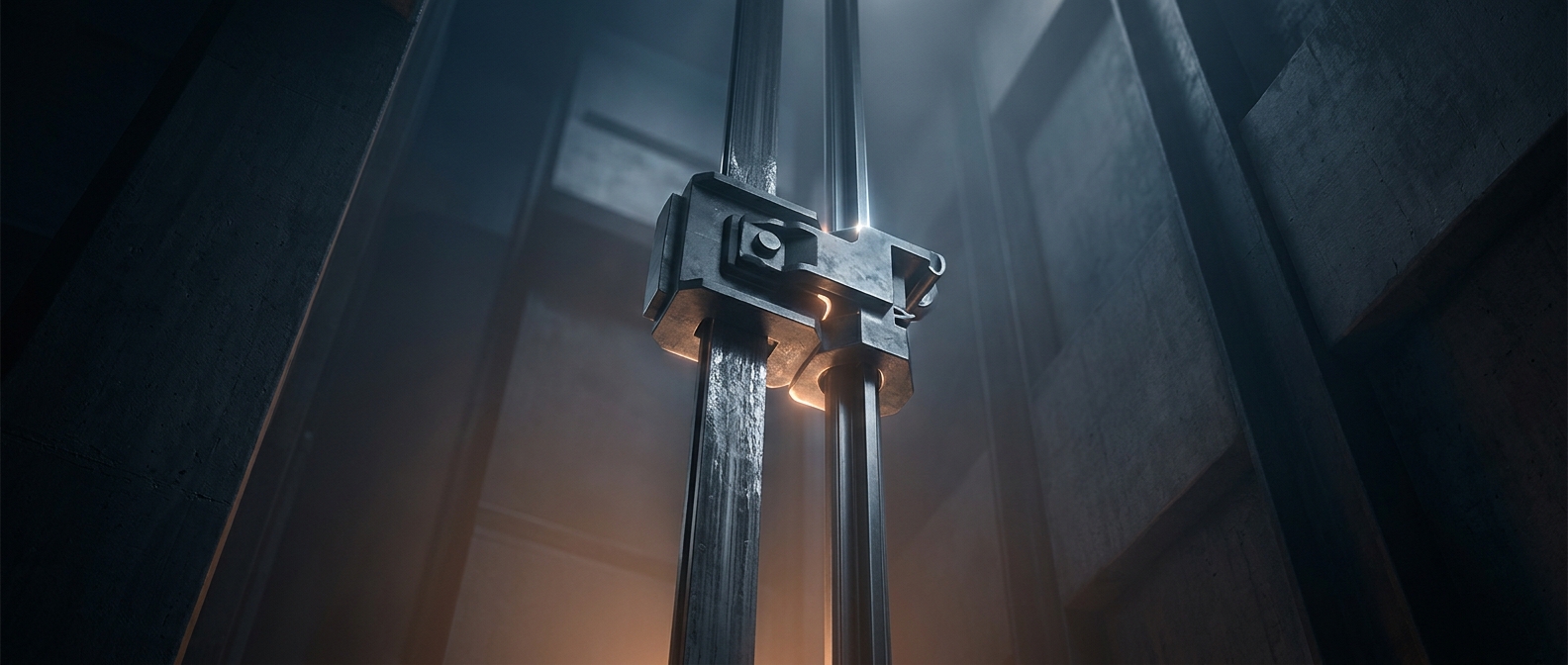
An elevator is not normally suspended by a single rope. Its car is supported by several steel cables, and the system is designed so that one failure does not leave the car freely falling. If the car moves too fast, an overspeed governor—a device that detects excessive speed—can trigger safety brakes that grip the guide rails running along the shaft. Those rails help hold the car in place.
Elisha Otis’s 1850s safety design made this principle visible: a mechanism could catch an elevator if its supporting rope failed. Modern elevators build on that idea with multiple layers of protection, including braking systems and buffers at the bottom of the shaft. The exact equipment varies, but the basic goal is the same: detect a dangerous movement and stop the car rather than rely on one cable alone.
The Ride Feels Less Safe Than It Is
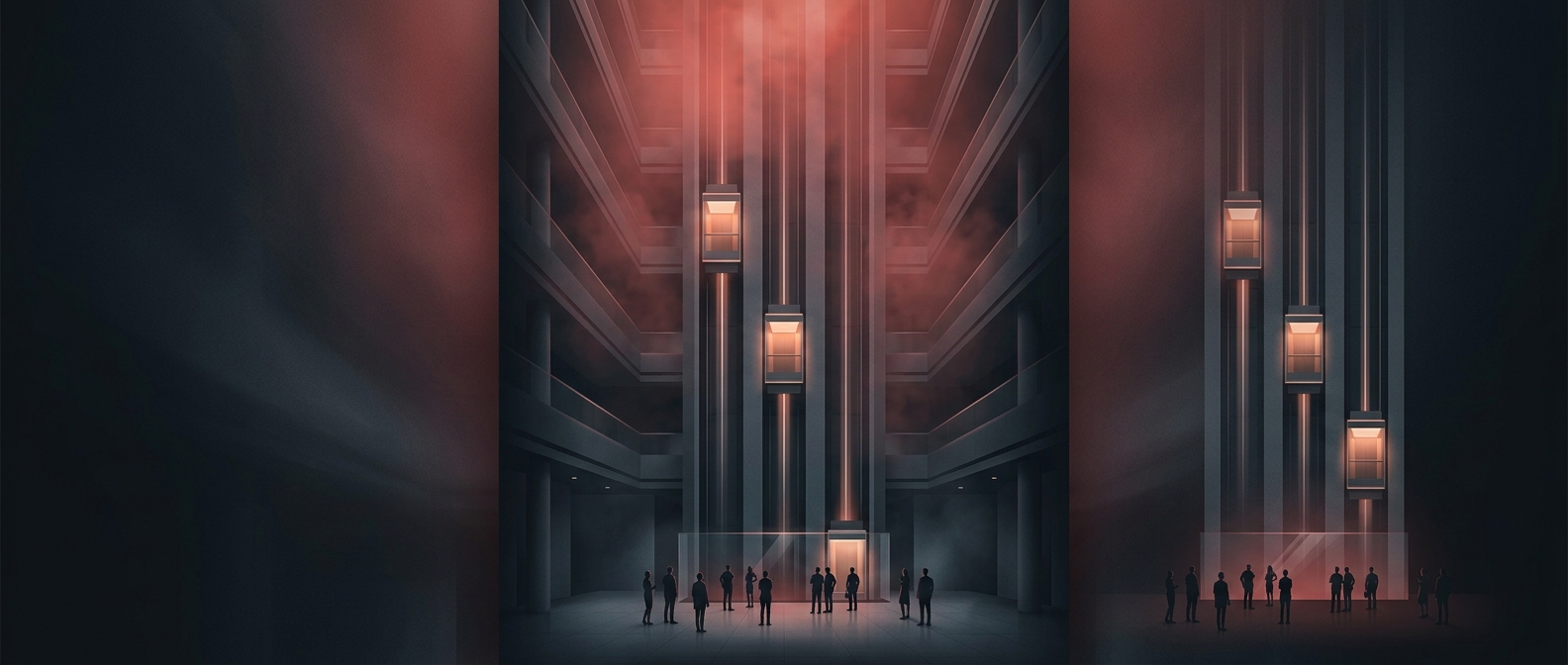
A car gives passengers a view of the road and a steering wheel to hold. Those cues can create a sense of control, even though a passenger cannot prevent a collision. In an elevator, the machinery is hidden, the walls offer no view of the route, and the rider cannot steer or easily judge what the car is doing. The loss of visible control can feel like danger, even when it is not evidence of danger.
The elevator also moves while the passenger stands still. A brief change in pressure or a small jolt as the car starts and stops can make that motion noticeable, but the ride is ordinarily controlled by equipment the passenger never sees. Anxiety fills in the missing information: an enclosed box, an unseen shaft, and no obvious way to intervene.
That mismatch is why a short elevator ride can provoke more alarm than a familiar drive. The reassuring part is not that nothing can ever go wrong; it is that the car is built with safeguards intended to stop it if a fault occurs. The mechanism most riders never notice is doing its job precisely when the ride feels uneventful.