Why rescuers may need to enter from above
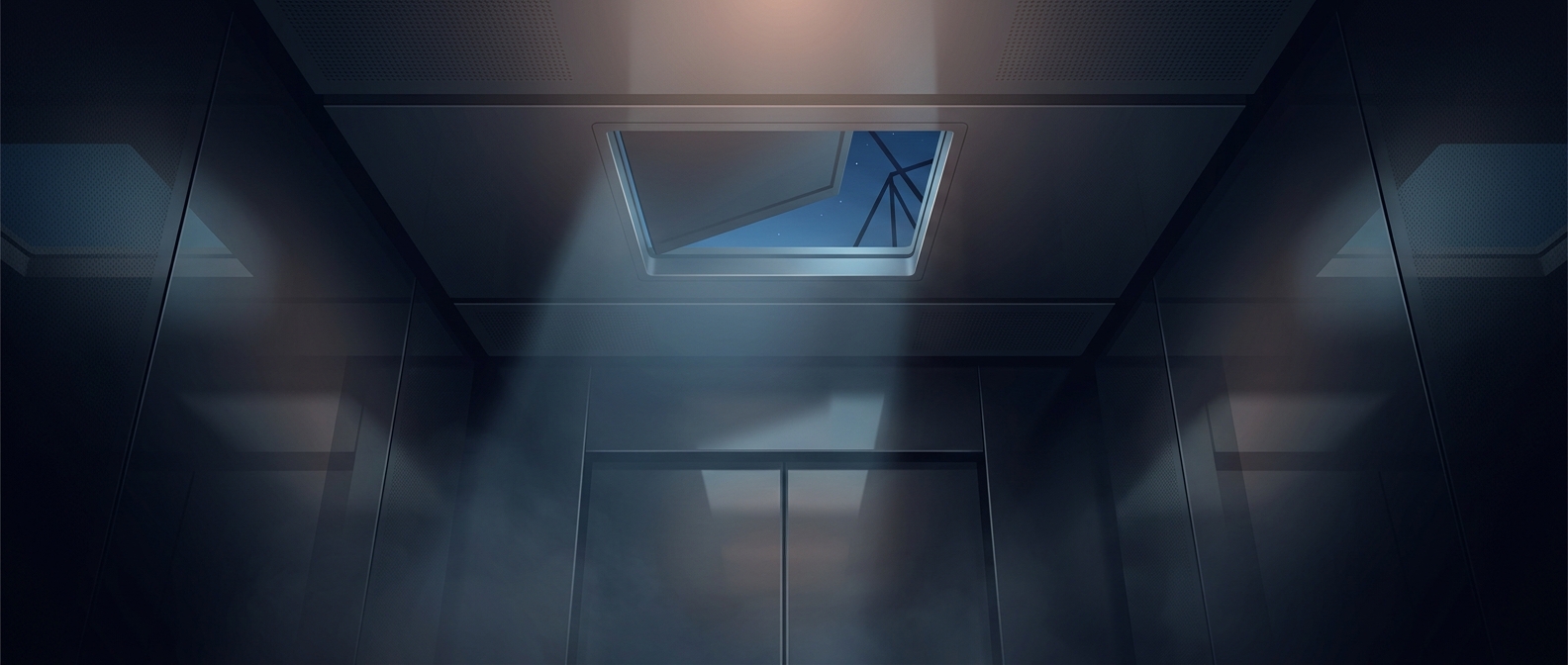
An elevator car is designed to stop at a floor, where its doors line up with the building’s landing doors. If it stops between floors, those doors may open onto a section of shaft wall—or leave a dangerous gap—rather than a safe way out. The ceiling hatch gives trained responders another route into the car without asking passengers to climb through that gap.
The hatch is useful because rescuers can approach from the elevator machinery or the space above the car, depending on the building’s design. From there, they can assess where the car is and help occupants leave by a controlled route. The opening is an access point for a rescue operation, not a normal passenger door.
Why a hatch is not a shortcut
The car hangs and moves within a narrow shaft. A car that seems still can be a hazard if it shifts, and the space above it contains equipment that passengers are not trained to handle. A rescue therefore has to account for the car’s position and prevent an unexpected movement before anyone uses the hatch or enters the shaft.
That is why an occupant should not try to force the hatch or climb out on their own. If the car moves while someone is on its roof or crossing the gap to a floor, the consequences can be severe. The hatch matters precisely because it gives responders a way to reach people while keeping the rescue under control.