Why the Far Hand Changes a Door Opening
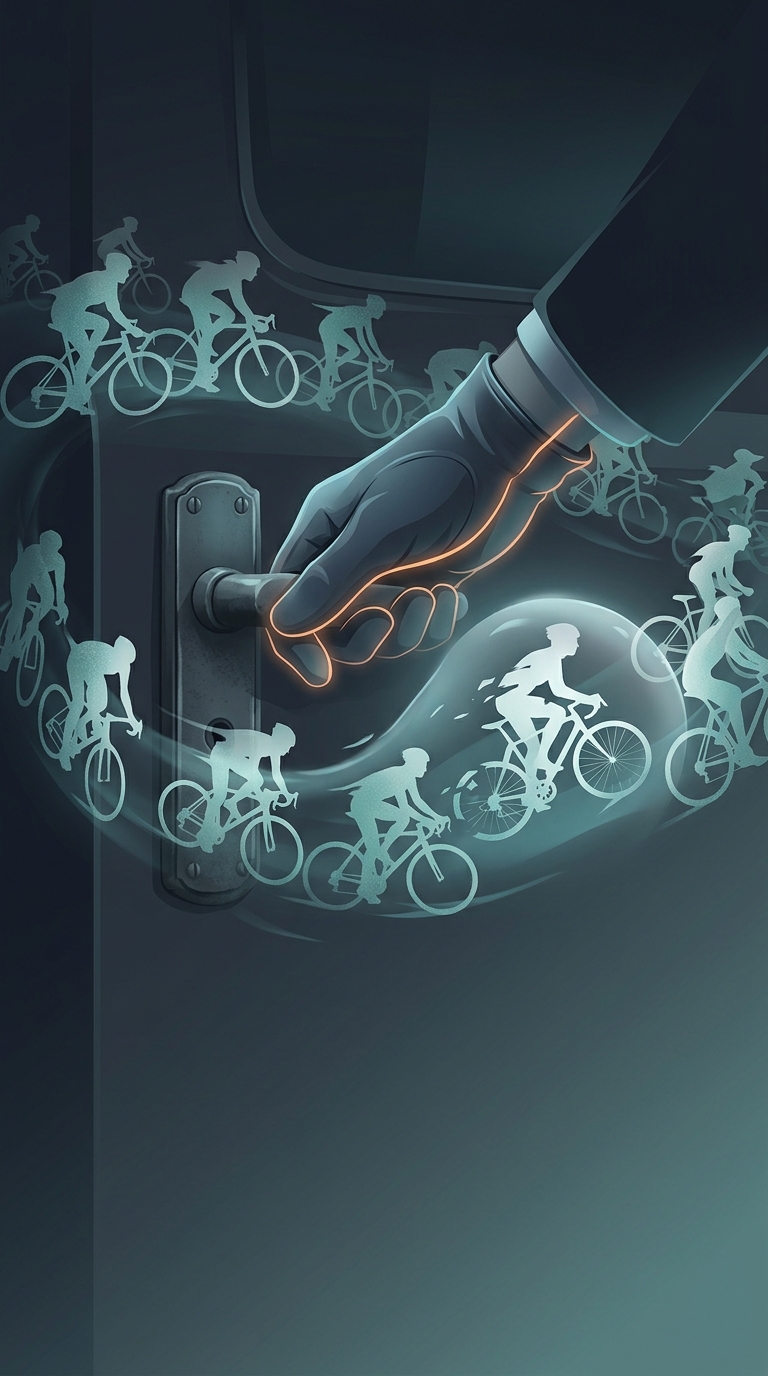
The Dutch Reach means using the hand farther from the car door to open it: a driver on the left, for example, reaches with the right hand. That small change turns the shoulders and upper body toward the window and the traffic behind. Instead of pushing the door open while facing forward, the driver is more likely to look into the side mirror and over a shoulder first.
That matters because a cyclist can approach quickly and quietly from behind, often in the strip of road beside parked cars. A glance backward can reveal the rider before the door moves into that path.
A Slower, Narrower Opening
Reaching across also makes it less natural to fling the door wide in one motion. The driver’s body is angled, and the door can be opened gradually while checking for approaching traffic. That creates an extra chance to spot a cyclist and stop before the door blocks the rider’s route.
A dooring crash can happen when a cyclist strikes a suddenly opened door or swerves into moving traffic to avoid it. The reach helps address the first link in that chain: opening without looking. It does not replace mirrors, a direct shoulder check, or care when getting out, but it builds the check into the movement itself.
The Crucial Moment Is Before the Door Moves
The technique is useful for passengers as well as drivers, and it works only if people actually pause and look. Its practical value is that it turns a safety reminder into a physical habit: reaching across makes turning back easier, right when a glance can prevent a cyclist from meeting an open door.