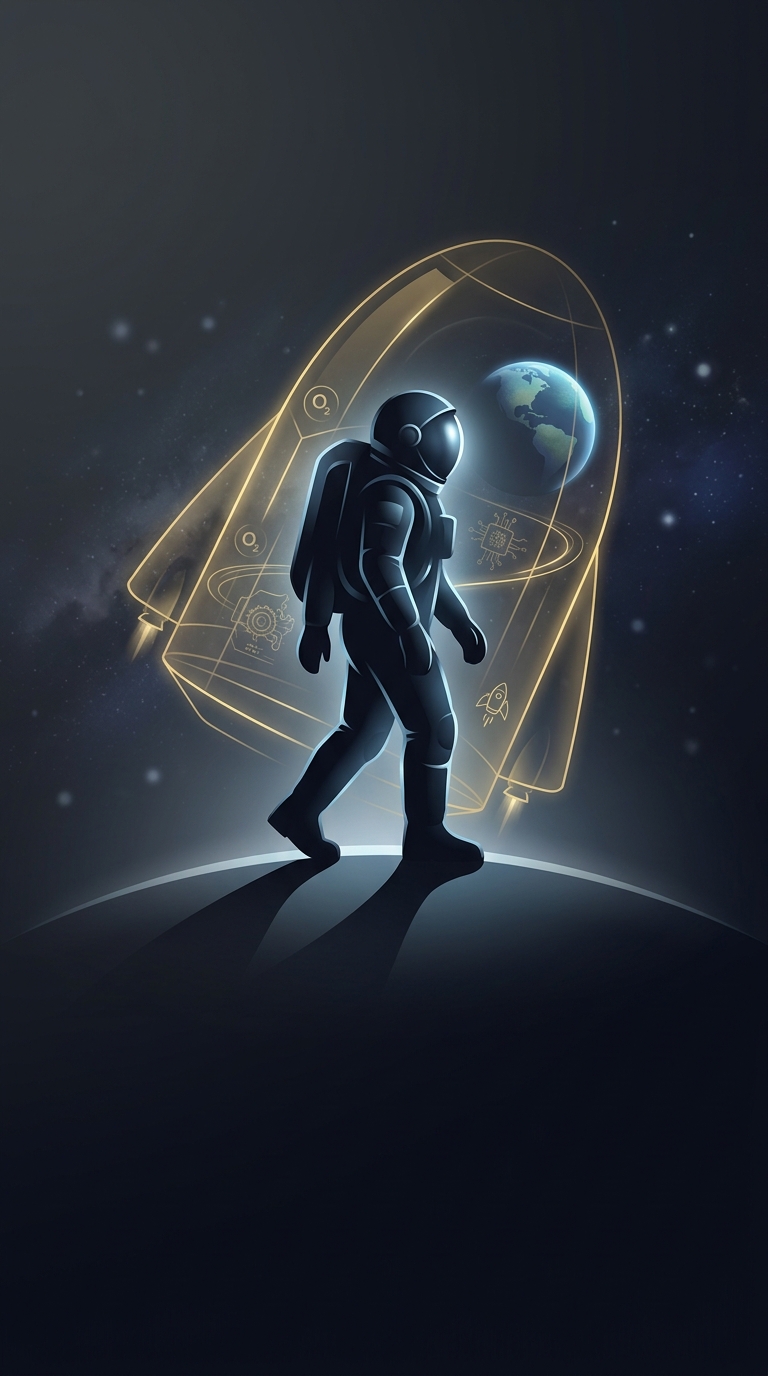
A spacecraft built around one person
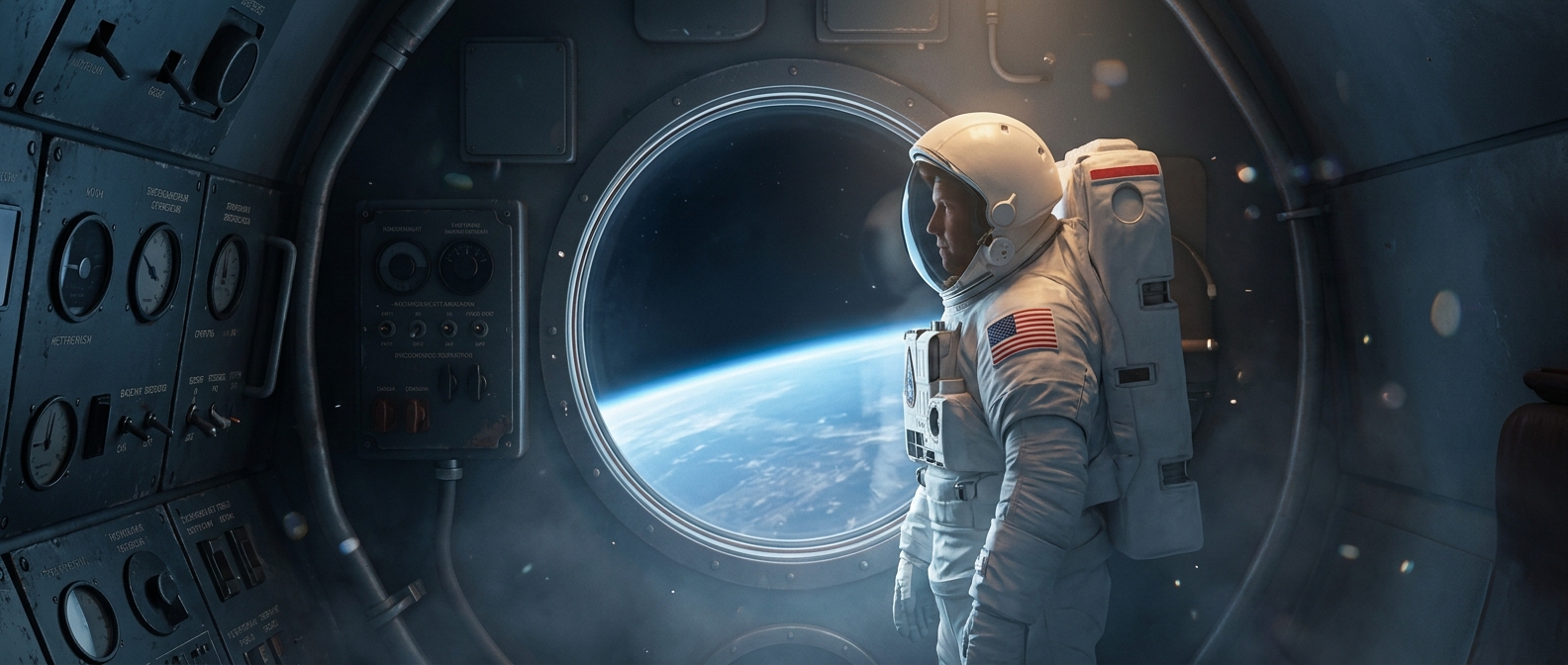
A spacesuit has to solve the same basic problem as a crewed vehicle: keep a human alive where there is no breathable air or usable atmospheric pressure. But instead of enclosing a cabin, it brings a tiny life-support system along with the astronaut. The backpack feeds oxygen into the suit and removes exhaled carbon dioxide; a garment of narrow water-circulation tubes carries away body heat.
The suit’s pressure layer is crucial. Space is nearly a vacuum, so the suit maintains pressure around the body while still allowing the wearer to bend arms and legs. That is a difficult balance: too little flexibility makes work exhausting, while too much can make the pressurized suit hard to control.
Staying on course—and getting back
Most spacewalkers are attached to the spacecraft by a safety tether. The tether helps prevent a separation, but it is not a practical way to steer: it can snag, and it cannot reliably pull someone back from every position. For an emergency, some suits can carry SAFER, a compact jetpack that uses small nitrogen thrusters to let an astronaut maneuver back toward the station.
That backup changes the suit’s role. It is not merely protective clothing; with independent life support and, when fitted, a way to maneuver, it can function as a one-person vehicle. The astronaut is both the passenger and the pilot, making each movement a tradeoff between reaching the work site, conserving effort, and preserving a route home.