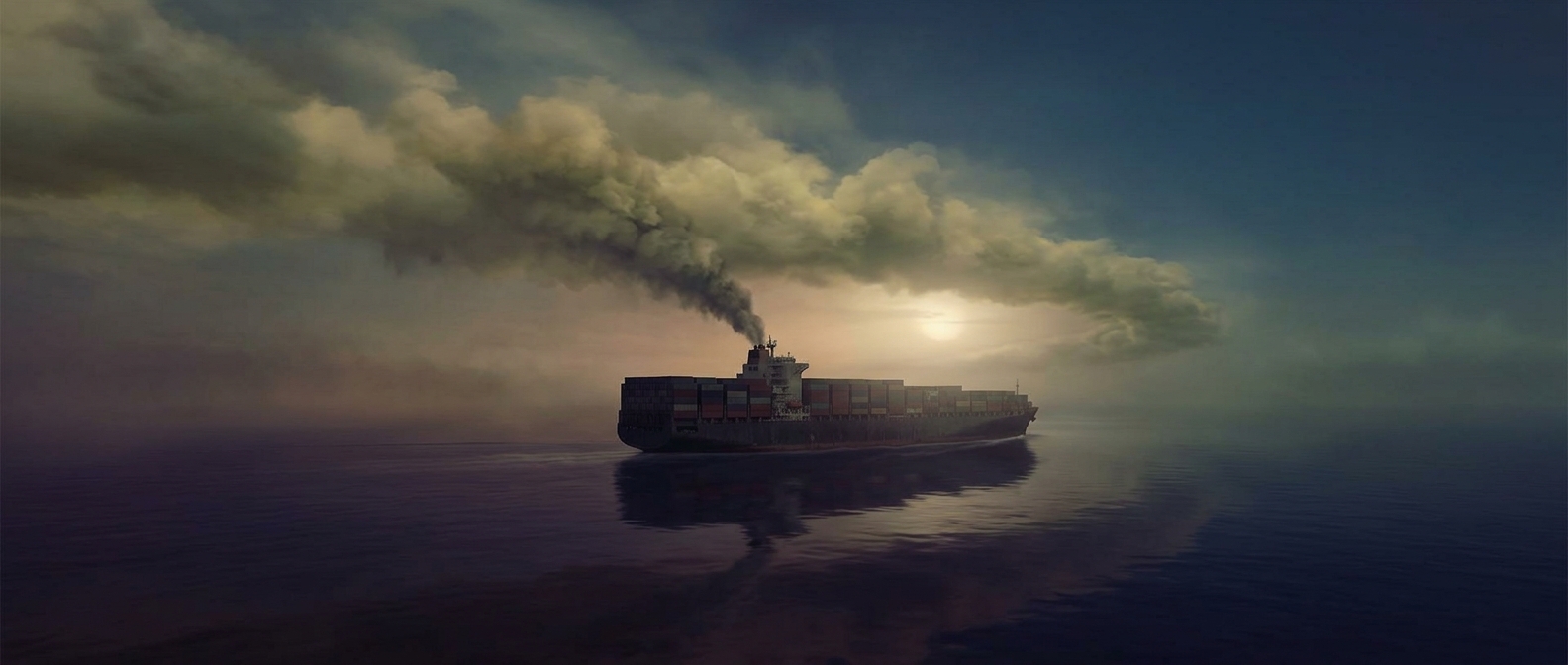
How exhaust turns into a cloud track
A ship’s engine sends a plume of exhaust into the moist air above the sea. Along with gases, that plume contains tiny airborne particles, including soot and particles formed from sulfur compounds. These specks can act as cloud condensation nuclei: surfaces on which water vapor gathers into droplets.
Over the ocean, the air is often humid and already contains low clouds. When a ship’s particles enter that environment, they can help form many small droplets in a narrow band. The droplets scatter sunlight, making the band look brighter than the surrounding cloud—or making a thin streak visible where the sky was otherwise clear. Winds then stretch and blur the trail behind the vessel.
Why the trail matters
A ship track is therefore not smoke hanging in the air; it is a change in the cloud, caused in part by particles in the exhaust. Its appearance depends on the local weather: the air must have enough moisture, and the surrounding cloud conditions must allow the altered droplets to stand out. The same ship can leave a conspicuous track in one patch of sky and none in another.
Because bright clouds reflect sunlight back toward space, ship tracks can affect how much solar energy reaches the ocean below. That effect makes the trails useful to scientists studying interactions between pollution and clouds, but it does not make ship exhaust environmentally harmless: the particles and gases also contribute to air pollution. A vessel can leave a visible mark in the sky precisely because its emissions have changed the tiny droplets that make up a cloud.