How a convoy keeps its trucks in step
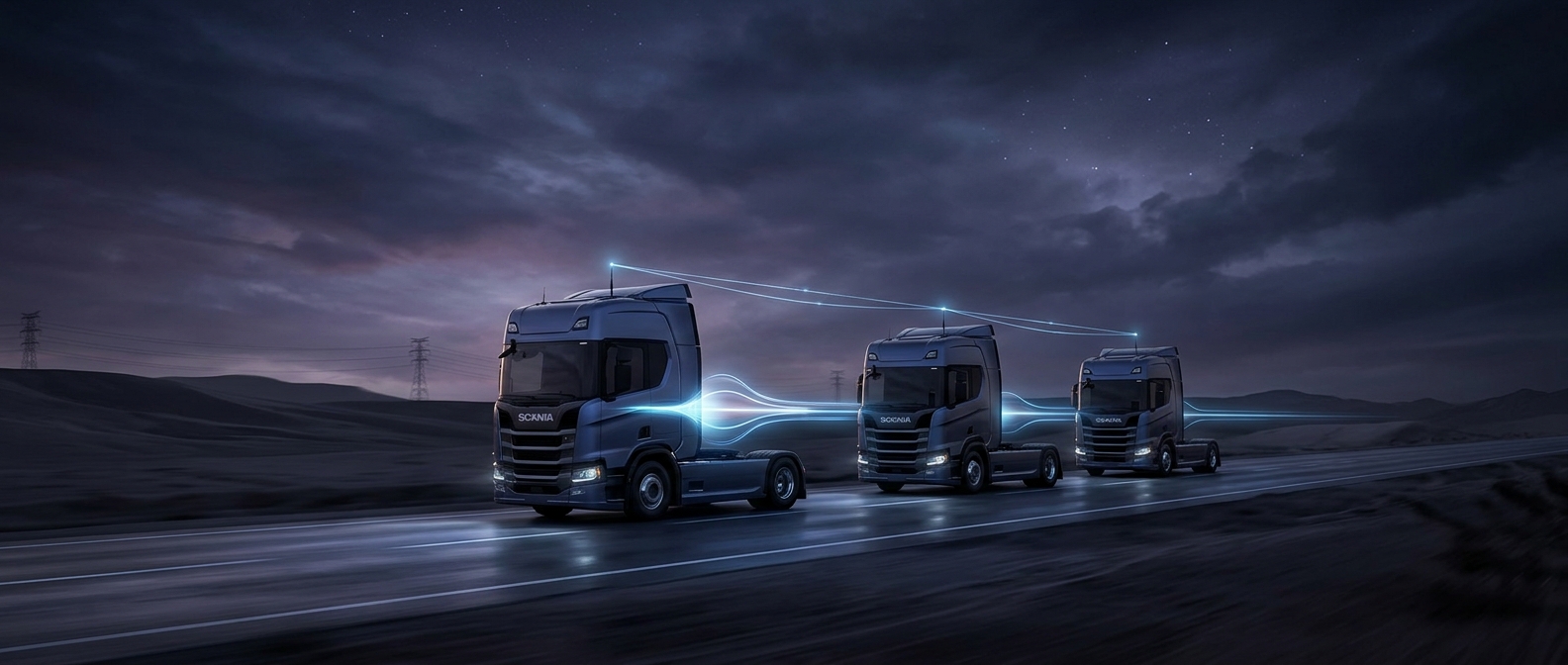
A digitally linked truck convoy is often called platooning. The lead truck sets the pace; wireless messages pass its speed changes and braking signals to the trucks behind it. Each follower can respond sooner and more consistently than a driver relying only on sight, while its own sensors help it track the vehicle directly ahead.
That coordination matters because a short gap leaves little room for a delayed reaction. The trucks’ control systems must keep adjusting their speed to preserve the spacing, and braking has to be coordinated across the line. The system is assistance for drivers, not simply a set of trucks moving close together without oversight.
Why following closely can save energy
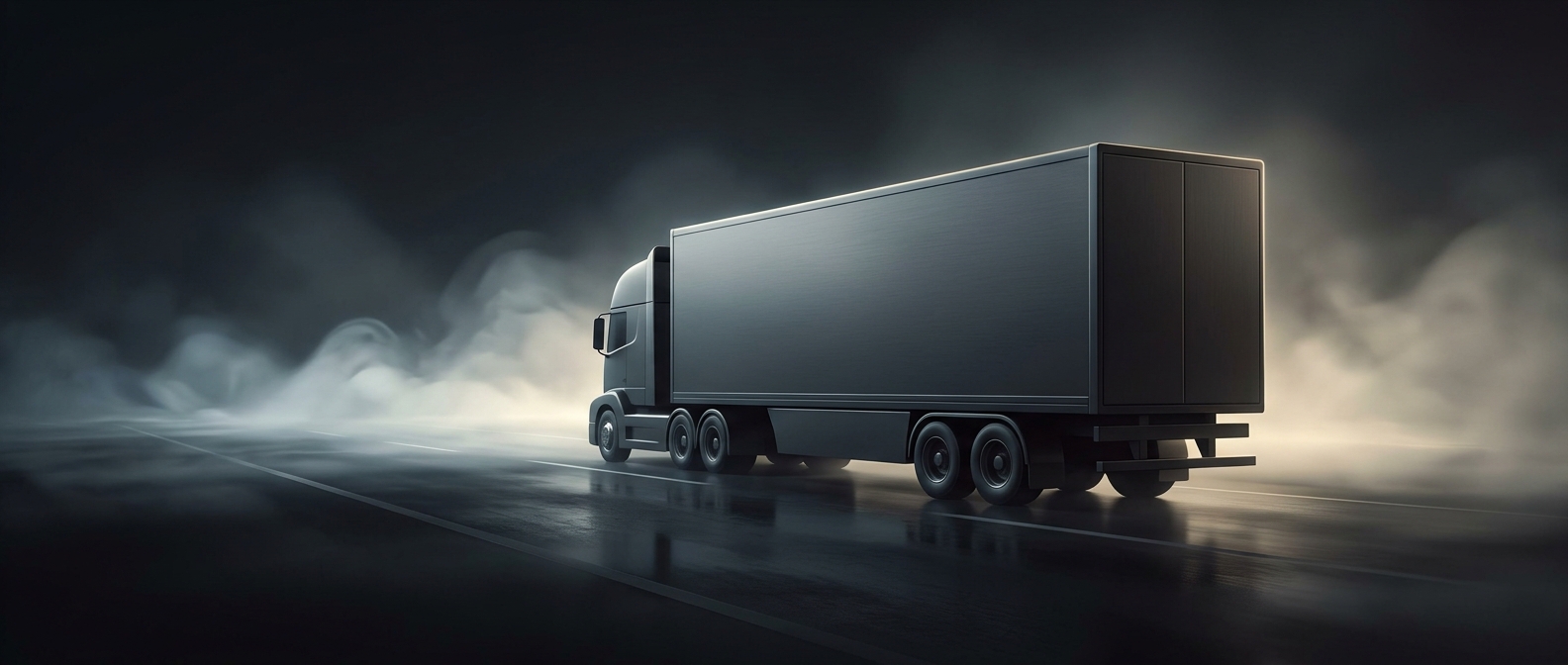
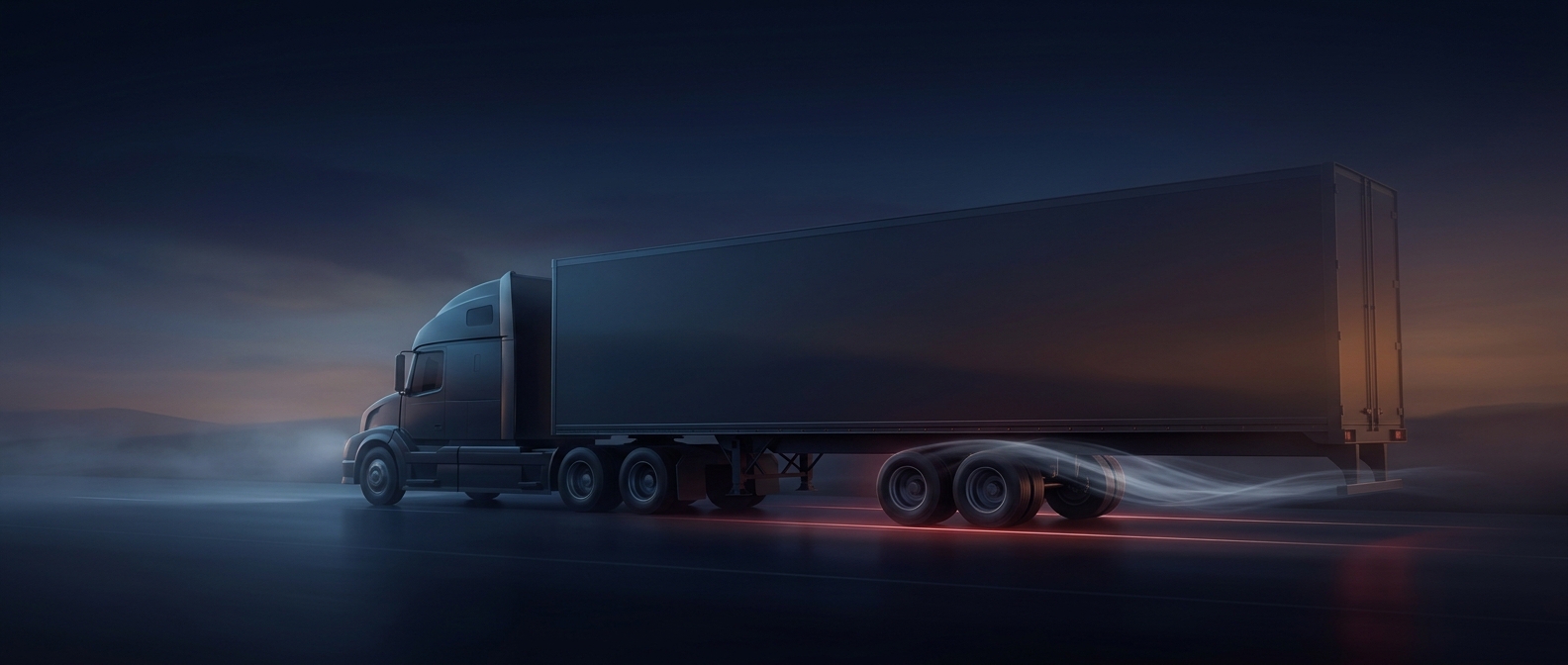
At highway speed, a truck must push air out of its way. The turbulence behind it creates a lower-pressure wake, and a following truck placed in that wake faces less air resistance. It therefore needs less energy to maintain speed. The lead truck does not get the same drafting benefit, so the gains fall mainly to the vehicles behind it.
The effect depends on conditions: speed, spacing, weather, and the trucks’ shape all influence how much aerodynamic drag is reduced. Close spacing can also be harder to maintain in ordinary traffic, where cars may cut into the convoy or road conditions may change.
The road sets the limits
Platooning works best when vehicles can hold a steady pace and remain in communication. If a truck needs to leave the line, traffic interrupts the formation, or the link is unavailable, the convoy has to give up its tight spacing and operate more like separate trucks. The engineering tradeoff is clear: the smaller the gap, the greater the potential drafting benefit—and the more precisely the vehicles must coordinate.