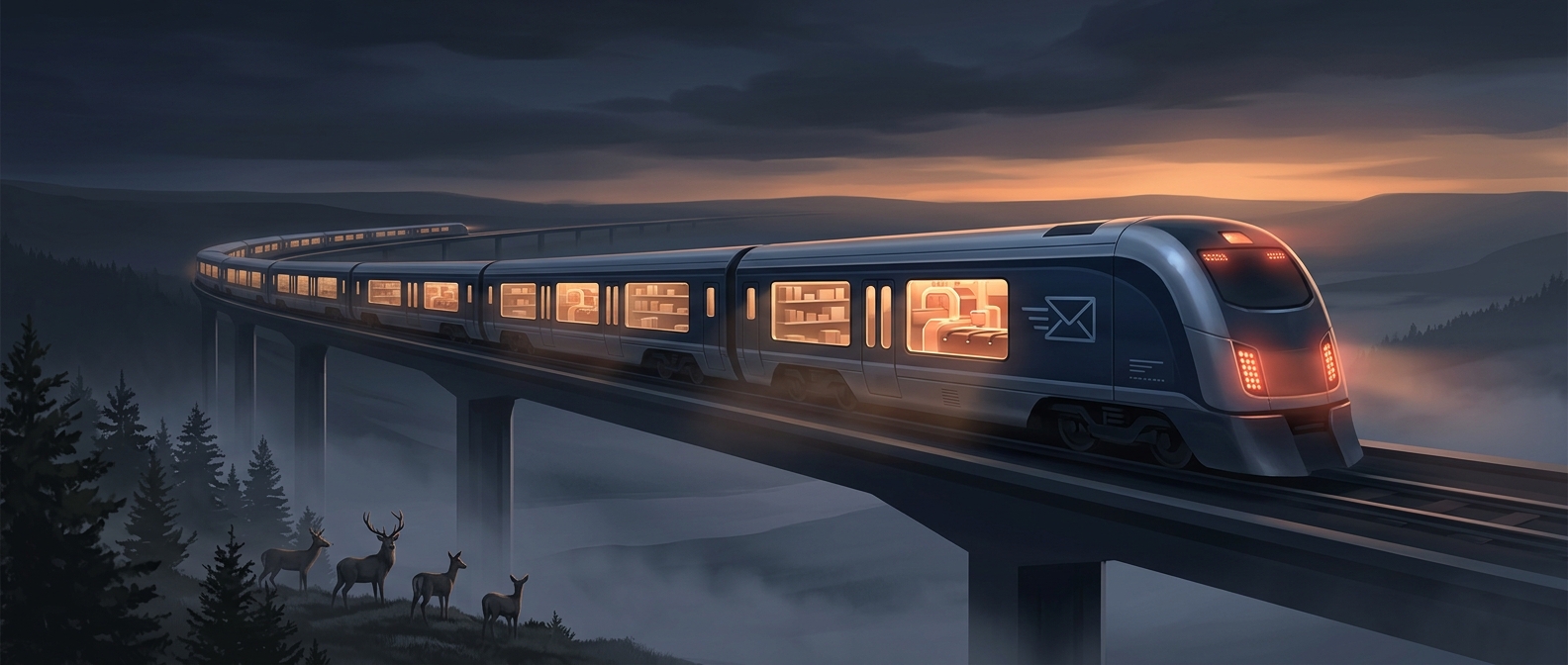
A railway built around the shape of the job
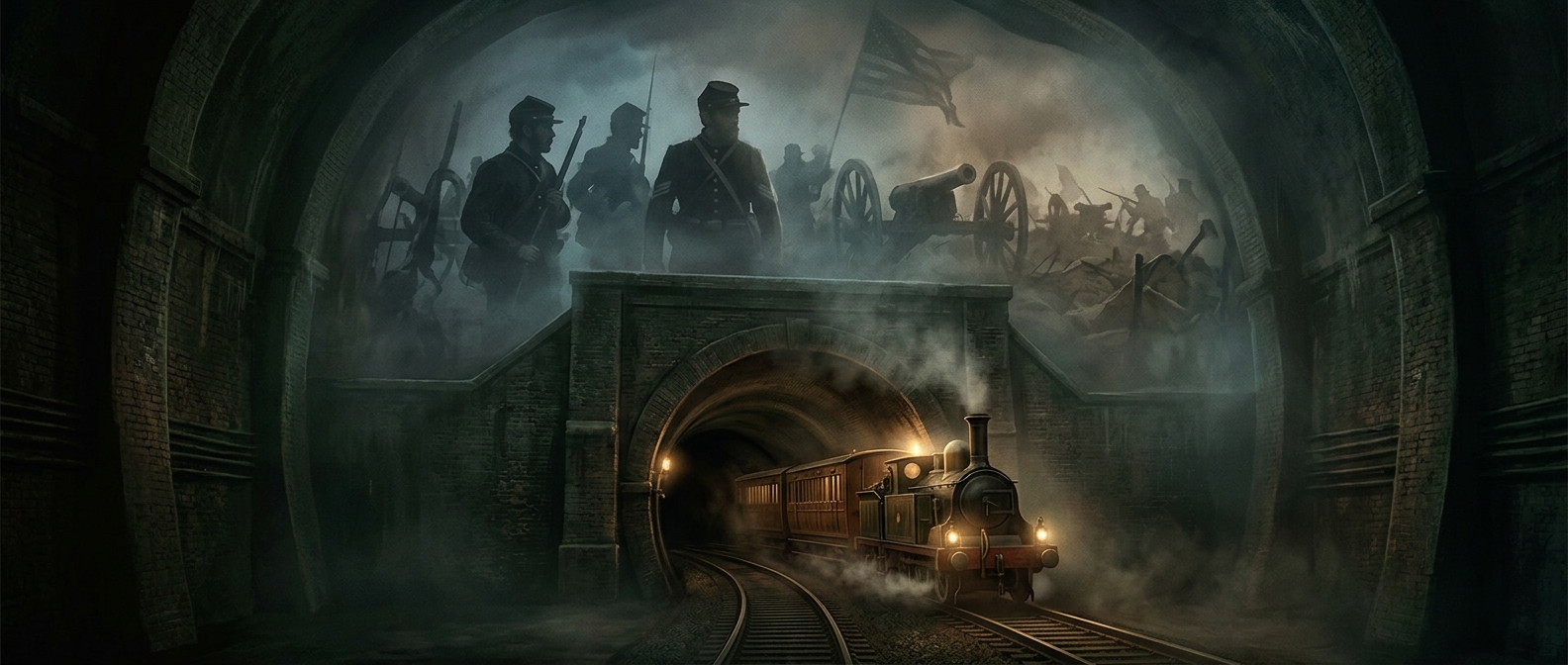
A mail train does not need the flexibility of a road vehicle. Letters can be gathered at set locations, loaded into small cars, and carried along a permanent route. That makes a tunnel useful: it gives the service a protected corridor beneath streets where ordinary traffic cannot block the track.
The route’s predictability also makes automation practical. Trackside controls can guide cars along the rails and coordinate their movement, while the system’s fixed path removes many decisions a human driver would face on a changing road. Automation does not make the railway independent of people; workers still have to handle the mail and keep the equipment and route usable.
Speed comes from avoiding the street
On the surface, a delivery vehicle shares space with cars, pedestrians, intersections, and changing traffic. Underground, the mail cars can travel on their own track. The benefit is not that letters need a faster ride than commuters; it is that their journey between sorting or transfer points can be separated from road delays.
That separation comes with a tradeoff. A tunnel serves only the places connected to it, so mail still has to be brought to the railway and taken away from it at its endpoints. The system is most useful as one link in a larger delivery chain—not as a replacement for the people and vehicles that carry letters the rest of the way. By moving one leg below the traffic, it turns a crowded street journey into a scheduled track journey.