How a train’s motion can make sleep easier
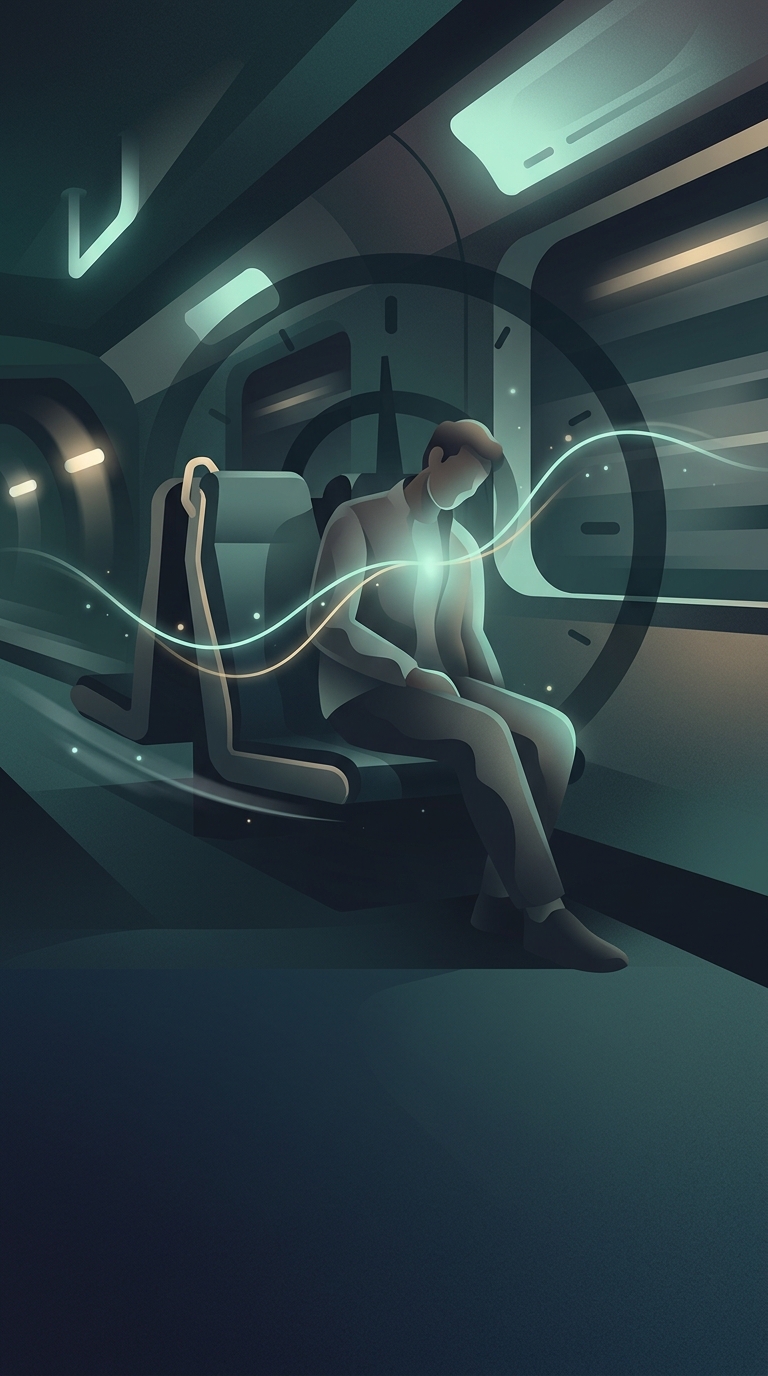
The movement stimulates the vestibular system—the inner-ear network that senses motion and helps the brain keep track of balance. On a train, repeated swaying and vibration provide a steady stream of similar sensations. For some people, that rhythmic input can feel calming, much like being rocked, and make it easier to drift off.
Why noise and stress may not keep someone awake
A loud carriage is not necessarily a demanding one. Once a passenger has settled into a seat, the sound and motion can become predictable background sensations rather than signals that require a response. With little to do and few changes to attend to, the brain may let its vigilance drop.
Stress can make sleep harder, but it does not cancel the body’s need for it. After a short night or a tiring day, the pressure to sleep may be strong enough that a monotonous ride tips someone into sleep despite noise or worry. The train is not acting like a sedative; its repetitive movement can simply help create conditions in which sleep comes more readily.
A soothing effect, not a guarantee
The response varies: the same bumps that lull one passenger may make another uncomfortable or nauseated. But when the motion is gentle and regular, a commuter train can supply a kind of continuous rocking—an unexpected cue for the brain to stop monitoring every passing sound and start resting.