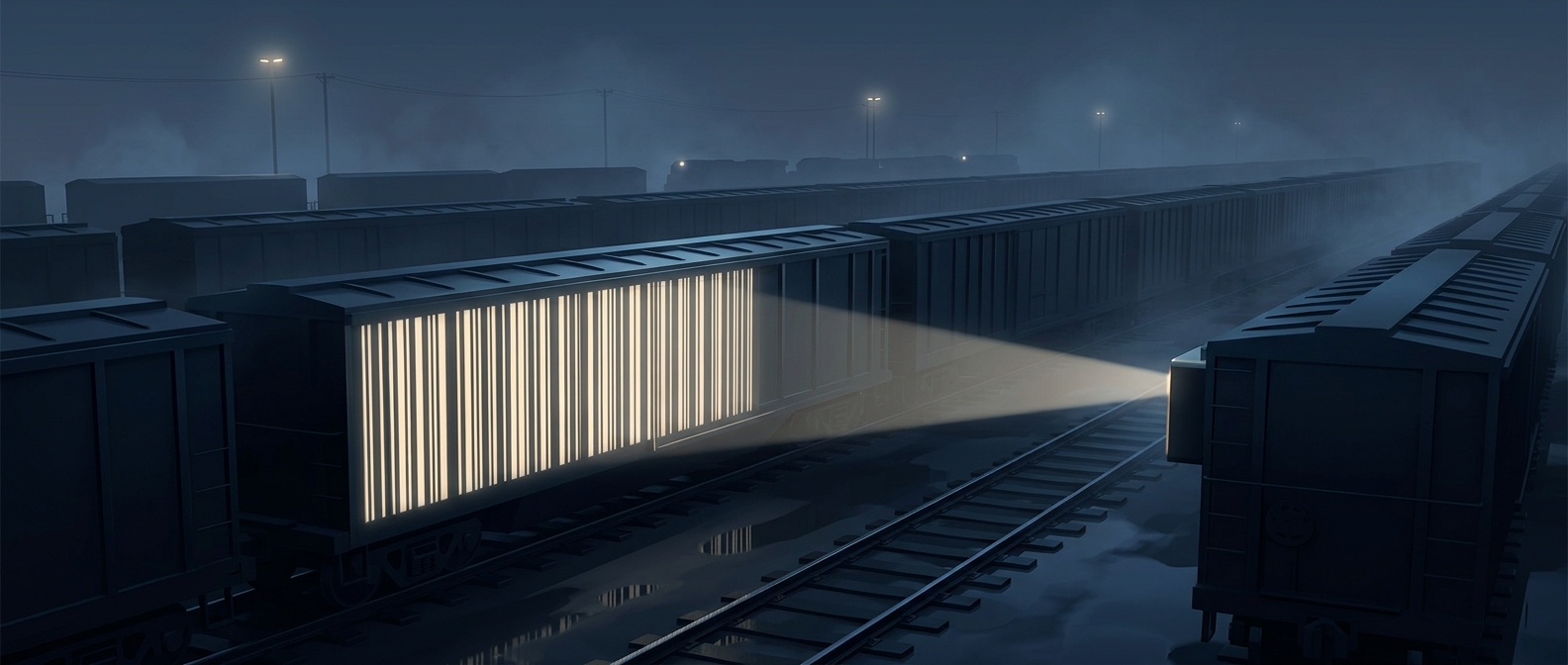
A moving label for a complicated network
A freight car can travel across several railroads, far from the company that owns it. To route it correctly and know where it was, railways needed a way to identify cars without stopping each one for someone to read its number. The colored optical system known as KarTrak was an attempt to make that identification automatic.
Each car carried a panel of reflective colored stripes encoding its identity. As the car passed a scanner beside the track, the device shone light on the panel and measured the colors reflected back. In principle, the scanner could translate that pattern into a car number quickly enough to keep up with moving traffic.
Why the color code was a tradeoff
KarTrak was not simply a barcode printed in different colors. Its designers used several colors to pack identifying information into a compact pattern, but that also made reliable reading depend on the scanner distinguishing those colors correctly. Dirt, wear, and changes in lighting could interfere with the signal; a panel that looked recognizable to a person might still produce a poor machine reading.
That mattered because rail equipment works outdoors and is handled roughly. A system useful across a network had to keep working on cars in different conditions, not just on a clean test track. When a scanner failed to read a car, the railway still needed another way to identify it, limiting the benefit of automation.
From experiment to a lasting idea
The system showed that trackside equipment could read a vehicle’s identity as it passed, turning a visual mark into data for railway operations. Its practical difficulties helped make clear that a successful automatic identification system needed markings and readers that could tolerate real-world wear and contamination.
The underlying goal—recognize a vehicle without stopping it—outlasted the colored panels. Railways later pursued other automatic identification approaches, including radio tags that communicate with readers. KarTrak’s legacy is less the particular pattern than the operational problem it tried to solve: keeping track of a moving car across a network too large for manual checks at every handoff.