A canal bed became a transit corridor
Cincinnati’s subway began with an unusual piece of ready-made geography: the former Miami and Erie Canal. After the canal was drained and filled, its broad, low-lying route through the city offered a practical path for a rapid-transit line. Instead of threading trains through dense streets, planners could put much of the railway underground along this corridor and connect it to the city’s expanding neighborhoods.
The plan was ambitious. The tunnels were meant to carry electric trains quickly through the center, where streetcars and road traffic competed for space. Stations and passages were built as parts of that larger system—not as isolated underground rooms—so their usefulness depended on completing the route, fitting it with railway equipment, and linking it to the rest of the network.
Construction outlasted the budget
Work started in the early 1920s, but the city could not secure enough money to finish the line. Costs had risen sharply after the original financing plan was approved, and further borrowing faced resistance. The project stalled before track and trains could turn the passages into a working railway.
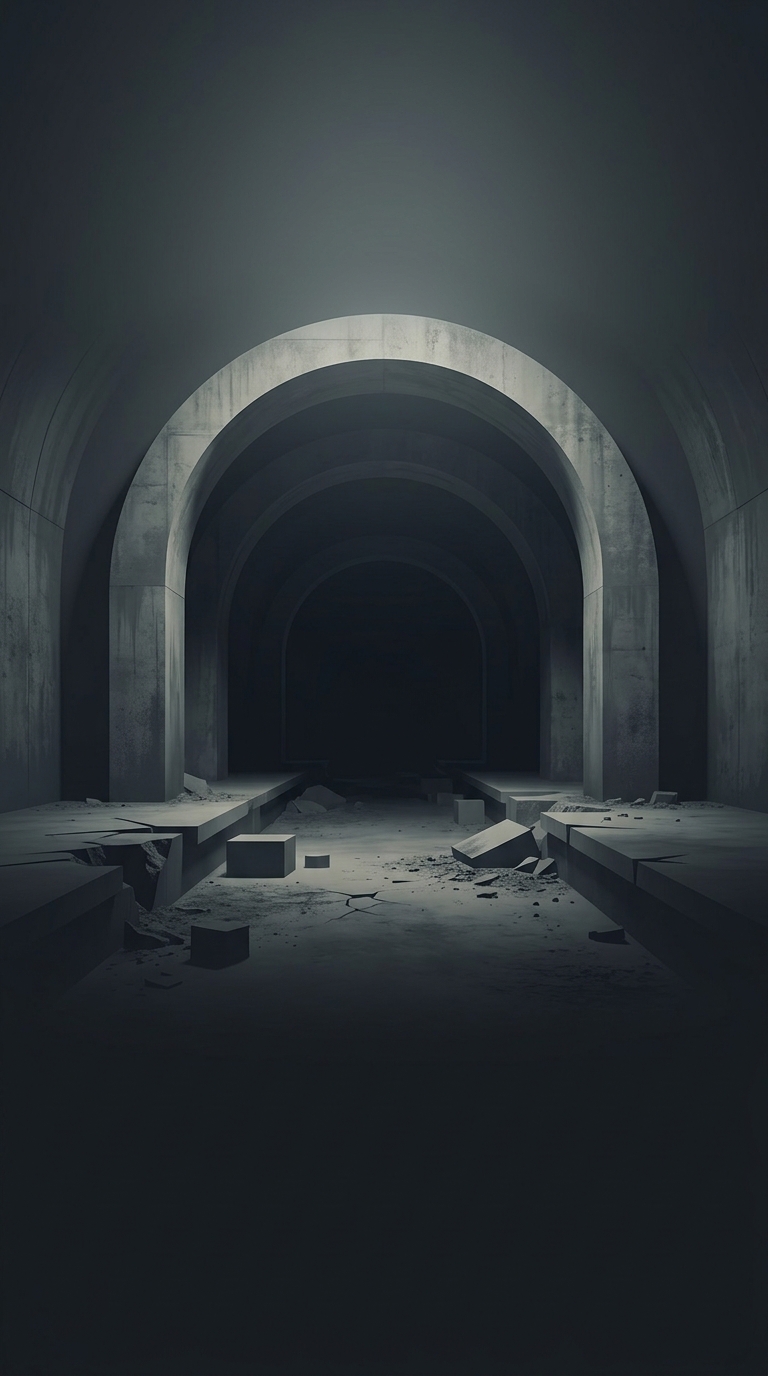
That distinction explains why the tunnels remain so striking: Cincinnati completed substantial, visible pieces of a transit system, but not the connections that would make those pieces function together. A station without rails, power, and service is not a usable stop; it is a costly shell awaiting the rest of the network.
An unfinished system beneath an active city
The abandoned works are not simply a subway that ran and later closed. They are the physical remains of a transportation decision that was started, partially built, and then left behind. Streets and neighborhoods developed above them, while the underground route never gained the trains it was designed to carry.
The result is a rare urban time capsule: infrastructure built for a city’s future, preserved underground after that future changed. Its emptiness is not evidence that the engineering was unnecessary; it shows how a transit line can fail at the point where construction meets the harder problem of paying for an entire connected system.