Why a Sledge Beats a Cart on Tundra
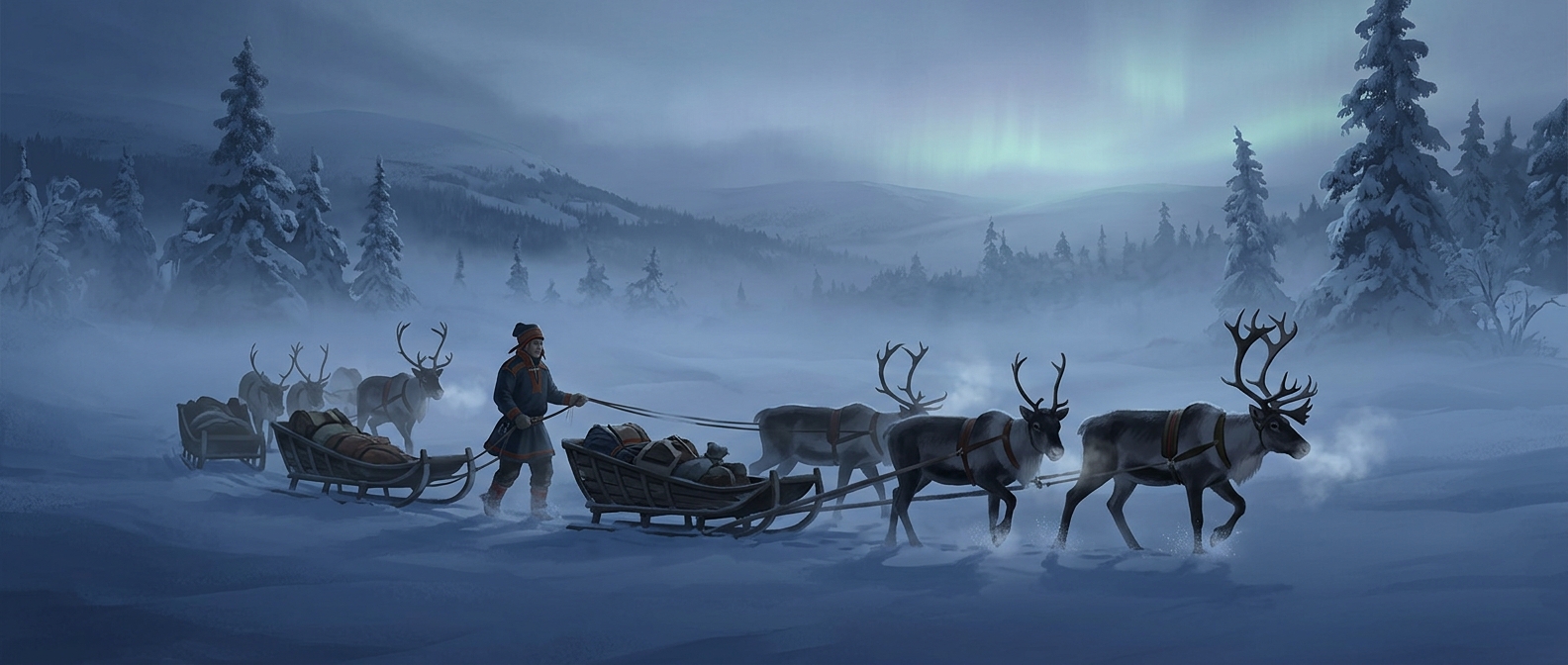
On snow-covered ground, wheels can be a liability: they press into soft drifts, catch on uneven crust, and need a firm track to roll. A sledge replaces wheels with long runners. The load still presses down, but its weight is spread along the runners, helping them skim over snow rather than punch through it. With less resistance to overcome, an animal can move cargo that would be difficult to drag directly across the ground.
Turning a Pull Into Forward Motion
A harness connects the reindeer to the sledge so the animal’s steps draw the load behind it. The runners matter as much as the pull: smooth contact limits the force needed to keep the sledge moving. Once it is sliding, maintaining motion can take less effort than starting from a standstill, so avoiding sudden stops and choosing a workable route both matter.
Reindeer suit this system because their broad, spreading hooves help them travel over snow without sinking as readily as a narrow foot would. The animal and the sledge solve different parts of the same problem: one finds footing, while the other keeps cargo from becoming a deep-dragging burden.
A Tradeoff Written Into the Landscape
A sledge is most useful when snow provides a continuous surface for its runners. Bare ground, rough patches, or deep, loose snow can make travel harder, and a heavy load increases the pull required. The design is therefore not a universal replacement for carts; it is a practical match for a landscape where wheels often lose their advantage.
That pairing makes Arctic freight possible without building a road first: the reindeer carries the effort, and the runners let the terrain itself serve as the transport surface.