A passenger had to fit the spacecraft
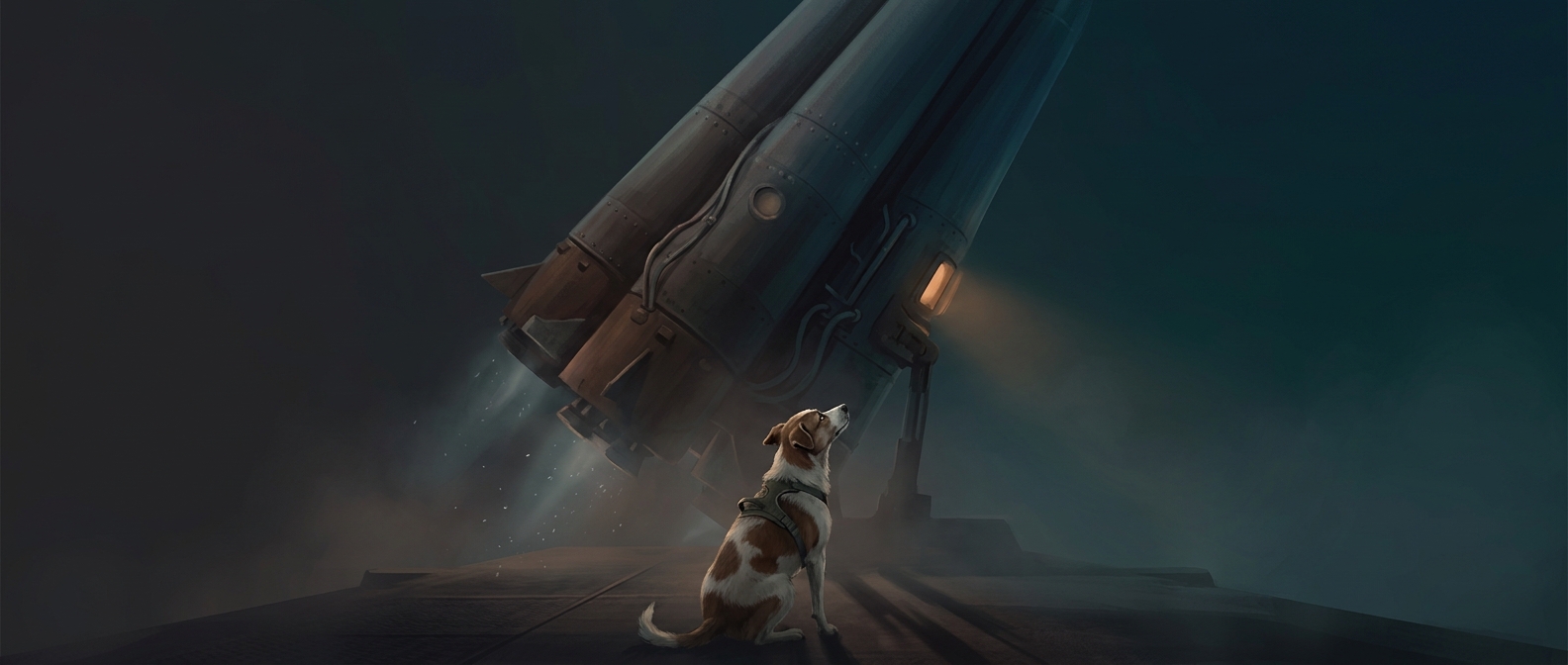
Early Soviet spacecraft were built around a tight engineering limit: they had to carry instruments, transmit useful measurements, and keep a living passenger alive inside a very small cabin. A large animal would have needed more room and more air, adding weight to a vehicle already struggling to lift its equipment into orbit. Street dogs were generally small enough to fit the available capsules.
Their size also made them practical test subjects. Engineers could monitor how a dog’s body responded to launch forces, weightlessness, and the sealed cabin—conditions that could not yet be tested safely with a human crew. The aim was not simply to prove that an animal could be launched, but to learn whether a living body could endure the trip.
Why dogs from the streets
Stray dogs were accustomed to unpredictable surroundings and could be selected for a compact build. Trainers then gradually exposed them to confinement, noise, vibration, and restricted movement. This preparation mattered because a capsule offered little opportunity to move away from discomfort or settle in a new environment.
The dogs were not chosen because they were immune to hardship. Rather, their small size made a flight possible, while training helped them tolerate some of its stresses. Measurements from their bodies could help designers judge what later spacecraft would need to protect a human passenger.
The limit of the early capsules
Testing a launch and returning its passenger safely were separate engineering problems. Early vehicles could carry a dog up without having the systems needed to bring it back alive. In the case of Laika, sent into orbit aboard Sputnik 2 in 1957, the mission had no planned recovery; she died during the flight.
That gap between what a capsule could launch and what it could recover shaped the program’s harsh progression. The dogs supplied evidence about spaceflight, but each flight also exposed how much remained to be built before a human could make the journey and come home.