How a Sheep Becomes a Seed Carrier
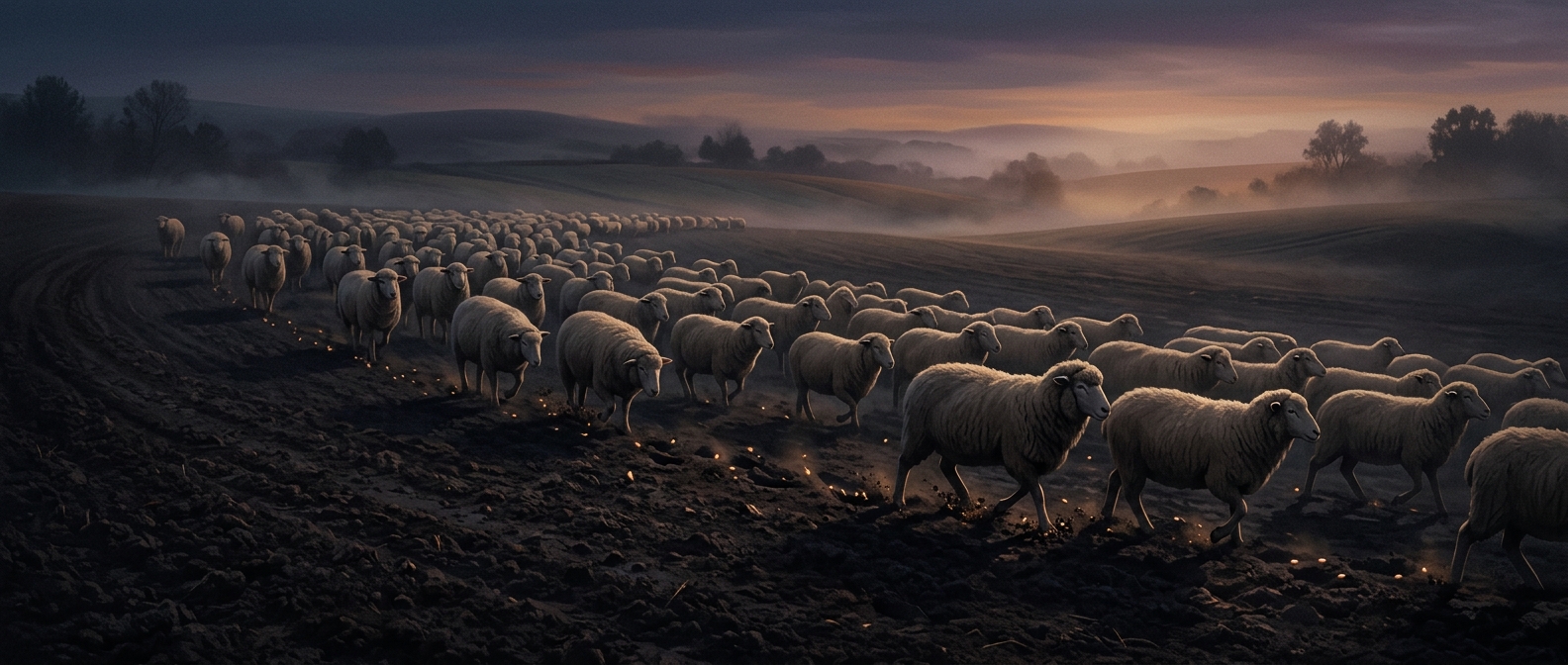
A seed does not need to pass through an animal to travel. Some seeds have hooks, bristles, or rough surfaces that catch in wool; others become embedded in wet soil clinging to a hoof. As the sheep walks, it carries this small cargo beyond the patch where the seeds grew.
That movement can matter because a seed’s chances depend partly on where it lands. A sheep crossing a fence line or moving between grazing areas can carry seeds into a new patch of ground, including places the parent plant has not reached.
From Transport to a Chance to Grow
The ride ends when a seed falls out of the fleece or the mud dries and crumbles away. Hooves can also press seeds into disturbed soil, where contact with the ground may help them stay in place. But transport is not a guarantee of growth: a seed still needs suitable conditions, and grazing can trample or eat plants as well as move their seeds.
The striking part is the combination: wool and mud provide temporary carriers, while the sheep’s ordinary route can move seeds between patches. A muddy hoof can leave behind more than a footprint—it can deliver a seed to ground where it has a chance to take root.