The tractor and implement behave like one machine
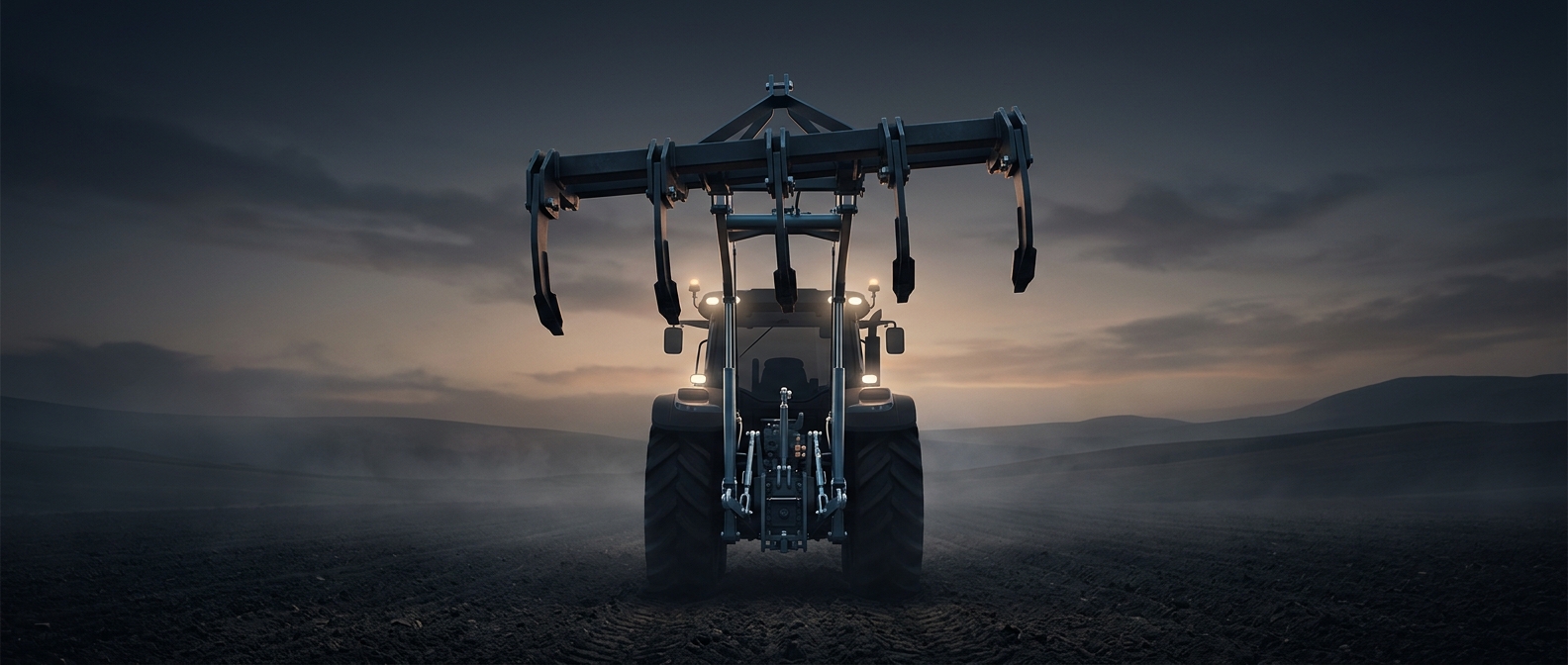
A tractor operator is not simply choosing a direction and speed. The tractor’s engine may be supplying power in several ways at once: moving the vehicle, driving a rotating power-take-off shaft, or sending pressurized oil through hydraulic hoses to move an attachment. The implement—such as a mower, baler, or plow—has its own demands, but the driver has to manage them through the tractor’s controls.
That creates a live feedback loop. If a plow meets harder ground, the tractor may need more power to keep moving. If the driver slows too much, the implement may no longer work as intended; if the tractor pushes too hard, its tires can spin instead of turning engine power into forward motion. The operator watches the ground and the implement, then adjusts speed, engine output, or hydraulic settings.
Every pass sets up the next one
Field work also makes steering a matter of alignment, not just avoiding obstacles. A pass must follow the previous one closely enough to cover the ground without leaving strips untouched or repeatedly working the same patch. At the end of a row, the driver may need to lift the implement, turn, line up for the next pass, and lower it again—while keeping the machine under control.
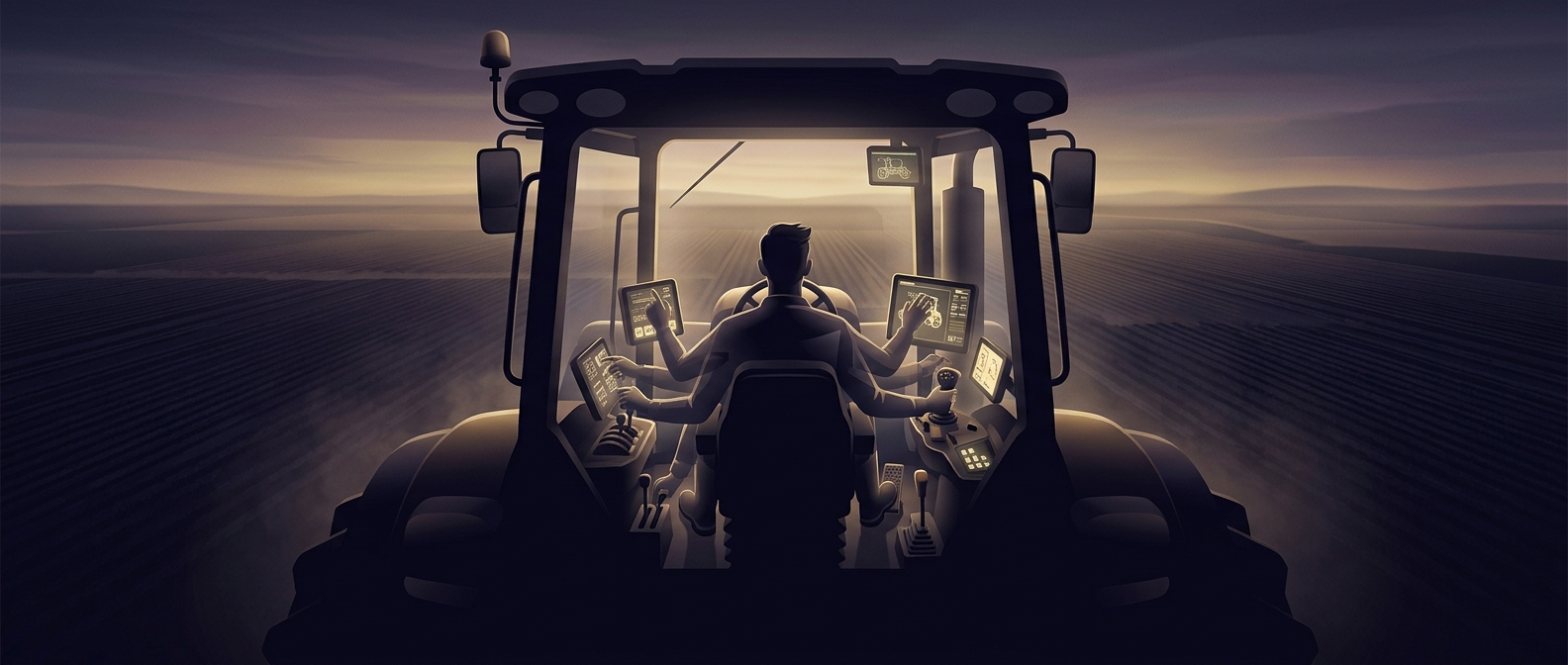
The controls vary with the tractor and attachment, but the underlying challenge is consistent: the operator must coordinate the vehicle’s motion with the work happening behind or beneath it. A small adjustment to speed or steering can change how the implement engages the soil, so the driver is constantly balancing progress, traction, and the quality of the pass.