How a Tractor Hitch Gets an Implement Over an Obstacle
A three-point hitch connects an implement—such as a mower, plow, or blade—to the tractor at three places: two lower links and one upper link. That arrangement does more than keep the attachment from falling off. It lets the tractor control the implement’s position and angle as it works.
The Lift Is a Linked Motion
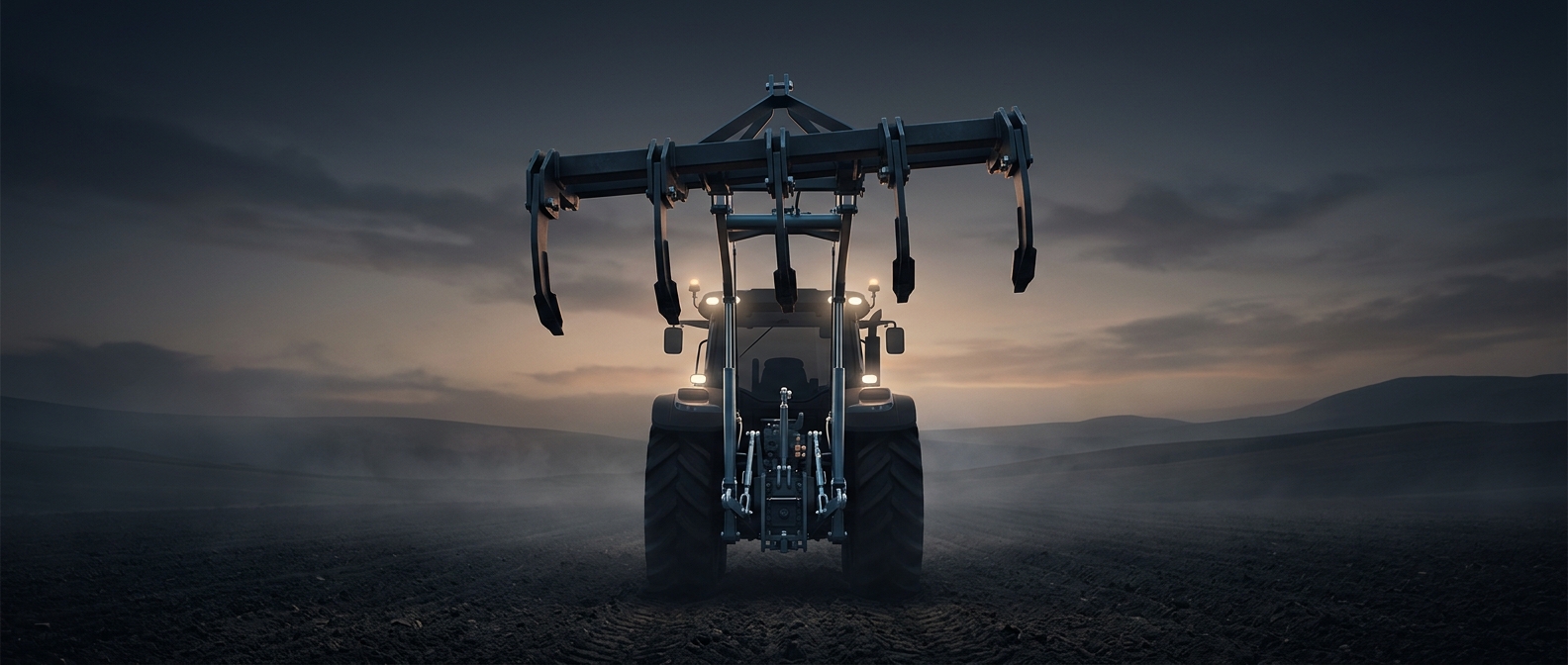
Hydraulic power moves the hitch’s lower arms upward. Because the implement is attached to both arms, it rises as a unit rather than pivoting loosely from a single point. The upper link completes the three-point connection, limiting how the implement tips and helping it stay in a controlled orientation during the lift.
When a blade or frame approaches a stump, the operator can raise the hitch so the working parts clear it. The obstacle is not pushed through or dragged beneath the implement; the tractor temporarily carries the attachment above it. Once past the stump, the operator lowers the hitch to resume work.
Why Three Attachment Points Matter
The two lower links carry and lift much of the implement’s weight, while the top link helps govern its tilt. Together, they make a practical compromise: the attachment can move up and down when needed, yet remains connected closely enough for the tractor to guide it. That controlled movement is what turns a hydraulic lift into more than a way to park equipment—it lets the operator adjust the working tool to uneven ground and obstacles without disconnecting it.
The small but important consequence is that the tractor can protect both the implement and the obstacle from a hard collision simply by lifting the whole working assembly clear.