Why a Small Airport Tug Can Move a Bomber
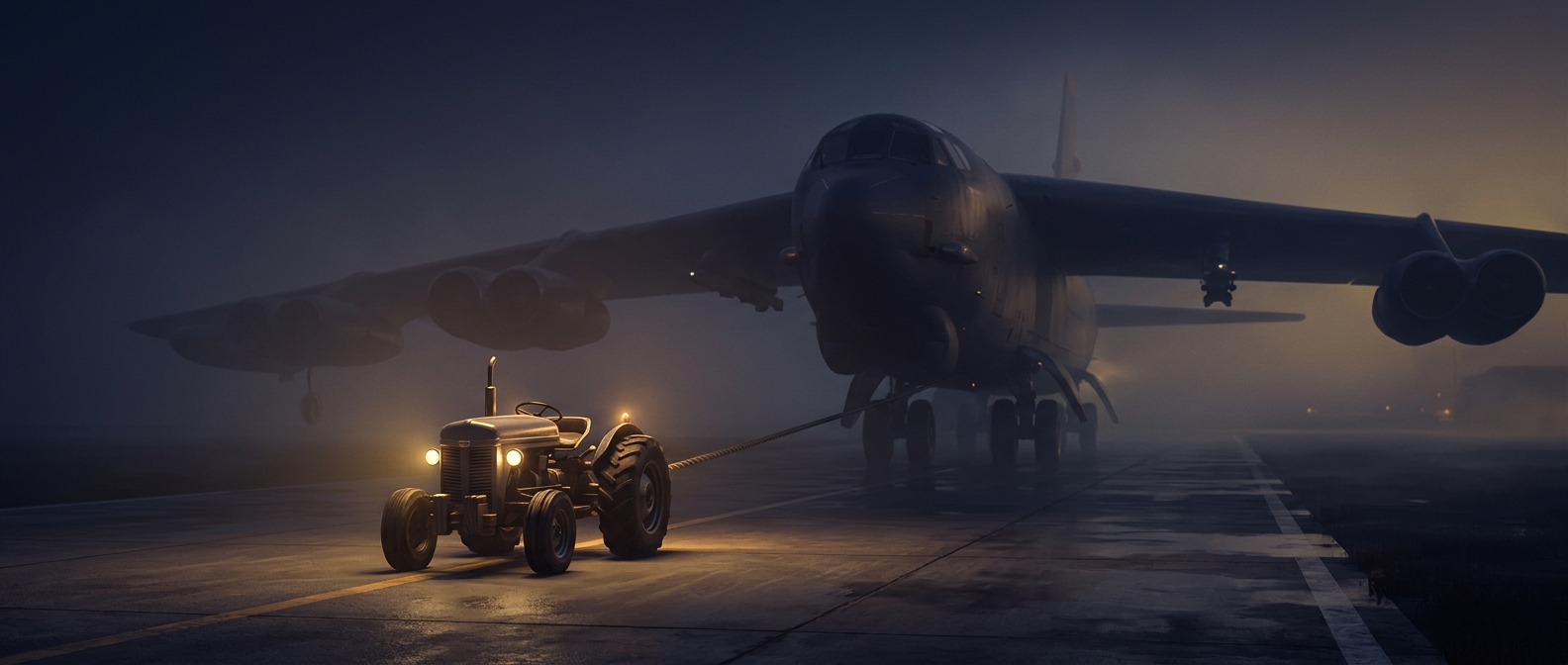
A tug does not have to lift an aircraft’s weight; it has to get its wheels rolling. Once the bomber is on a hard, level surface, its landing-gear wheels carry the load and roll with relatively little resistance. The tug’s job is to overcome that resistance, then keep the aircraft moving slowly and under control.
That calls for a different kind of power than a fast road vehicle needs. A tug’s transmission uses very low gears, trading wheel speed for force. The engine can turn the tug’s wheels slowly but forcefully, which is useful when starting a heavy aircraft from rest or nudging it into position.
Grip Is the Limit
Force at the wheels matters only if the tires can pass it to the pavement. The tug’s own weight pushes its tires down, helping them grip instead of spin. If the tug tries to deliver more force than the tire-pavement contact can support, its wheels slip; adding engine power alone will not solve that problem.
A towbar connects the tug to the aircraft’s landing gear and transfers the pull. The driver must also account for the aircraft’s steering and braking arrangements, which vary by aircraft and towing procedure. The tug moves the plane at walking pace, while people on the ground and in the cockpit help guide the maneuver.
Built for Control, Not Speed
This is why airport tugs look disproportionately stout beside the aircraft they move. Their compact size is not evidence that they are overpowering the bomber in a contest of strength. They are engineered to produce steady pulling force, maintain traction, and maneuver precisely in tight spaces.
The striking part is that the aircraft’s mass is mostly supported by its own wheels; the tug supplies the carefully controlled push that gets those wheels turning.