A bag became a routed load, not a handoff
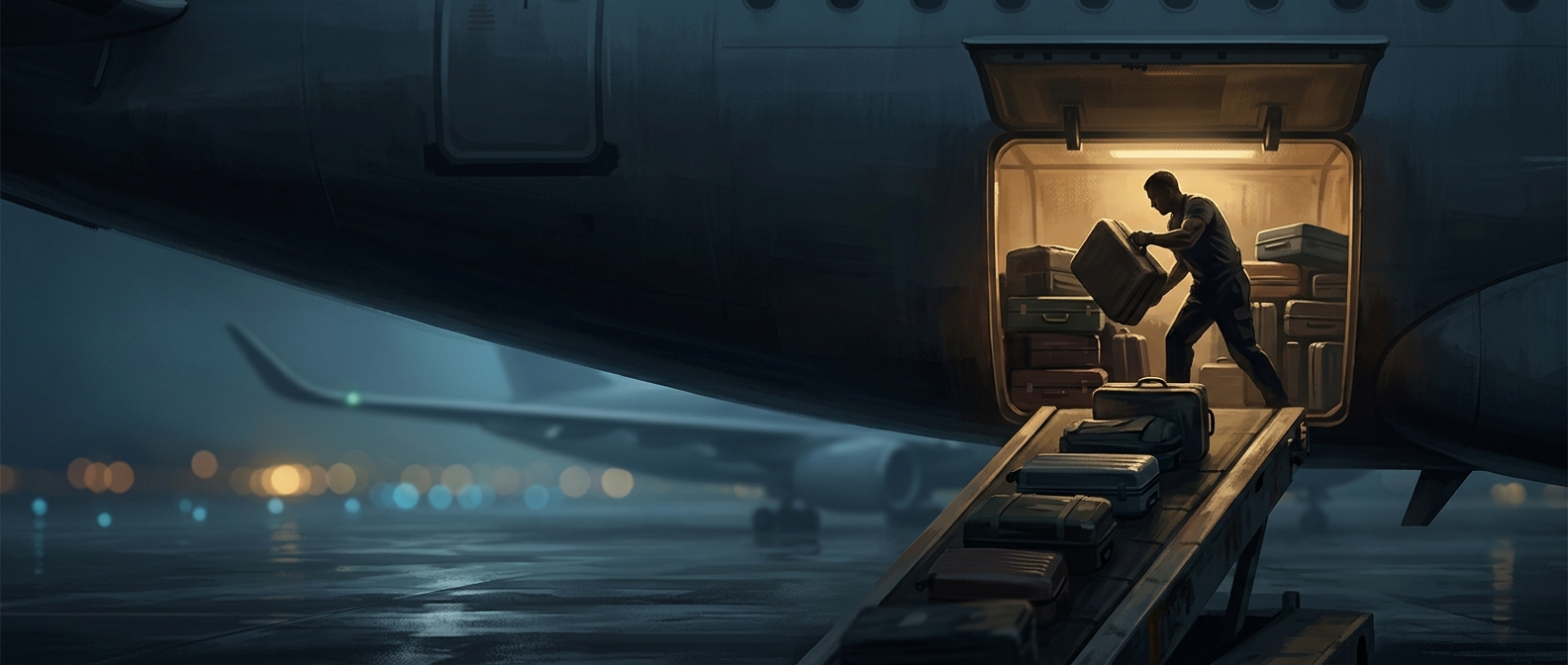
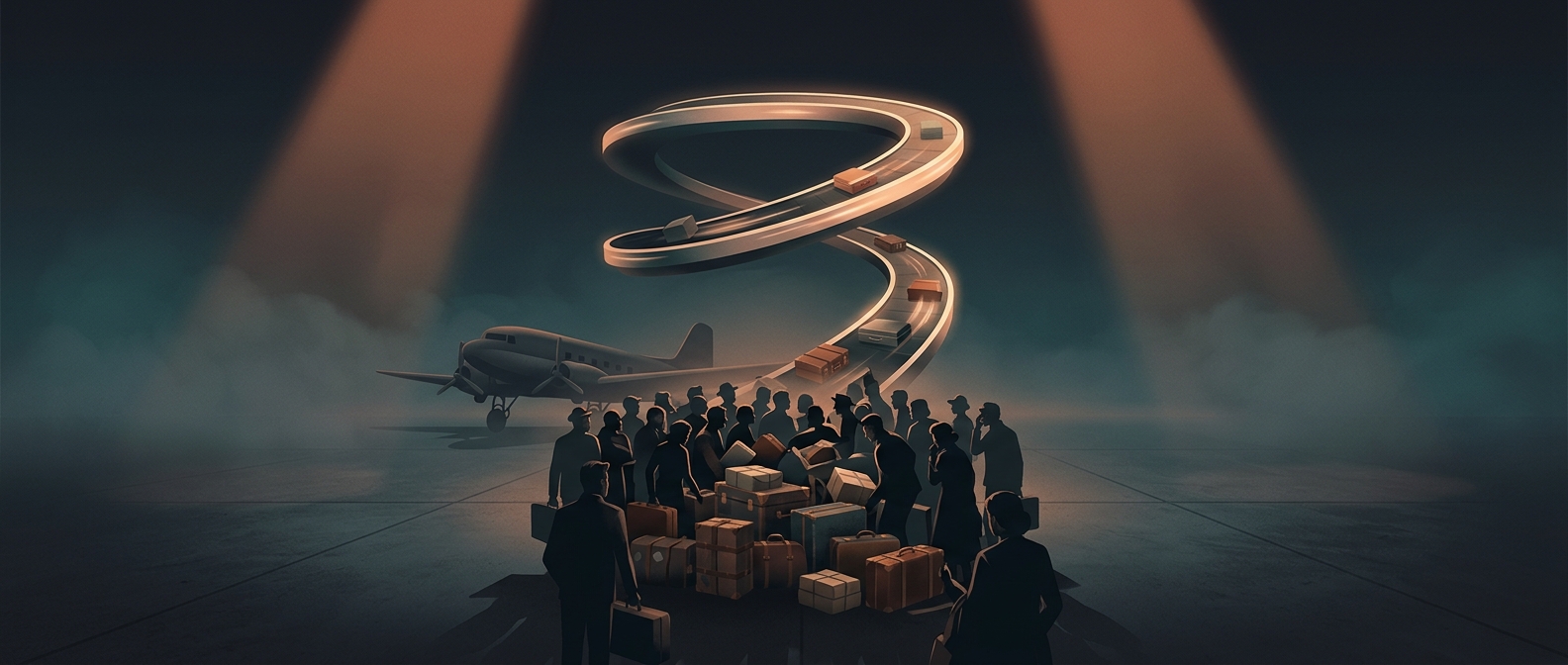
The key change was to make baggage movement a sequence of controlled transfers. A suitcase could leave the check-in area on a conveyor, reach a sorting space, and then travel by cart to the aircraft. Each stage handed it to the next part of the system instead of relying on a chain of workers passing bags across the tarmac.
That route mattered because bags for different flights had to be separated before loading. Sorting areas gave staff a place to group them by destination, while carts carried each group across the apron—the open area where aircraft are parked and serviced. The conveyor and carts did not eliminate handling; they organized it.
The route helped the whole turnaround
An aircraft cannot depart with bags still scattered across a loading area. A defined path made it easier to move baggage in batches toward the right plane and coordinate loading with other turnaround work. It also kept much of the sorting and movement away from the passenger’s view, replacing a conspicuous scramble with a process that could run behind the scenes.
The tradeoff was infrastructure: belts, sorting space, carts, and staff all had to connect reliably. A bag could still be delayed or sent the wrong way, but it now moved through identifiable stages rather than depending on improvised hand-to-hand transfers. The lasting change was not simply faster movement; it was giving baggage a route that could be managed separately from the flow of passengers.