How water protects a rocket at liftoff
A rocket engine produces more than thrust and heat: it generates intense, rapidly changing pressure waves. Those waves can bounce off the launch platform, the flame trench that directs exhaust away, and nearby structures. Reflected waves can strike the vehicle from below, shaking its body and stressing components while it is still close to the ground.
That shaking is called acoustic loading. It matters because a rocket is built to be light, and even brief vibration can strain structures or disturb sensitive equipment.
Turning a sharp blast into a less damaging roar
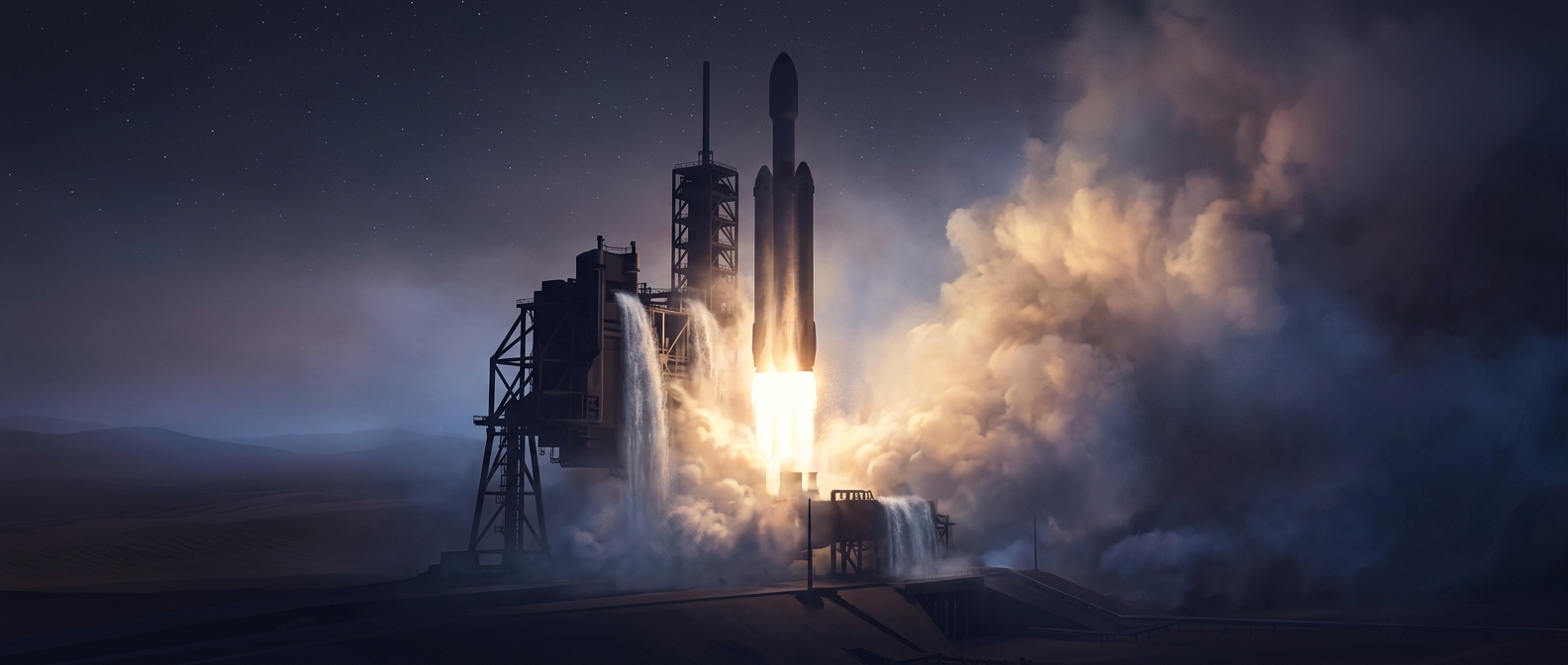
Launch systems release water across the pad around ignition and liftoff. The moving water and spray interfere with the pressure waves: droplets scatter them, and the water absorbs some of their energy. As water heats and turns to steam, it also carries energy away. The result is less intense acoustic energy reflecting back toward the rocket—not silence, but a less punishing environment.
The water also cools and protects parts of the launch structure exposed to hot exhaust. It is therefore doing two related jobs: managing heat and reducing the damaging effects of sound.
Why the pad needs so much
A fine mist would not provide the same protection as a system that can rapidly flood large areas. The deluge must put substantial water where the exhaust and reflected waves are strongest, on the same short timescale as engine startup. That makes the plumbing, storage, and outlets part of the launch system, not just ground-level firefighting equipment.
The visible torrent is a brief layer of protection between the engine’s violent start and the rocket’s delicate, lightweight structure.**