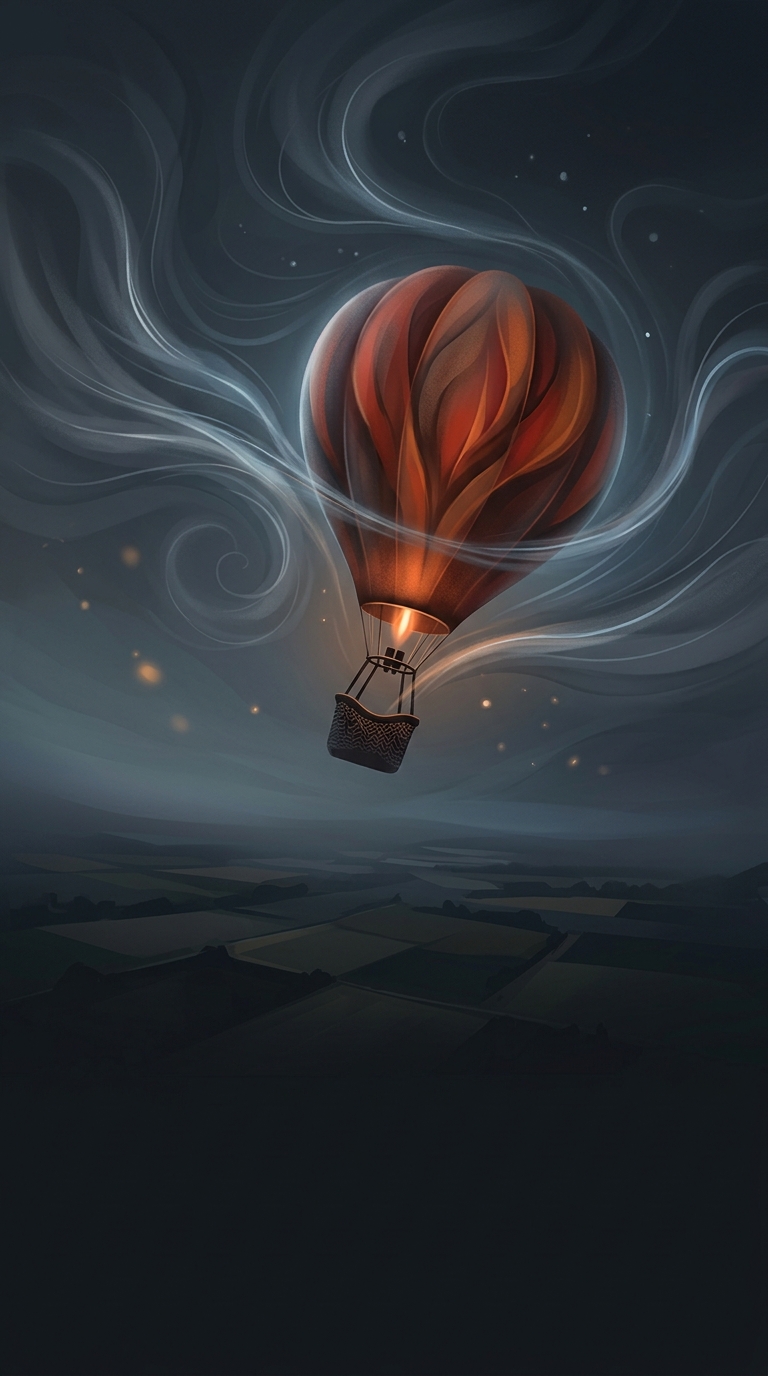
How a balloon pilot steers without a rudder
A hot-air balloon cannot turn left or right on command. Its burner heats the air inside the envelope, the large fabric balloon above the basket. Because warm air is less dense than cooler surrounding air, heating it makes the balloon rise; allowing the air to cool makes the balloon descend. The burner controls lift, not horizontal direction.
That leaves the pilot with an indirect kind of steering: choosing altitude. Wind speed and direction can differ between layers of the atmosphere. By climbing or descending, a pilot may find a current that carries the balloon toward a more useful part of the sky. The balloon travels with that air rather than cutting across it like a powered aircraft.
Why choosing a wind layer takes judgment
Altitude changes do not produce instant turns. The balloon needs time to rise or sink, and the wind at the new height may not move in the direction the pilot wants—or may be too weak or strong for the plan. Pilots therefore use wind information and what they observe during flight to decide when to heat the envelope or let it cool. Each adjustment is a tradeoff: gaining height can open a different route, but it also changes how quickly the balloon moves and where it may eventually descend.
This makes a balloon flight a sequence of route choices rather than a line the pilot can draw precisely in advance. The pilot can influence where the balloon goes, but cannot guarantee an exact path through the air.
The landing is part of the route
Because the balloon cannot power its way back toward a chosen spot, pilots plan with suitable landing areas in mind and adapt as conditions change. A field that looks reachable from one height may not be reachable from another. The practical skill is not commanding the wind; it is reading the available currents and choosing a safe course among them. The pilot decides which layer to try; the moving air supplies the horizontal ride.