Why rope tows work best on short, gentle slopes
A rope tow is a simple way to move people uphill because it does not have to carry their full weight. Riders stay on their skis or snowboard and slide along the snow while the moving rope supplies enough forward pull to overcome gravity and friction. That makes the system lighter and simpler than a chairlift, which must support and transport people in the air.
A continuous loop does the hauling
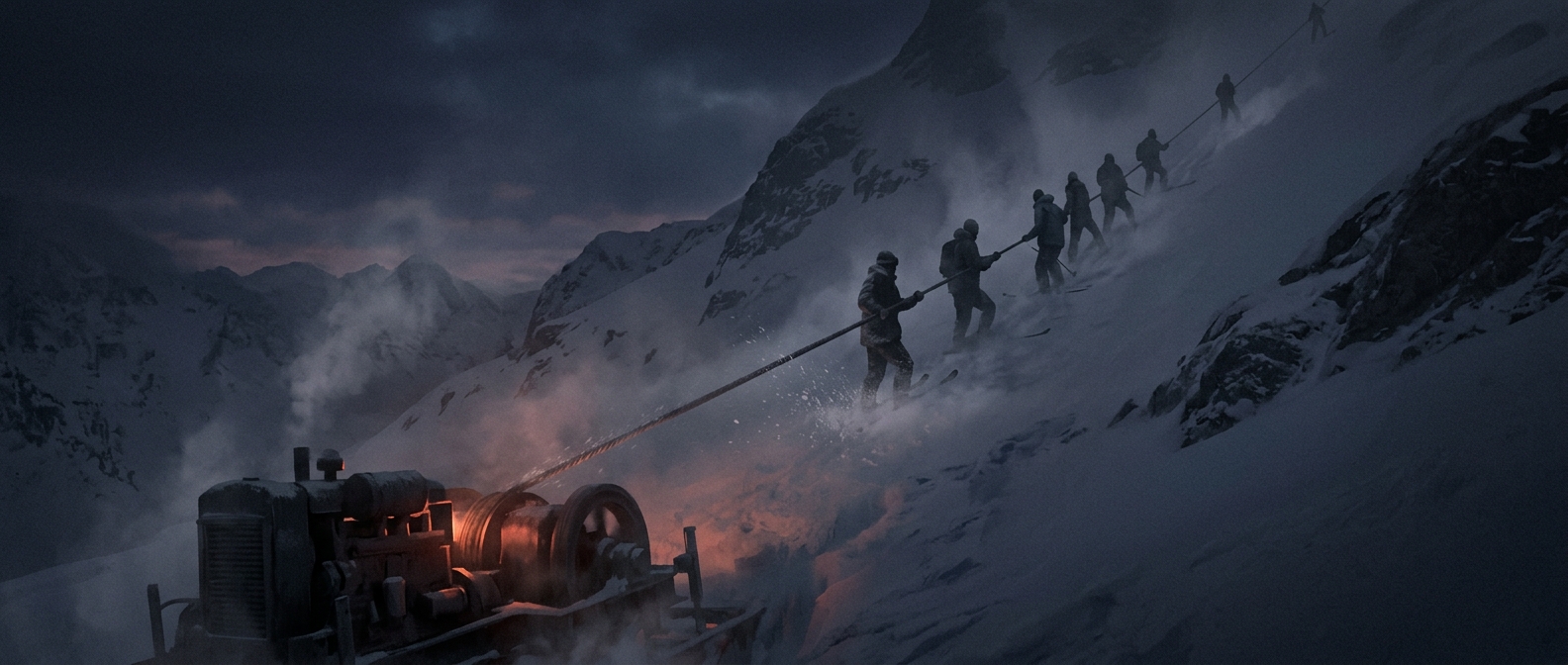
The rope runs around wheels at either end of the slope, forming a loop. A motor turns one wheel, keeping the rope moving uphill on the side riders use; the other side returns downhill to start the circuit again. Riders take hold of the rope, often with a small handle or tow device, and let it pull them while they maintain balance and steer.
The arrangement works best when the slope is not too steep and the ride is not too long. On a steeper hill, the pull can make it difficult to stay upright; on a long ride, holding on becomes tiring. The rope also needs enough space between riders to limit collisions if someone lets go or falls.
Simplicity shifts work to the rider
Because riders provide their own support and balance, a rope tow needs less elaborate equipment than a lift with seats, towers, and loading stations. The tradeoff is that users must be comfortable handling the pull, and the tow is less accessible to people who cannot stand or grip securely. Its stripped-down design is most useful where a short practice slope needs uphill transport without the cost and infrastructure of a larger lift.