How the Boat Turns Water Into a Riding Surface
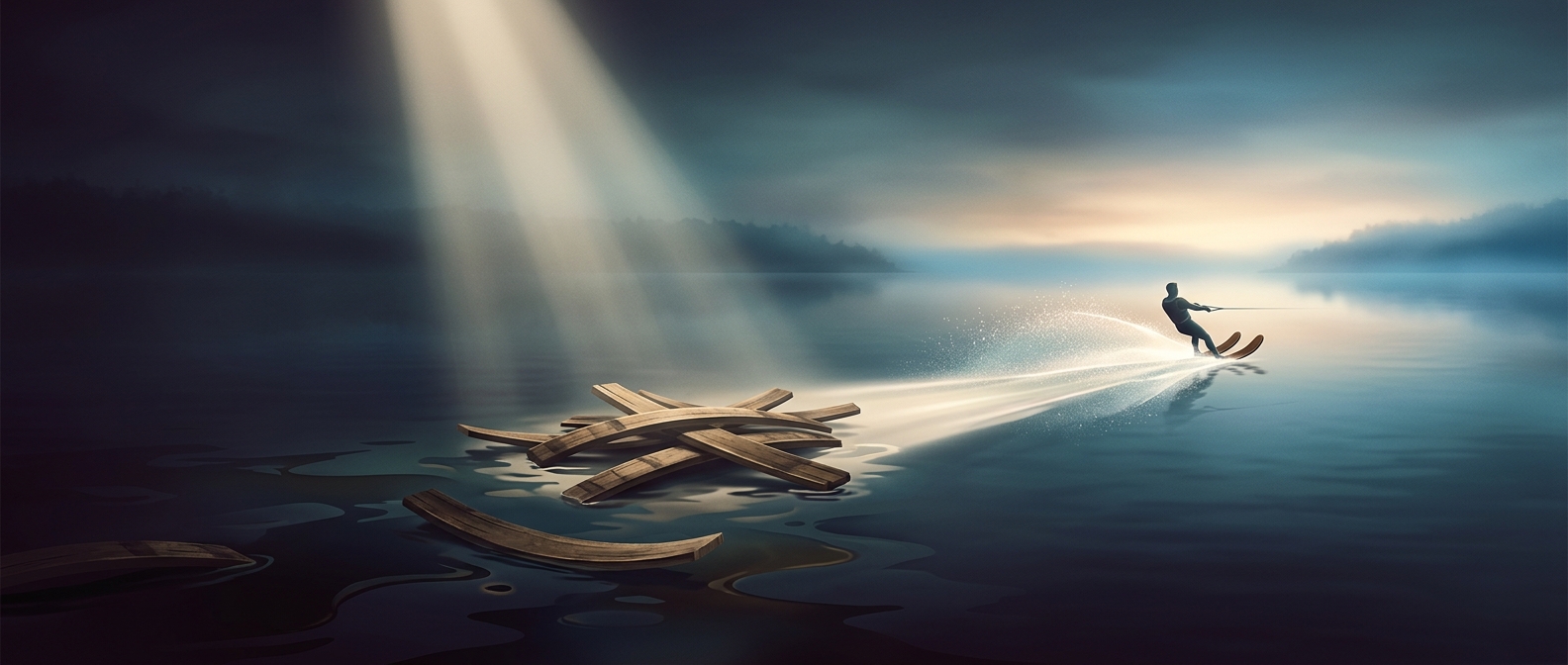
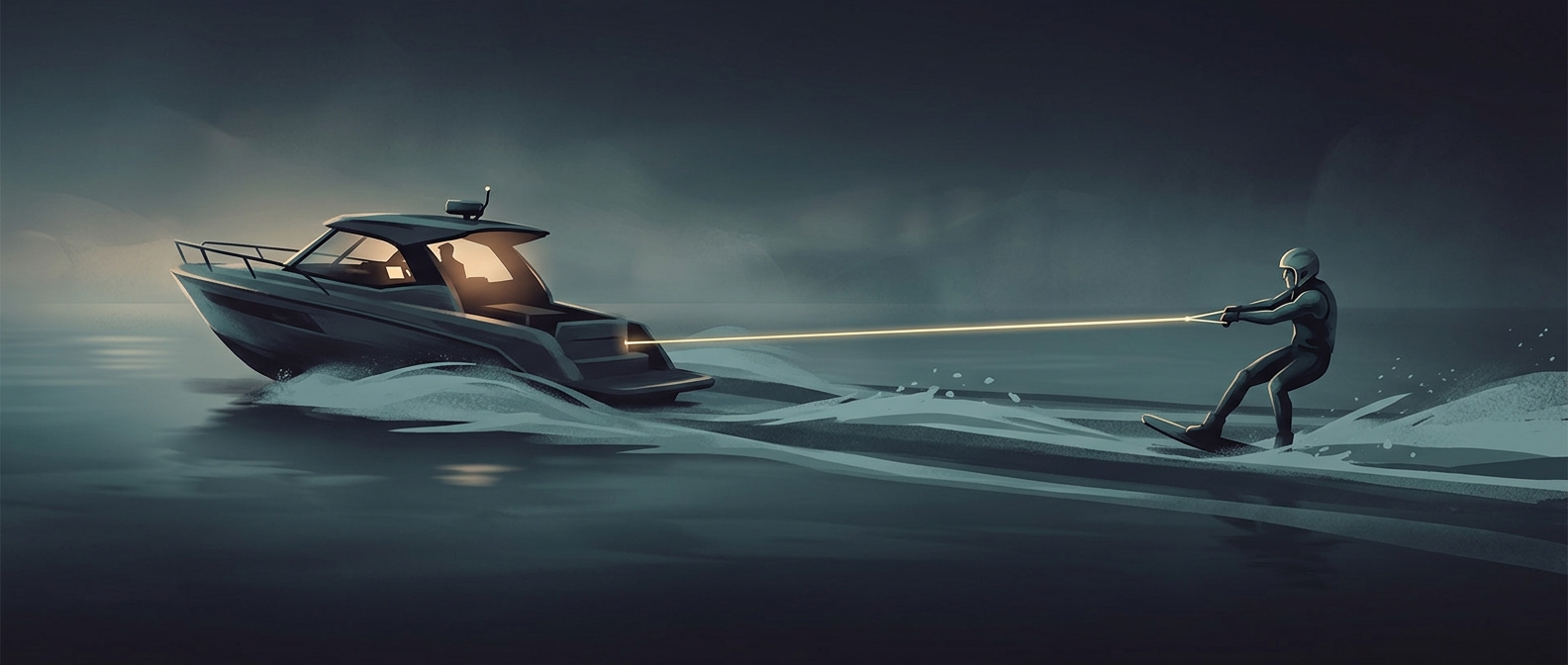
A wakeboard has no propulsion of its own, so the rider depends on a motorized watercraft to supply steady forward pull. The rope transfers that force to the rider. As the board gains speed, water pressure beneath it supports more of its weight, letting it skim on the surface rather than plow through the water—a state called planing.
The boat’s speed and the rider’s position work together. Leaning back against the rope helps keep the board’s nose from digging in; shifting weight and edging the board steer it across the boat’s path. The rider is not simply being dragged: small changes in stance alter how the board cuts through the water and how much tension the rope carries.
The Wake Is Part of the Equipment
A moving boat leaves two ridges of disturbed water behind it. Their shape depends on the boat and its speed, and a wakeboarder can approach one ridge and ride up its sloped face. That wave provides a brief change in height and direction, allowing the rider to launch into a jump. The wake is therefore not just a rough patch to cross; it is a feature the rider uses.
The boat also has to hold a consistent course and pace so the rider can build a predictable approach. The engine supplies the pull, but the rider supplies the steering and timing. Without the boat, there is no sustained tow to keep the board planing—and no moving wake to turn into a takeoff.