Early Water Slides Were Improvised—and Risky
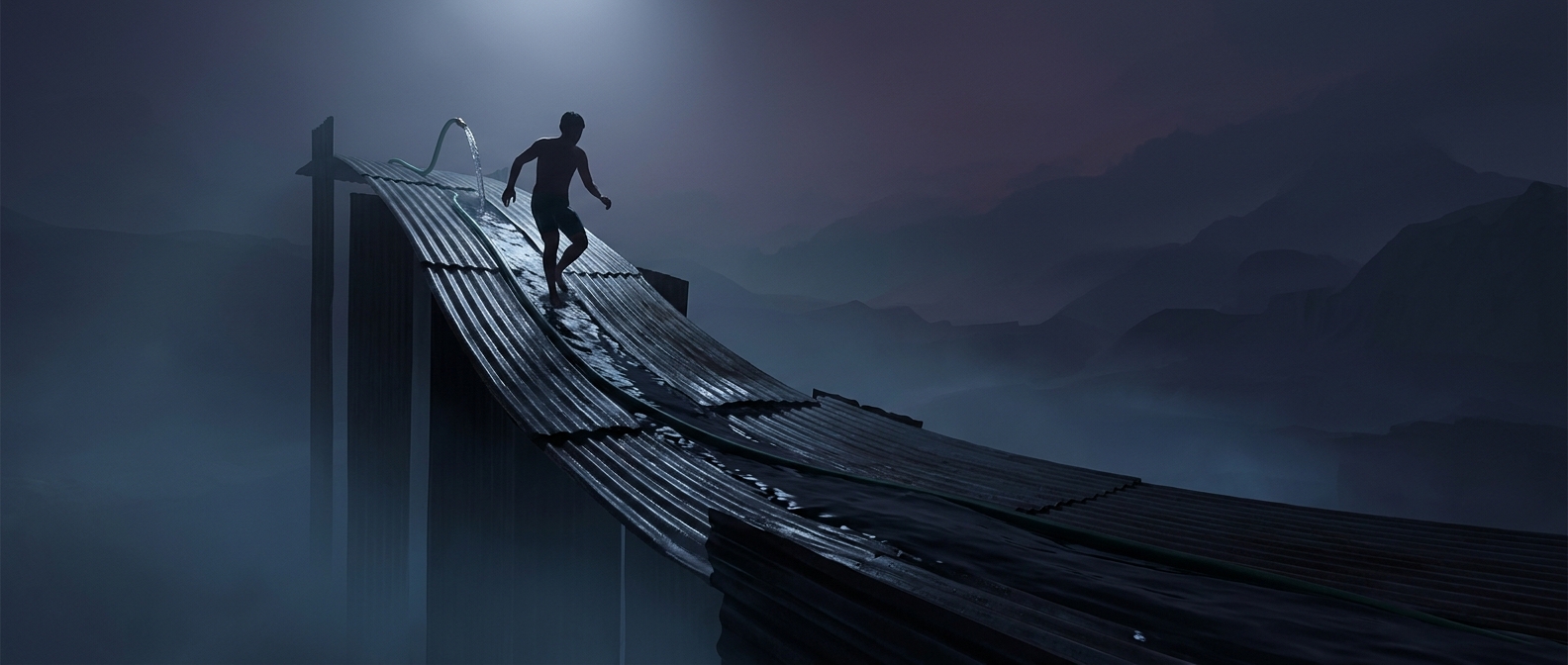
Before water slides became purpose-built attractions, early attempts used roofing material as a track, with cold water from a hose to make it slippery. The basic idea was simple: water reduces friction between a rider and the surface, letting gravity carry the rider downhill. But roofing materials were made for buildings, not bare skin. Their sharp edges or rough features could turn a fast ride into a painful one.
The Ride Needed More Than a Slope
That crude setup exposed the real engineering challenge: a slide had to be slick enough to keep riders moving while smooth and continuous enough to avoid injuring them. Designers also had to manage the ride at the bottom; a rider still carrying speed needs a safe way to slow down and stop. Water helps movement, but it does not make a track safe by itself.
The contrast between sharp roofing and a finished slide captures the shift from improvisation to designed recreation. The essential invention was not simply sending someone downhill—it was shaping the surface, water flow, and ending into one controlled ride.