One blade turns two kicks into one wave
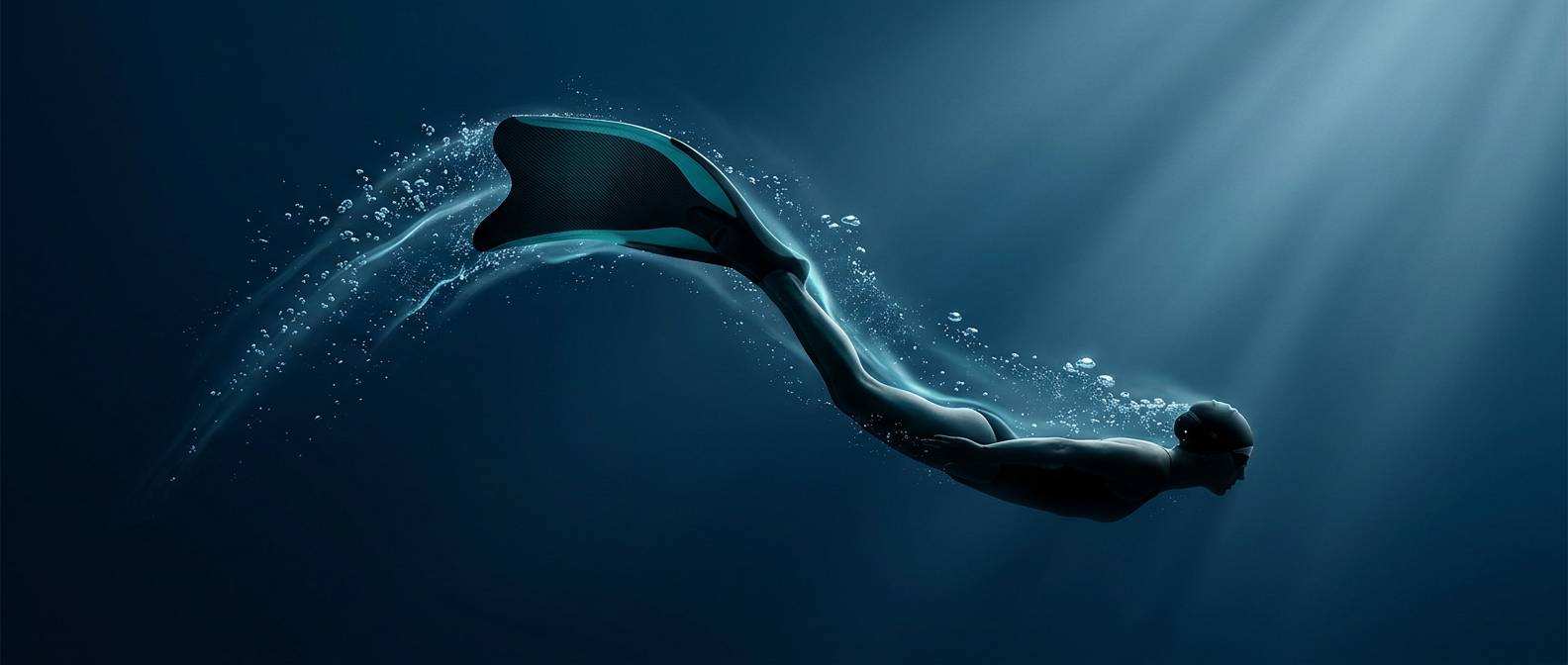
A monofin is a broad fin worn over both feet, so the legs work together instead of alternating. The swimmer bends and straightens the body in a continuous wave, starting near the hips and passing through the thighs, knees, and ankles. That motion drives the blade up and down through the water.
The blade is flexible: it bends under pressure, then springs back as the kick reverses. Its broad surface pushes a large volume of water backward, producing forward thrust. The swimmer’s feet stay close together, so the movement resembles a dolphin’s tail stroke rather than the scissoring kick used with two separate fins.
Power comes with a tradeoff
A monofin can make each kick powerful, but it also demands coordination. If the swimmer bends mainly at the knees, the blade may wobble instead of sweeping smoothly; the wave works best when the hips lead and the rest of the body follows. The fin’s resistance also makes each kick physically demanding, so a bigger blade is not automatically faster or easier to control.
That is why monofins are used in fin swimming, where the aim is to travel efficiently with a continuous undulation. They do not make a swimmer literally swim like a dolphin: the human body and fin differ from a dolphin’s flexible body and muscular tail. But by linking both feet to one blade, they make a coordinated, tail-like stroke possible—and turn a small change in footgear into a different way of moving through the water.