The hose carries the force from the water
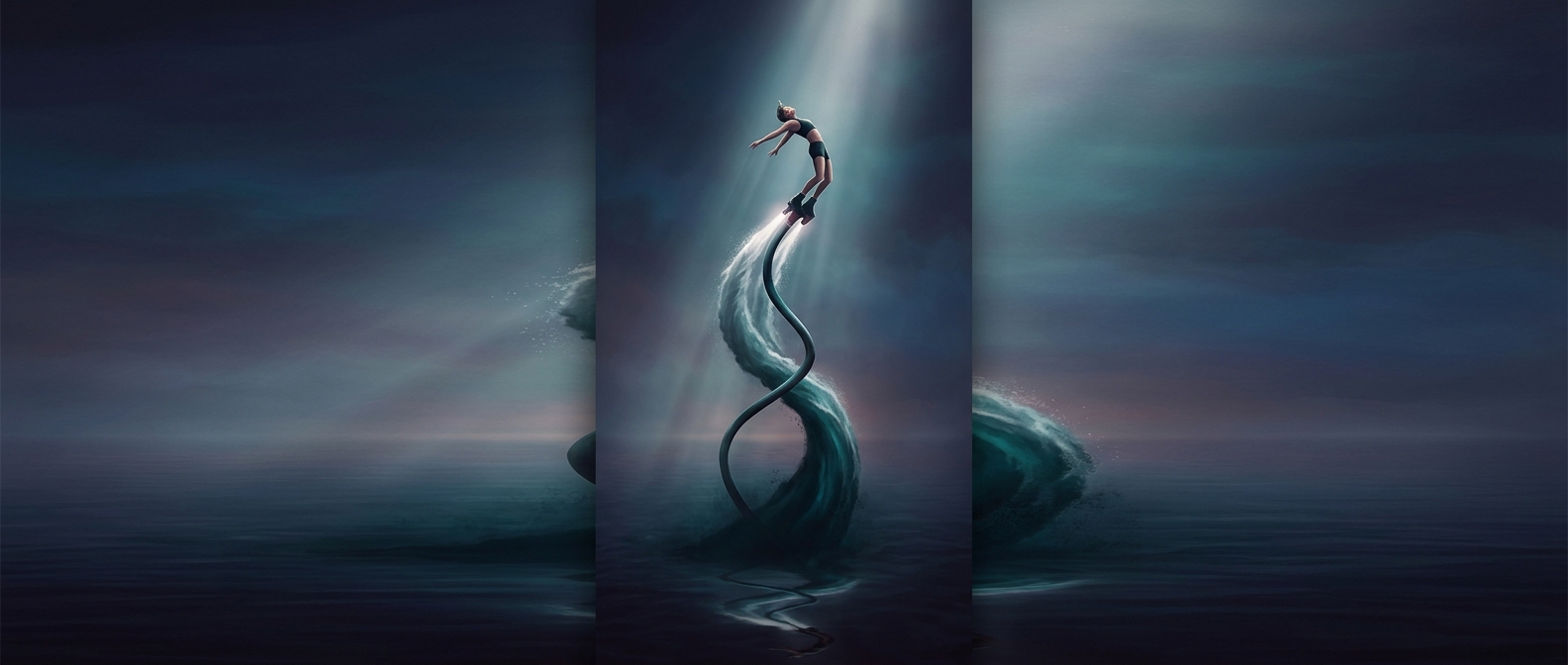
A flyboard is powered by a pump on a personal watercraft, which sends water through a flexible hose to nozzles beneath the rider’s feet. The nozzles turn that moving water downward. In response, the board is forced upward: the same action-and-reaction principle that lets a rocket rise, though here the working fluid is water supplied from nearby.
The height and steadiness of the lift depend on how much water the pump can move and how quickly it leaves the nozzles. A narrow, fast stream can produce strong thrust, but it also demands a substantial, steady supply from the pump. The hose is not merely a leash; it is the route through which the system delivers the energy that keeps the rider aloft.
Balance is part of the control system
The rider steers by shifting weight and changing the angle of the feet, which points the nozzles and redirects the thrust. Leaning too far can send the board off course; uneven pressure between the feet can tilt it. Unlike a platform resting on solid ground, a flyboard has no fixed support, so small movements can change both direction and balance.
That dependence on a nearby pump shapes the experience: the rider can rise above the water, but the board remains connected to the personal watercraft by its hose. The apparent freedom of flight is powered—and bounded—by that continuous water supply.