Lift is only the first engineering problem
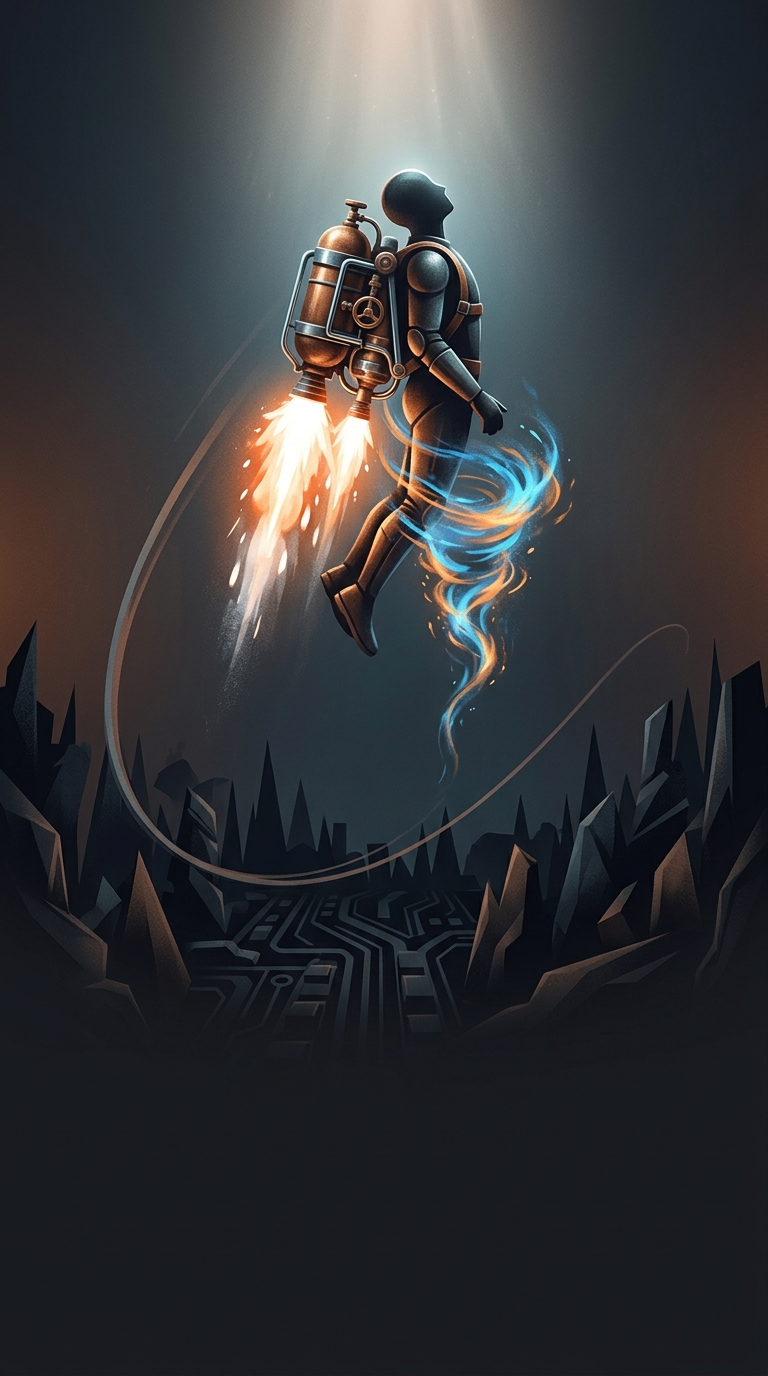
A jetpack must produce more upward force than the combined weight of the pilot, the machine, and its fuel. That creates a moving target: as fuel is used, the load gets lighter, so the pilot has to keep adjusting the thrust. Too little and the pack cannot climb; too much and it rises rapidly, leaving little room to correct near the ground.
The thrust also has to stay aligned with the pilot’s center of mass—the point around which their weight is balanced. If the force acts off to one side, it can rotate the pilot instead of simply lifting them. Designers use controls that let the pilot steer the exhaust or redirect thrust, but small changes can have large effects when the whole vehicle is strapped to a person.
Power comes with a weight penalty
The engines and their fuel must be carried along with the person they are lifting. Adding fuel can extend flight, but it also adds weight, which demands more thrust and therefore more fuel. This feedback makes a compact, human-carried aircraft difficult to keep aloft for long.
The practical result is that a jetpack’s flight is shaped less by a single burst of engine power than by a narrow balance among lift, control, and carried mass. Every extra second in the air must be paid for in fuel the pilot has to lift from the start.