Why a Standing Instructor Can See More
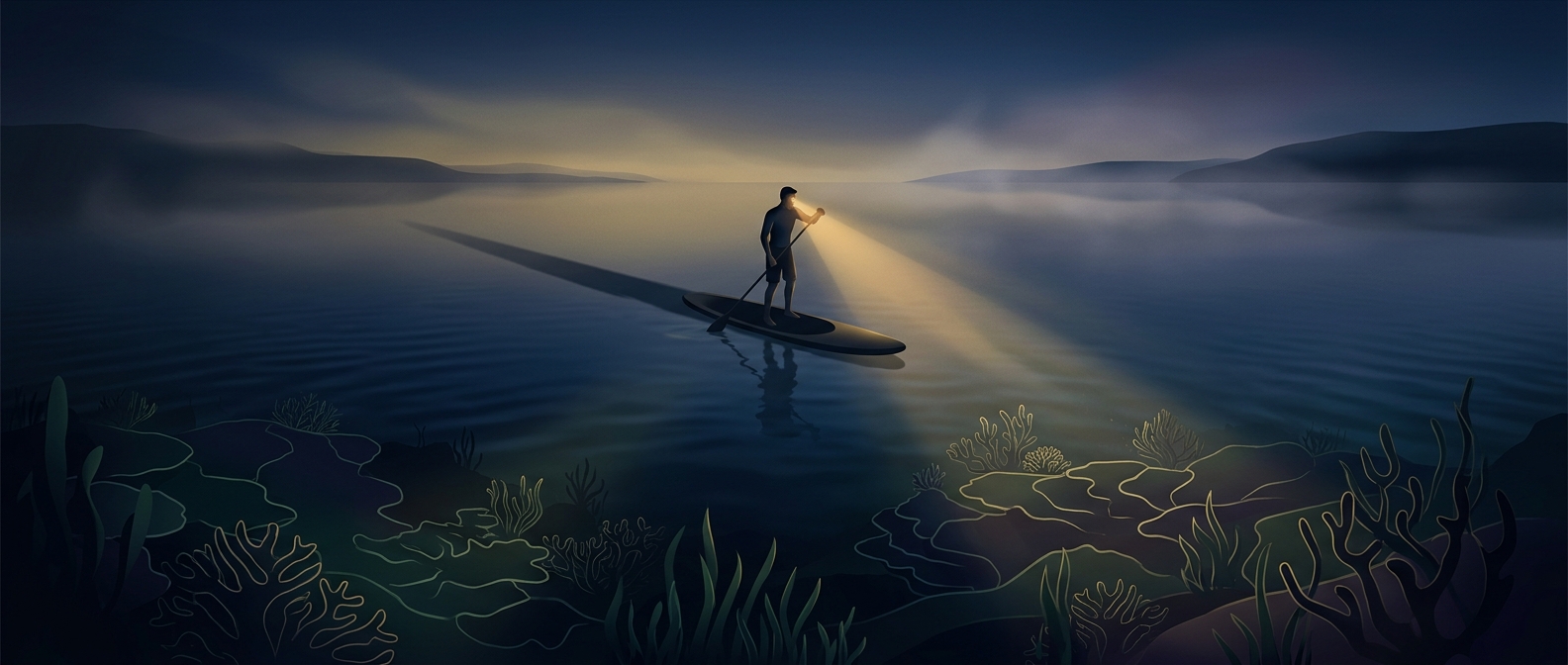
A lesson on the water is a moving group-management problem. Students drift at different speeds, turn their boards, and may stop to adjust a leash or recover a dropped paddle. From a low seat in a boat, the instructor’s view can be blocked by the water’s surface, other paddlers, or the boards themselves. Standing raises the instructor’s eyes above that clutter, making it easier to scan the group and spot a collision course or a struggling student early.
That extra height is useful only if the instructor can keep moving with the class. A paddleboard can be turned and repositioned with strokes, letting the instructor angle toward a student or pass alongside without bringing a motorized craft into the lesson. Its lack of engine noise also makes spoken directions easier to hear at close range.
A Viewpoint, Not a Guarantee
The board is not a fixed lookout. Wind, current, and boat traffic can push an instructor off course, while standing requires balance and attention of its own. The instructor still has to choose a safe position and keep checking the surroundings; elevation cannot reveal what is hidden behind a wave or around a shoreline.
The practical advantage is a better chance to notice small changes before they become problems. A student beginning to drift away or a board turning across another paddler’s path is easier to catch when the instructor can see over the group and move quietly to respond.