From banana hooks to ski seats
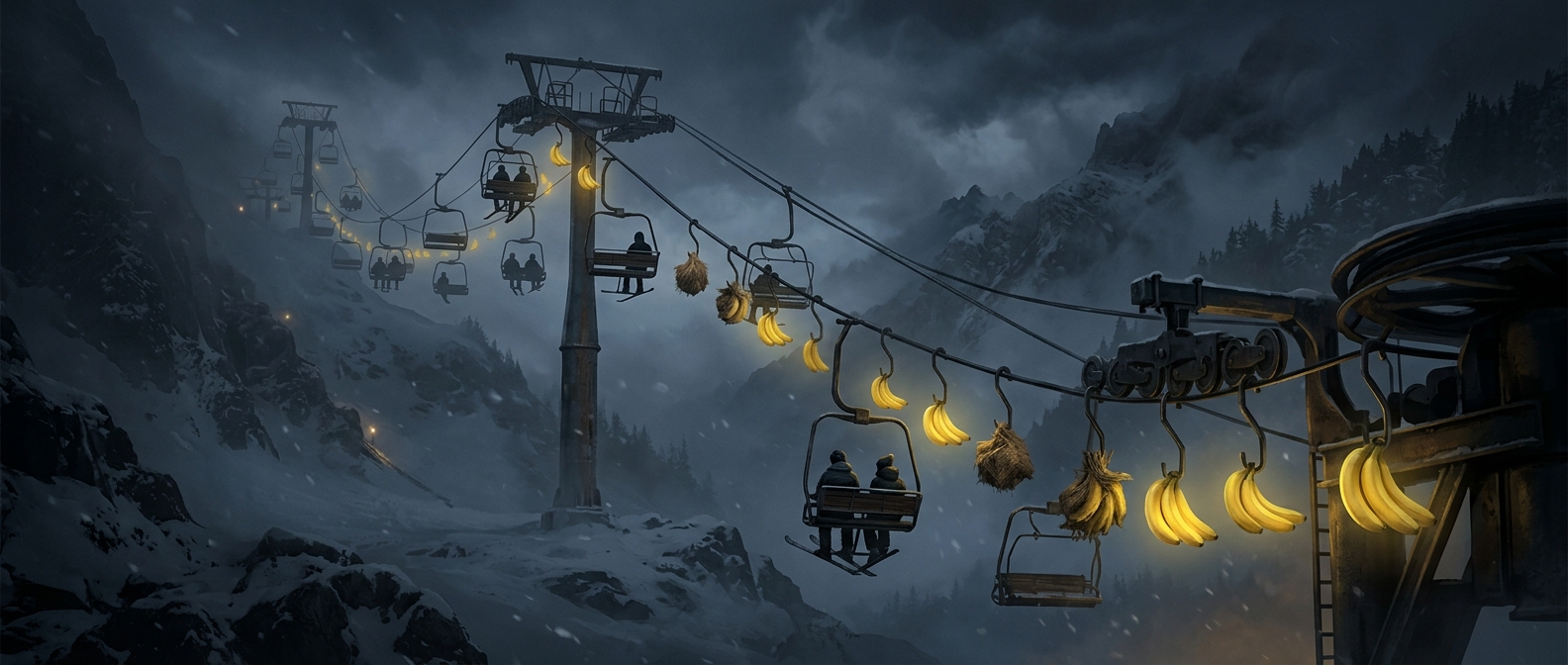
A banana-loading conveyor solved a problem that mountain resorts would soon face: how to move people or cargo uphill without making each trip a separate operation. Engineer James Curran had worked on equipment that carried bananas toward ships on hooks suspended from a moving cable. When asked to help devise a way to get skiers up a slope, he recognized that the cable system could do the hauling if the hooks were replaced with seats.
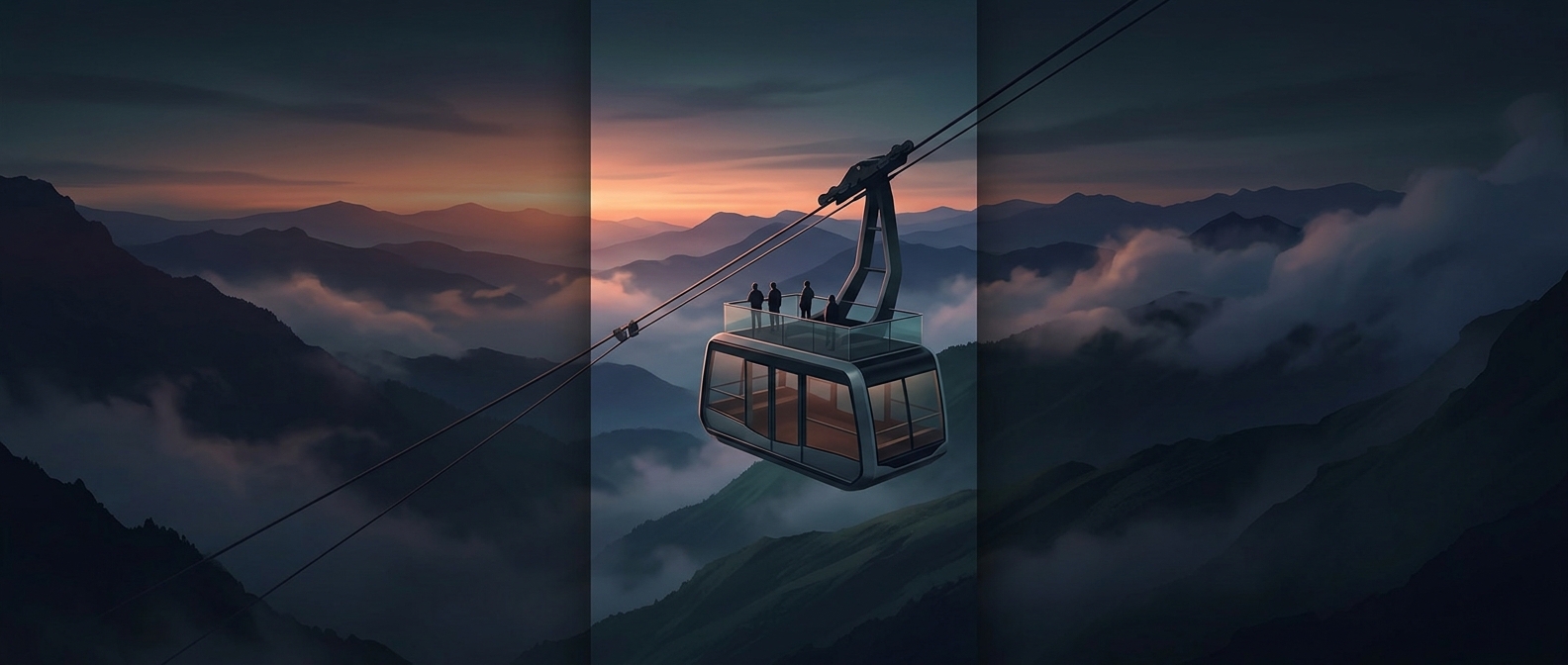
That change was more than a matter of comfort. A hook could carry a bunch of fruit; a chair had to support a person safely while moving through the air. The basic arrangement remained: a powered cable travels in a continuous loop, carrying passengers uphill on one side and returning empty on the other. At each end, the cable turns around so the seats can make another circuit.
A ride instead of a climb
Before lifts, skiers often had to climb back up the mountain after each run. A chairlift turned that tiring interval into a ride, letting skiers spend more of their day descending. It also opened terrain that would be impractical to serve with a simple tow, which pulls skiers along the snow rather than lifting them above it.
The important design leap was recognizing that the conveyor’s moving cable could carry something very different from fruit. The route and motion stayed much the same; the load changed from bananas to people. That practical adaptation helped make repeated runs—and the sweeping view from the way up—part of skiing itself.