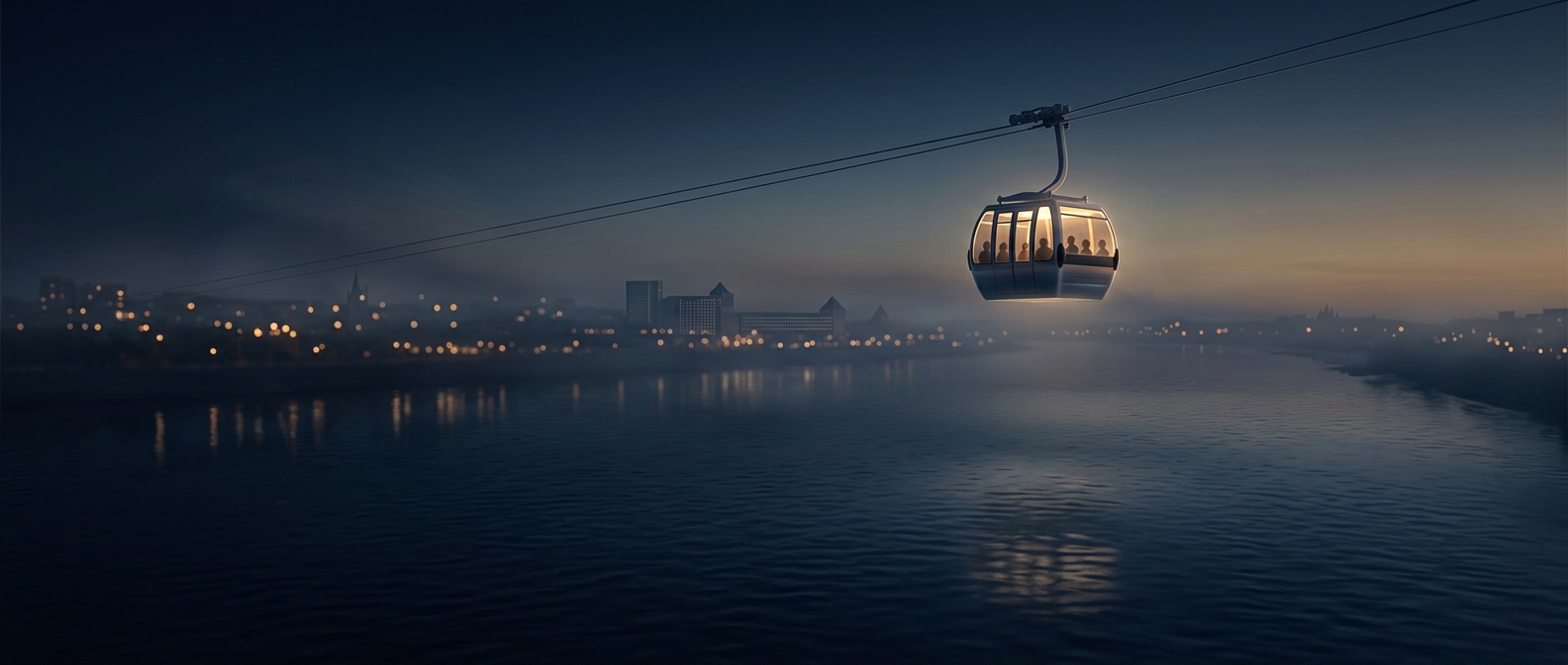
A moving cable hidden beneath the street
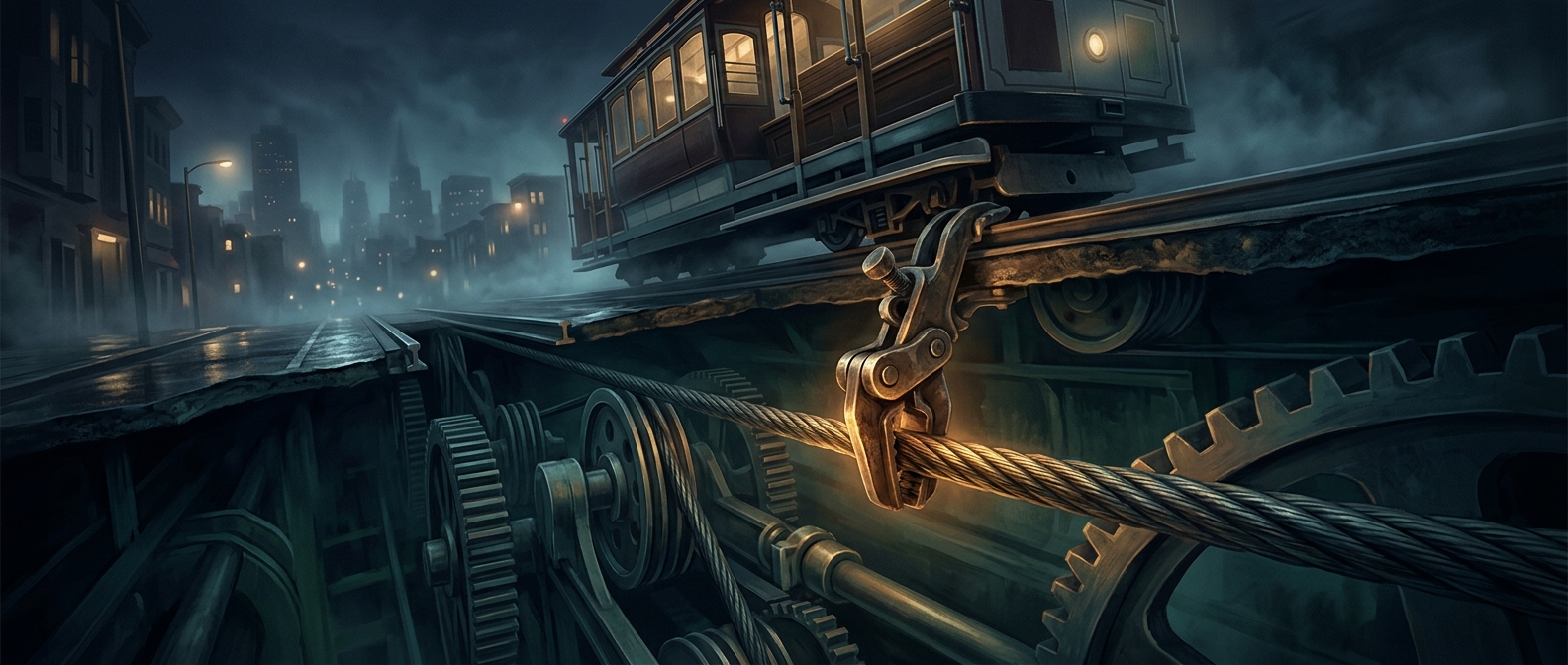
In a traditional grip cable car, the pulling cable travels continuously through a channel beneath the roadway. A narrow slot between the rails gives a long metal grip access to it. The operator can tighten the grip around the moving cable to start or accelerate the car, then loosen it to let the car coast or stop. The cable supplies the pull; brakes handle stopping.
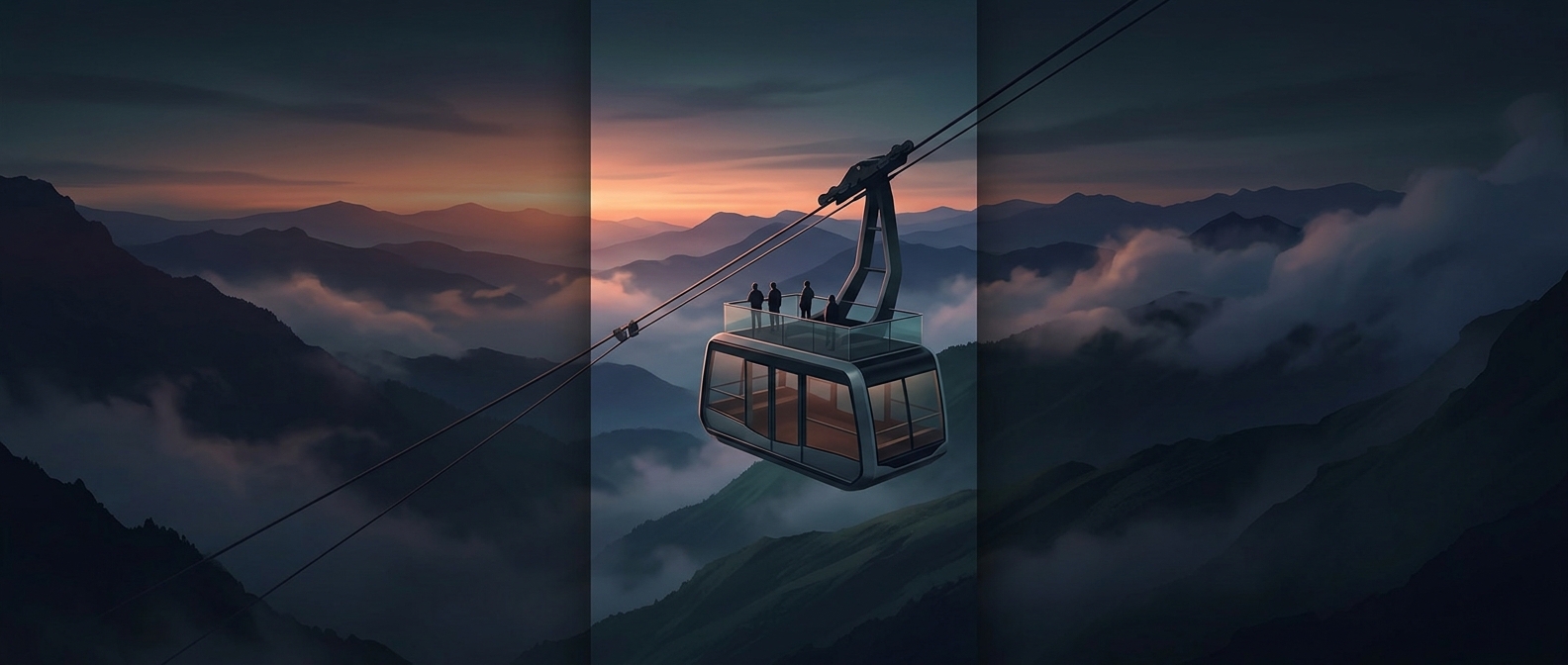
That arrangement lets a car climb steep streets without carrying its own engine. It also makes the roof deck possible: the car’s passenger space can be built above the grip mechanism rather than around a large motor.
Turning the roof into a passenger deck
An open roof offers a higher, unobstructed view, but it also puts riders above the street with little protection from weather. Seats and guardrails make that space usable; the rails are essential because the deck is exposed and the car moves through turns and over uneven track.
The elevated seating brings a practical constraint: passengers add weight high above the wheels. Designers must account for that load when building the car, and riders must stay within the guarded seating area rather than treating the roof as an ordinary standing platform.
Two parts of one ride
The striking design joins two very different experiences. Down below, a carefully controlled grip takes power from a cable running out of sight. Up top, passengers sit in the open air and watch the street pass from above. The roof feels like a viewing platform, but its motion depends on a mechanism reaching through a slot beneath the car.