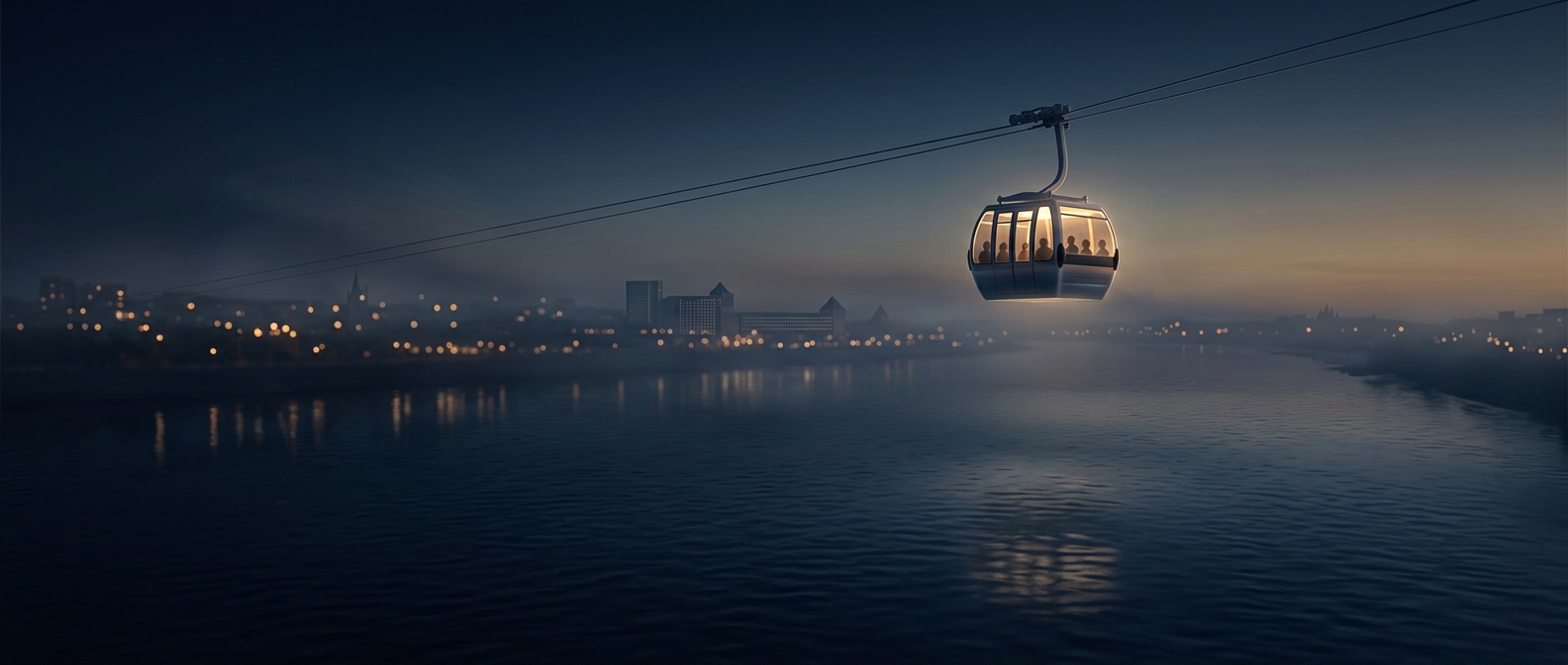
Why the gondolas swing
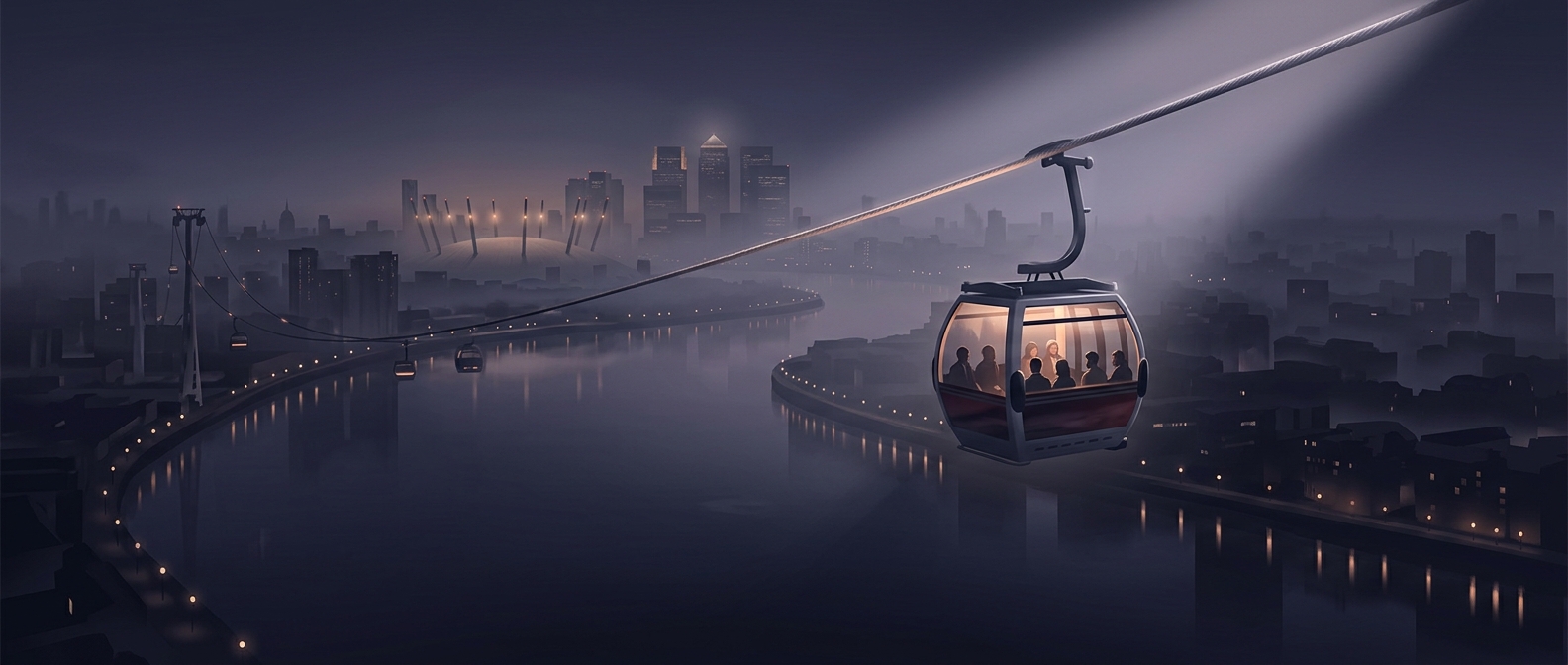
A gondola is not fixed rigidly to the cable. It hangs from a grip and support assembly, leaving the cabin free to move slightly as the cable shifts. When wind pushes the cabin or the cable, that hanging connection lets it swing like a pendulum. The motion can feel conspicuous over open water, where there is little nearby scenery to distract from the movement.
That flexibility is part of the system’s behavior, not a sign that the cabin is being thrown around like a box on a track. A rigid attachment would pass more of each gust’s force directly into the structure. A suspended cabin can move in response instead, though its sway still has to remain within safe operating limits.
A crossing shaped by the river
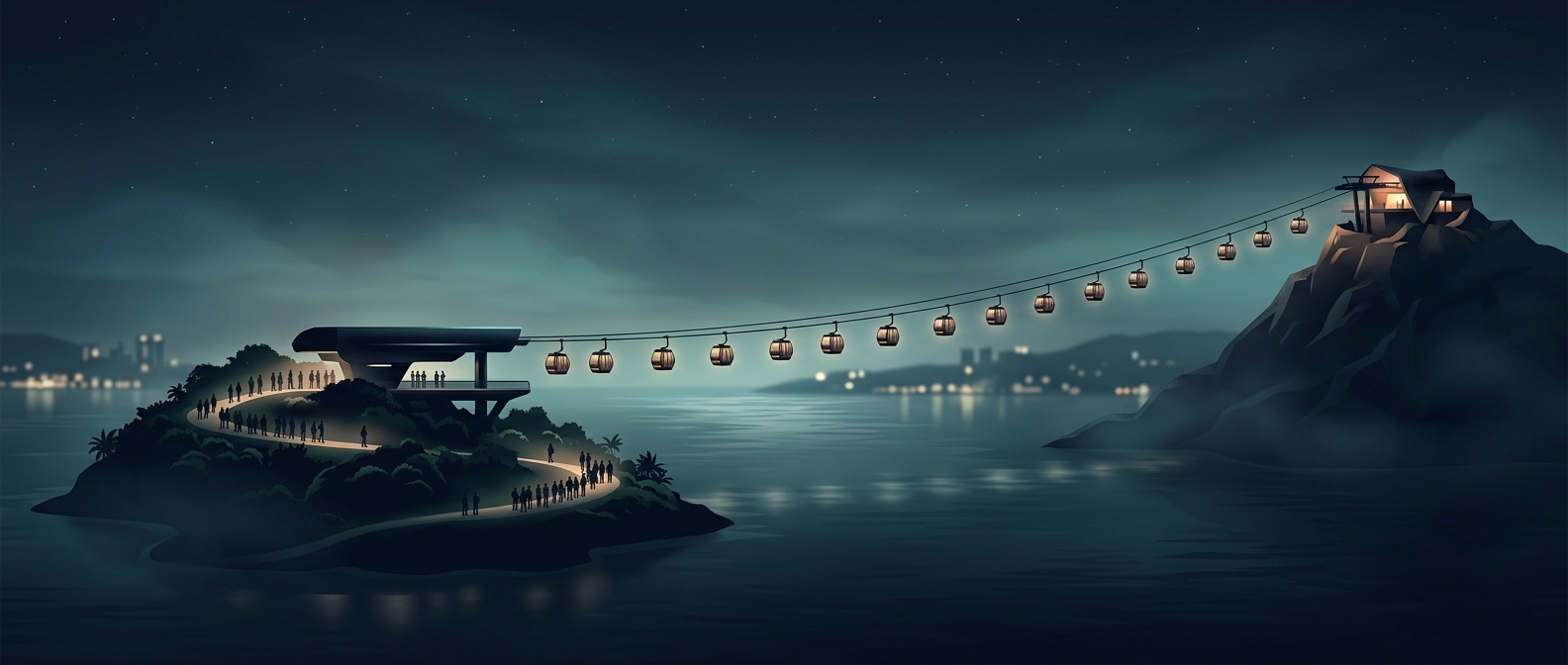
The Volga creates both the reason for the ride and its most striking sensation. A cable route can carry passengers directly across a broad stretch of water, while the cabins travel high above the surface rather than following the riverbanks. The elevated route turns the crossing into a visible journey: passengers see the river beneath them, and the open span leaves the gondolas exposed to wind.
So the sway is the tradeoff built into traveling by suspended cabin. The cable provides a direct path across the river; the hanging cabin responds to the air around it. What feels like a dramatic wobble is the motion of a flexible transport system moving through an exposed space.