The river creates a route the street grid cannot offer
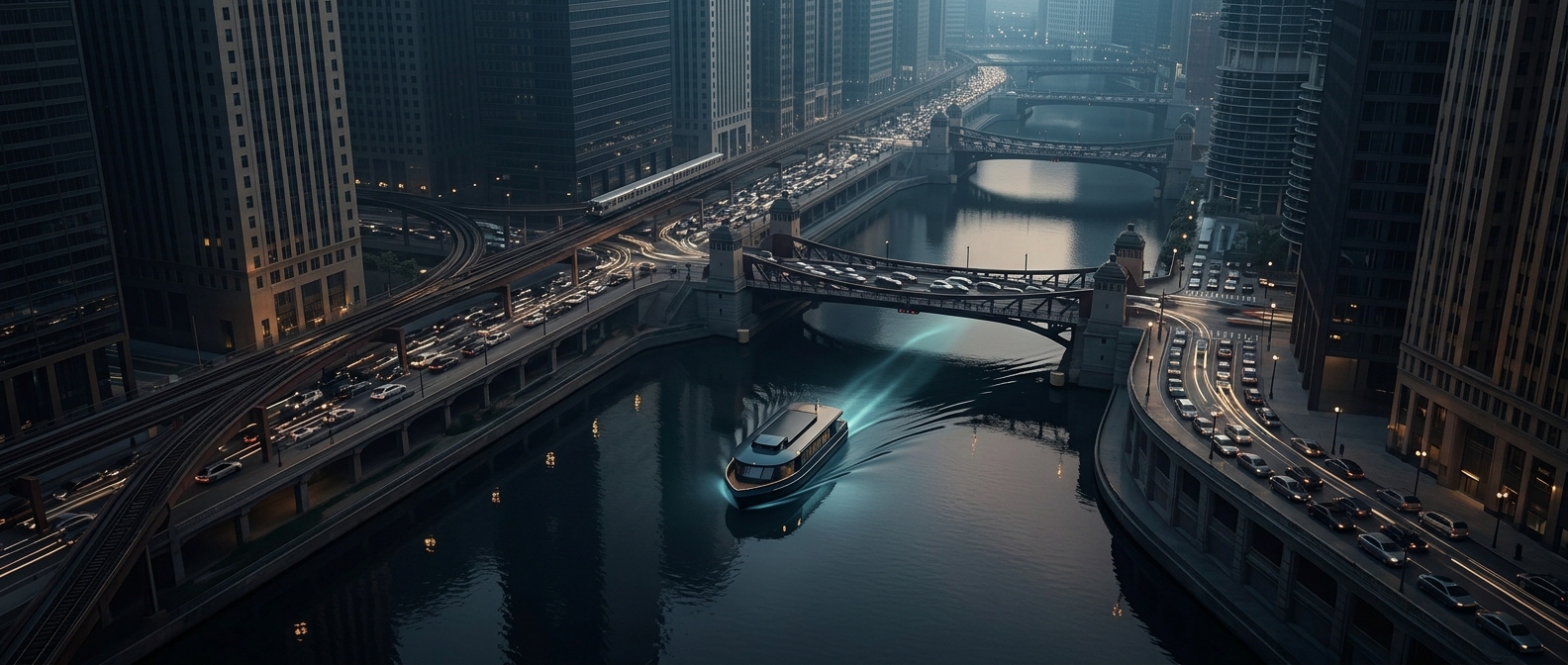
A water taxi works because a city’s waterways can serve as transportation corridors, not just scenery. In central Chicago, the river runs between dense blocks where street traffic competes for limited space. A boat moves through the waterway instead of joining the lines of cars waiting at intersections.
That advantage is most useful when a trip begins and ends near the river. Passengers board at a dock, travel along the channel, and leave at another dock; they still need to get to and from those stops. The service is therefore a practical shortcut for certain journeys, not a replacement for the street network.
Water has its own bottlenecks
The route is constrained by the river’s shape and by the bridges crossing it. Boats must pass through available openings, and their movement depends on river conditions and other vessel traffic. A taxi cannot turn wherever it wants or stop outside a passenger’s destination as a car can.
Those limits help explain why water taxis make sense on particular corridors rather than everywhere in the city. The river offers a continuous path through busy downtown blocks, but docks determine where that path becomes useful to people.
A different kind of shortcut
The benefit is not that boats make every trip faster. It is that they avoid one specific source of delay: crowded streets along the river. For someone traveling between convenient landing points, the waterway turns an obstacle in the urban landscape into a route—and makes the city’s traffic visible from the other side of the queue.