A harbor crossing becomes part of the street network
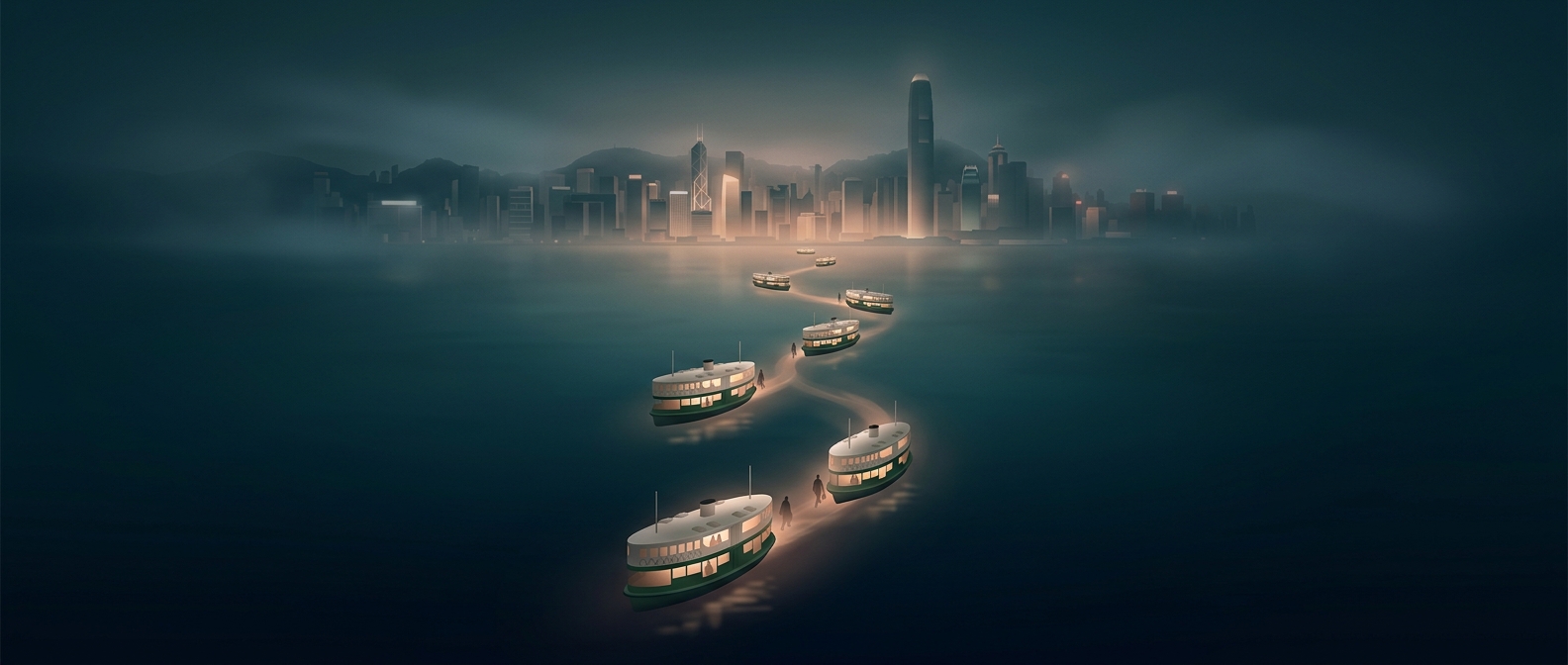
Victoria Harbour separates busy parts of Hong Kong, but a pedestrian does not have to follow the shoreline to get from one side to the other. A ferry follows a direct water route between landing points, replacing a long walk around the harbor with a short trip across it. The boat is doing the work of a bridge connection without requiring a fixed structure to span the water.
Terminals make the shortcut useful
The key is where ferries pick up and drop off passengers. A landing close to shops, offices, transit, or other destinations lets people continue on foot as soon as they step ashore. That makes the ferry more than a scenic ride: it joins two walkable areas, much like a link in a pedestrian route.
There is a small but real tradeoff. A ferry passenger must reach the pier, pay the fare, and board according to the service’s schedule. For a trip that lines up with the route, those steps can still be easier than walking a longer land route. For someone whose destination is far from either landing, the boat may offer less advantage.
The water becomes a passage, not a barrier
A fixed crossing occupies space and connects particular points; a ferry instead carries people along a route that can serve established shore-side landings. The practical result is strikingly ordinary: someone can make a cross-harbor journey as part of a walk, with the boat acting as the middle segment. In a city divided by water, that turns the harbor from an obstacle to go around into a shortcut to travel through.