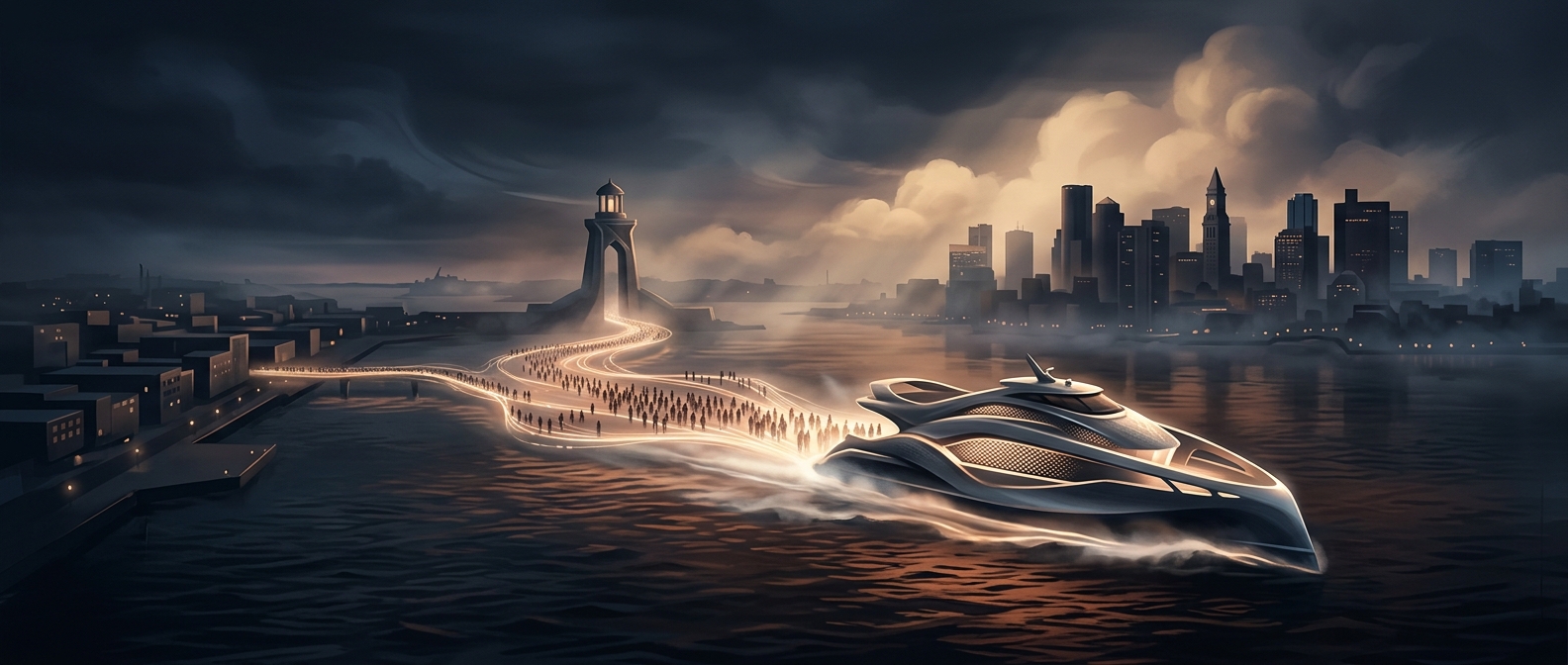
Why a Harbor Crossing Can Beat the Road Route
A shoreline can make two places look close on a map while forcing road traffic to take a long detour around the water. A ferry changes the geometry: it travels directly between docks, turning part of Boston Harbor into a link between neighborhoods and downtown rather than an obstacle to drive around.
That shortcut matters most when the docks are near where passengers are starting and going. A direct crossing can spare riders a winding road journey, while carrying many people without adding another line of cars to streets approaching the center.
The Route Depends on More Than the Crossing
A ferry’s usefulness is measured from door to door, not dock to dock. Riders still need a convenient way to reach the pier and continue on the other side. If those connections are awkward, the time saved on the water can disappear in waiting or extra travel on land.
Water service also has different constraints from road or rail transit. Boats run on schedules, carry a limited number of passengers per trip, and must contend with conditions on the harbor. That makes ferries a complement to other ways of getting around, not a replacement for every commute.
The practical effect is a new choice in the transit network: for some downtown trips, the harbor is not scenery beside the route—it is the route.