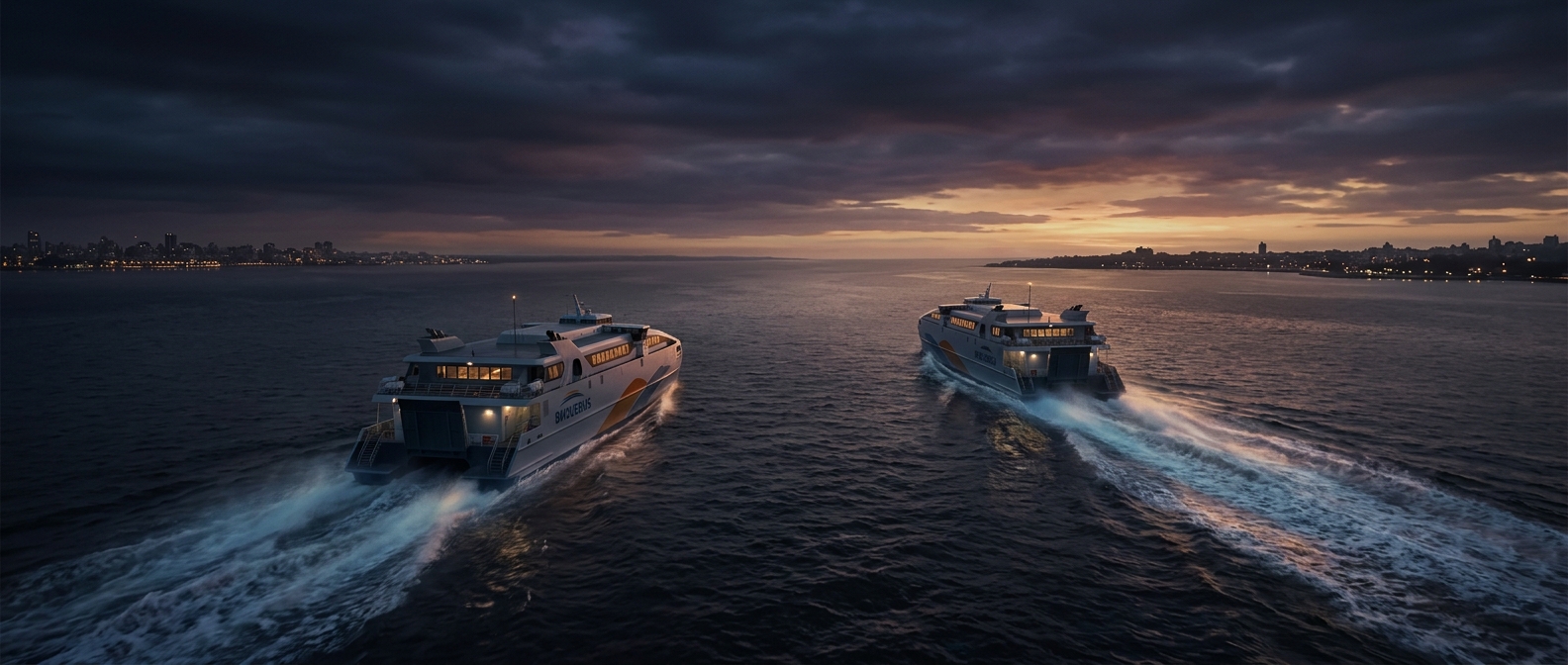
When a Ferry Becomes Part of the Transit Network
A commute by boat is usually a response to a mismatch between geography and roads. A river, inlet, or stretch of coastline may lie directly between home and work, while the nearest bridge or tunnel sends drivers far out of their way. A ferry turns that water crossing into a short link in the trip rather than an obstacle to route around.
The advantage depends on the whole journey, not just the time spent afloat. Travelers have to reach the dock, wait for departure, board, cross, and continue from the opposite landing. If those steps fit together reliably—and the road alternative is long or slow—the boat can make the trip practical even when it runs less often than a city bus.
The Tradeoff Is Built Into the Route
A bridge offers continuous access but requires a fixed structure across the water. A ferry can connect two existing shorelines without building that span, but it brings its own limits: service follows a schedule, capacity is finite, and rough conditions can disrupt crossings. The landing points also matter. A fast crossing is less useful if either dock is far from where commuters need to go.
That is why a ferry commute works best as a coordinated chain: local transport or a short walk gets riders to the dock, the boat carries them across, and another connection takes them onward. The boat is not merely a scenic alternative; it can replace a much longer land leg. For people whose daily route matches the water crossing, the dock becomes an ordinary stop on the way to work.