How a cable car crosses a working river
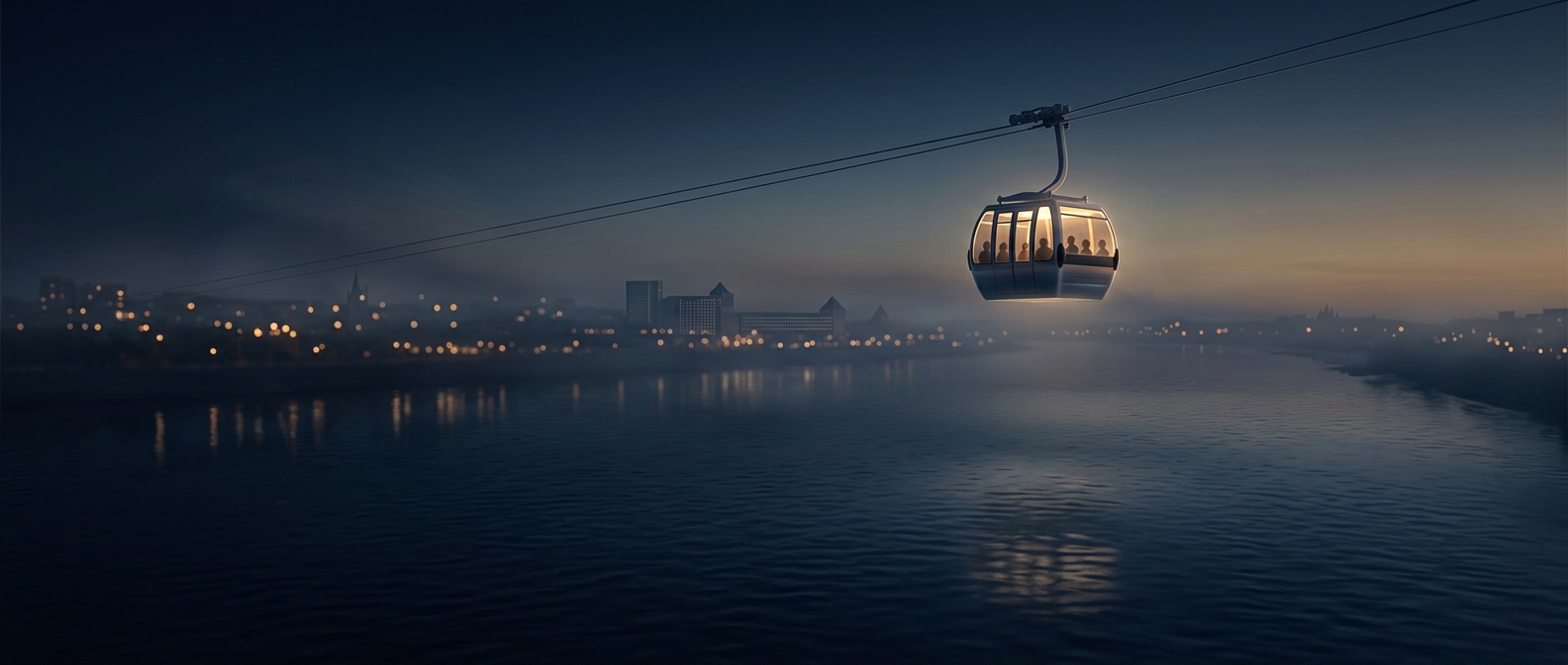
The cabins do not travel on a fixed rail. Each hangs from a grip attached to a continuously moving steel cable, which a motor pulls around a loop between stations. The cable carries the cabins forward while towers support it above the river; the cabins themselves remain suspended below it.
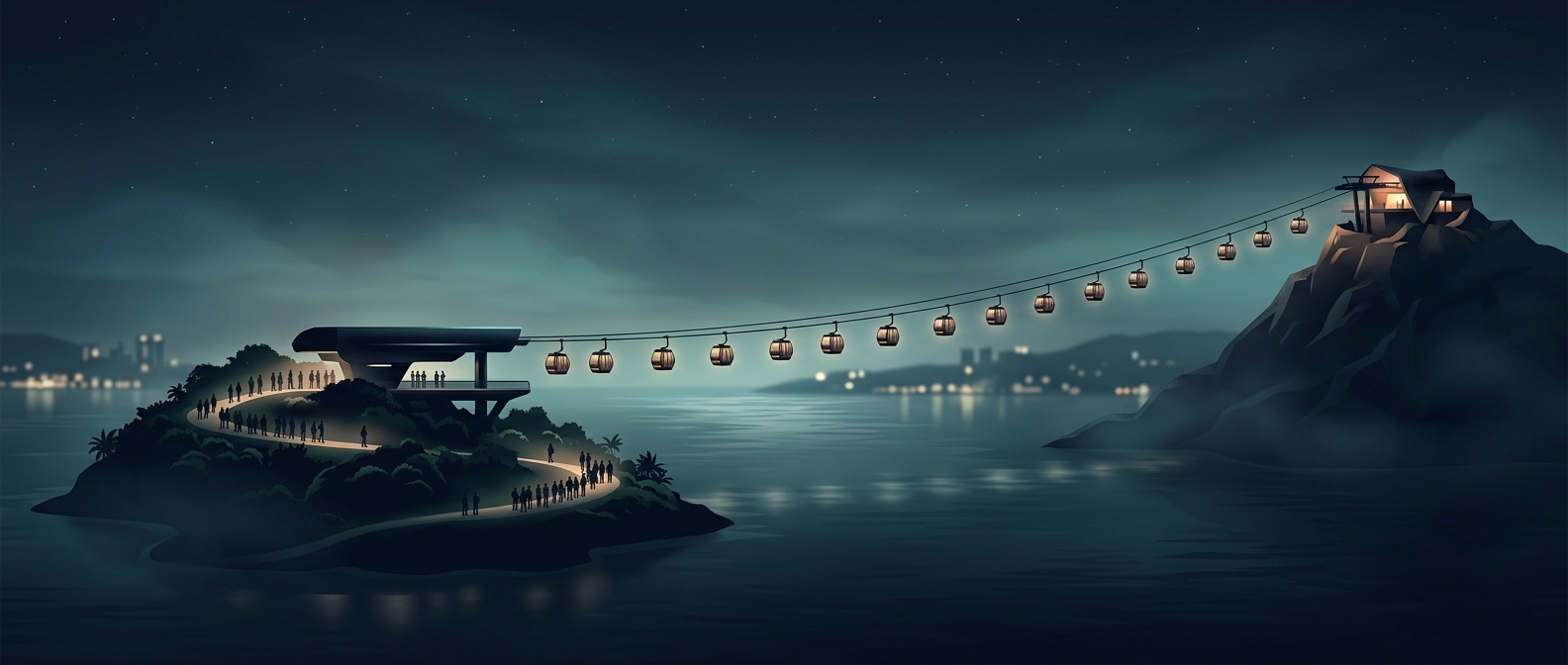
At a station, the grip can release the moving cable so a cabin slows for passengers to board. It reconnects before the cabin leaves, letting the line keep circulating without bringing every cabin to a stop. In transit, the moving cable—not a motor in each cabin—provides the pull.
A shortcut with a different kind of constraint
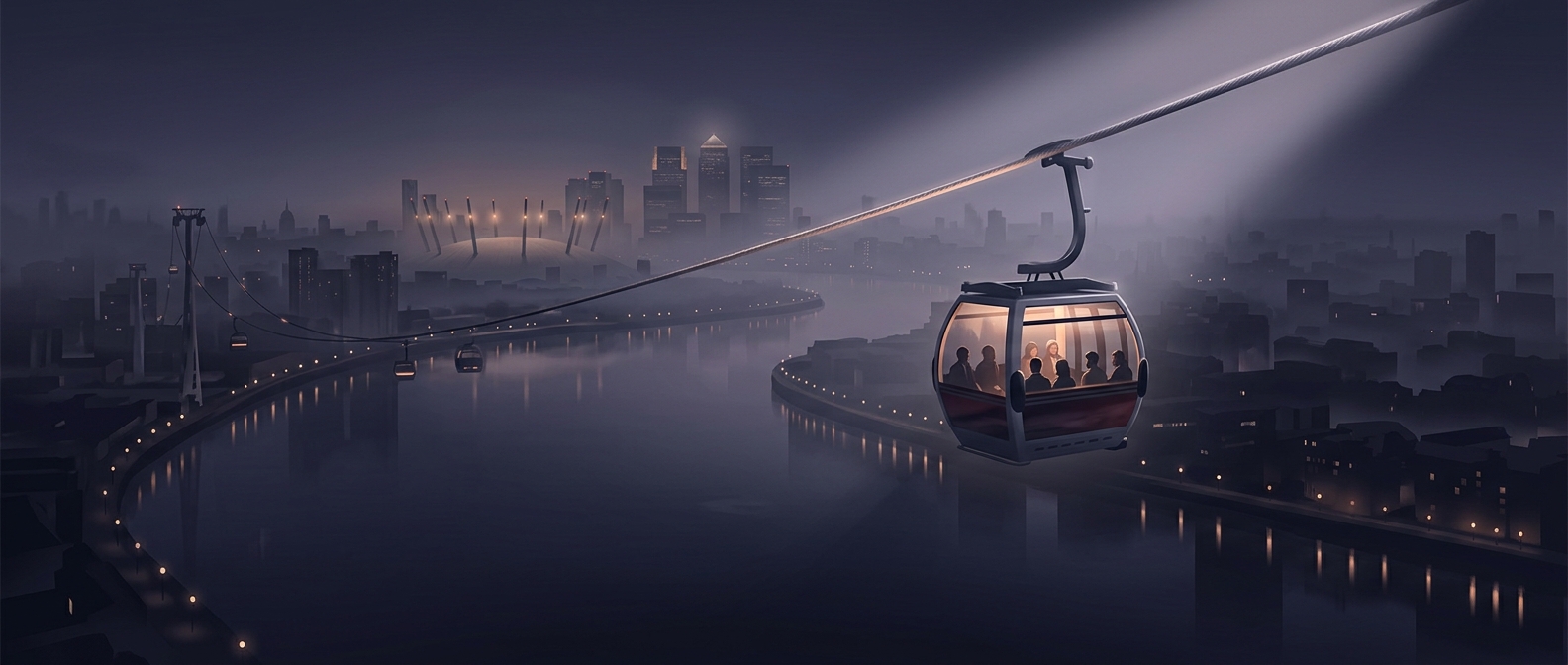
London’s line links the Greenwich Peninsula with the Royal Docks, crossing the Thames without requiring a road bridge or tunnel. That makes it a useful alternative for a cross-river trip, but not a road crossing: it carries passengers in cabins, rather than cars, buses or freight.
The route also depends on conditions that a bridge does not share in the same way. Wind can affect suspended cabins, and the system’s capacity is bounded by how many cabins can circulate and how quickly passengers can board. The result is a distinctive commute: the river is not something to drive over, but open space beneath a moving cable.