How a moving cable becomes a route
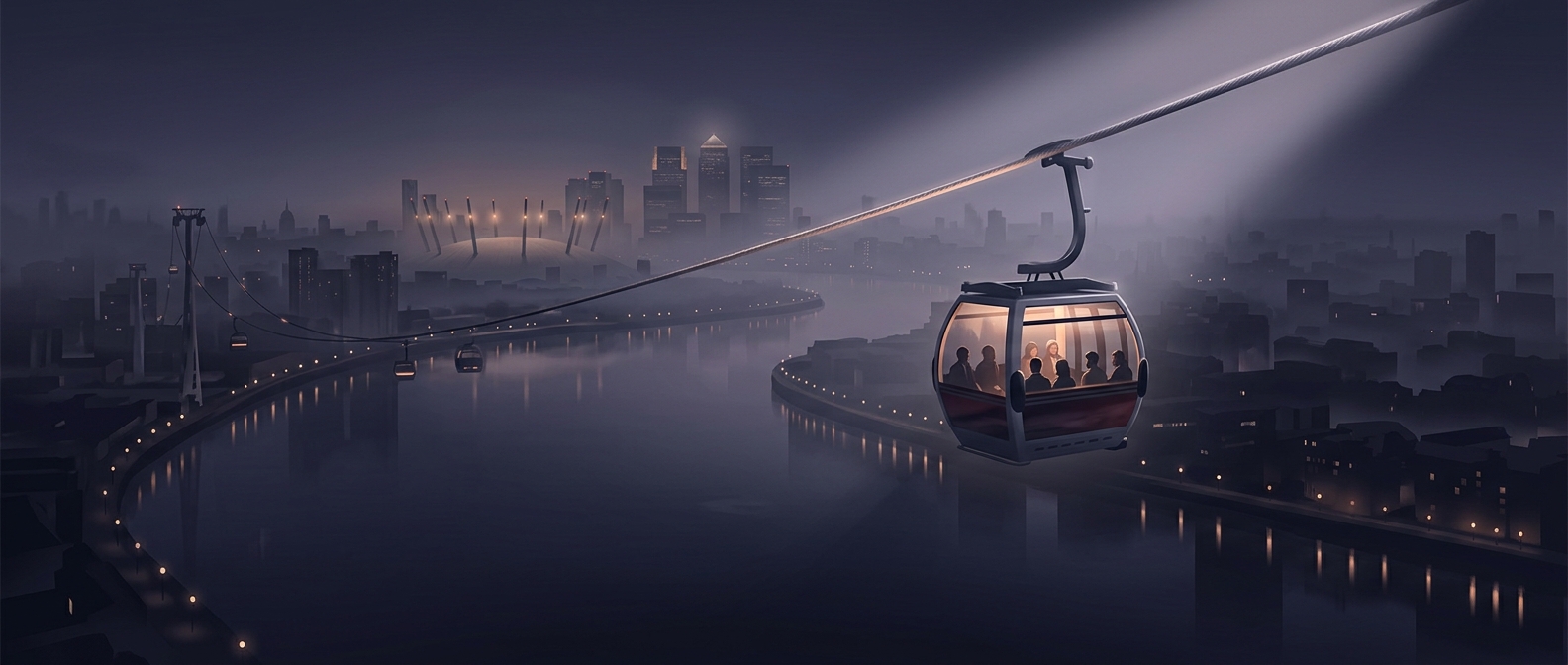
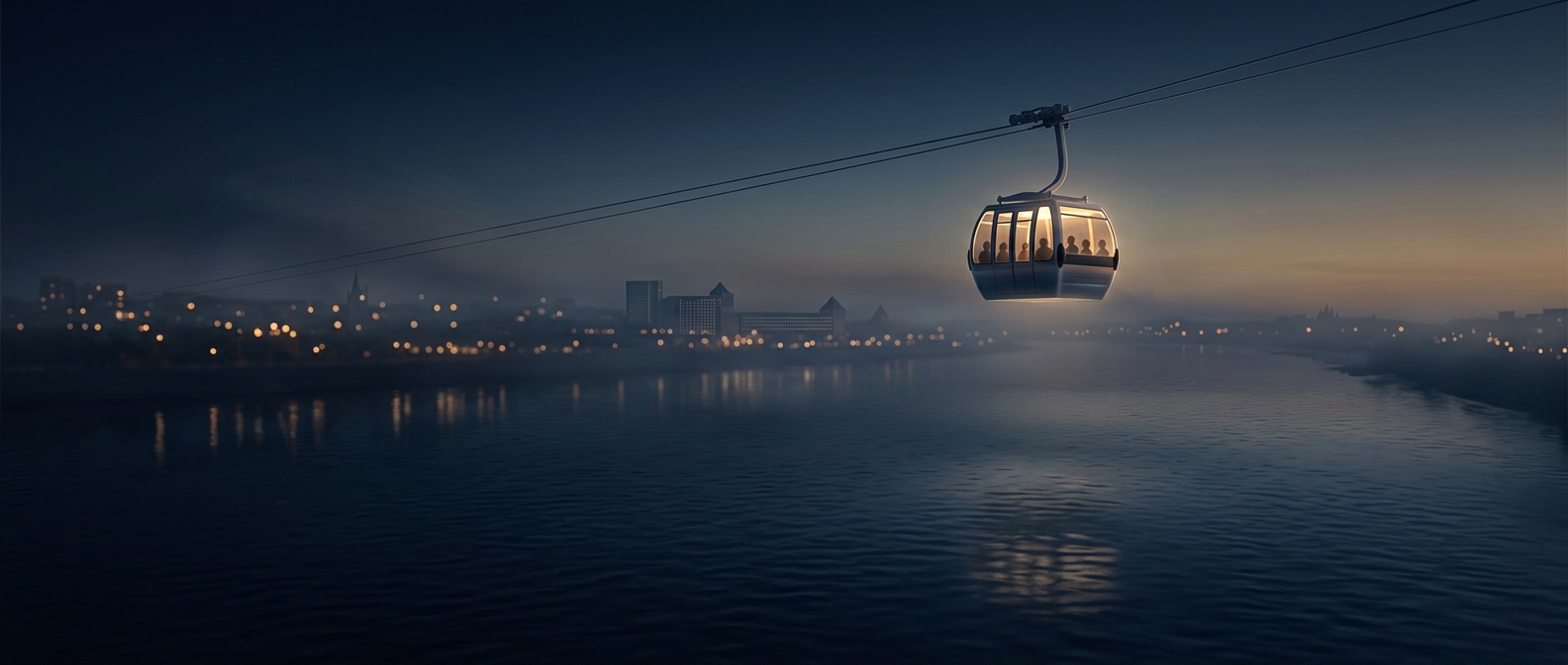
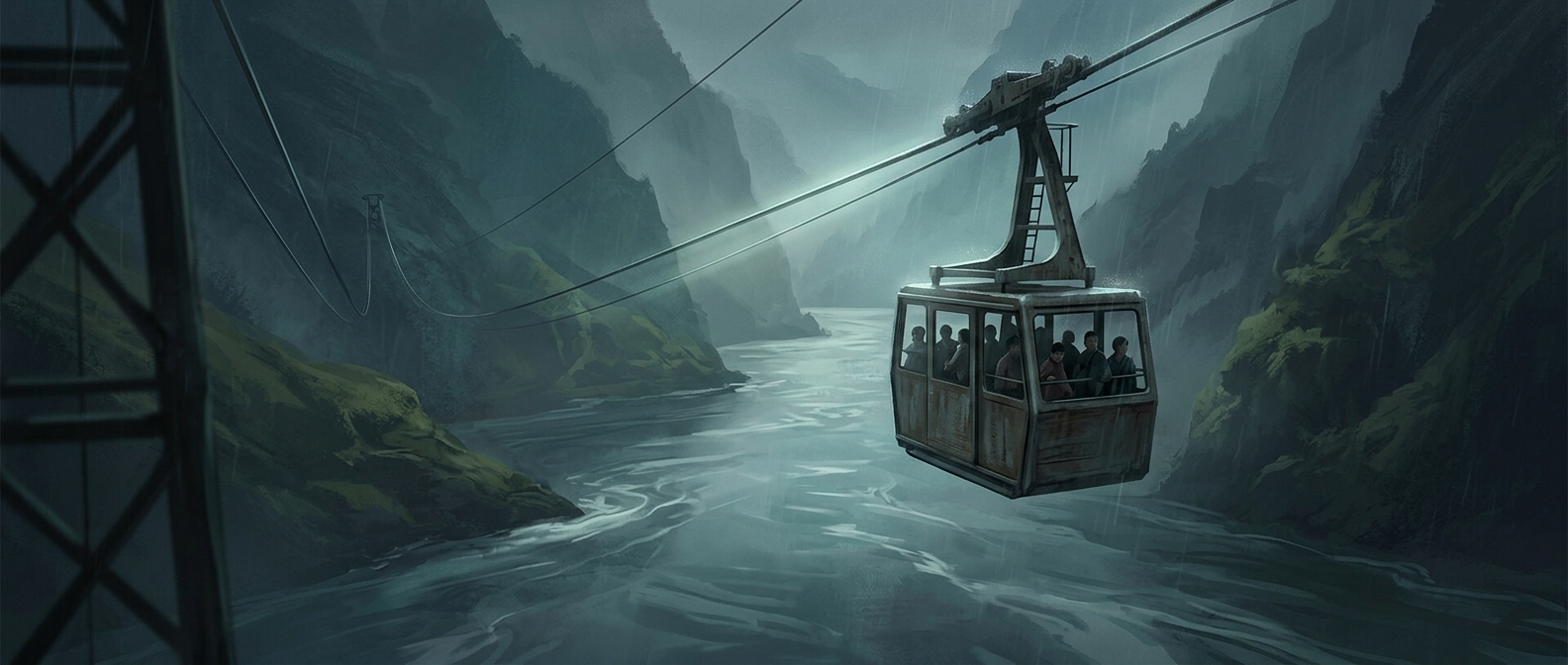
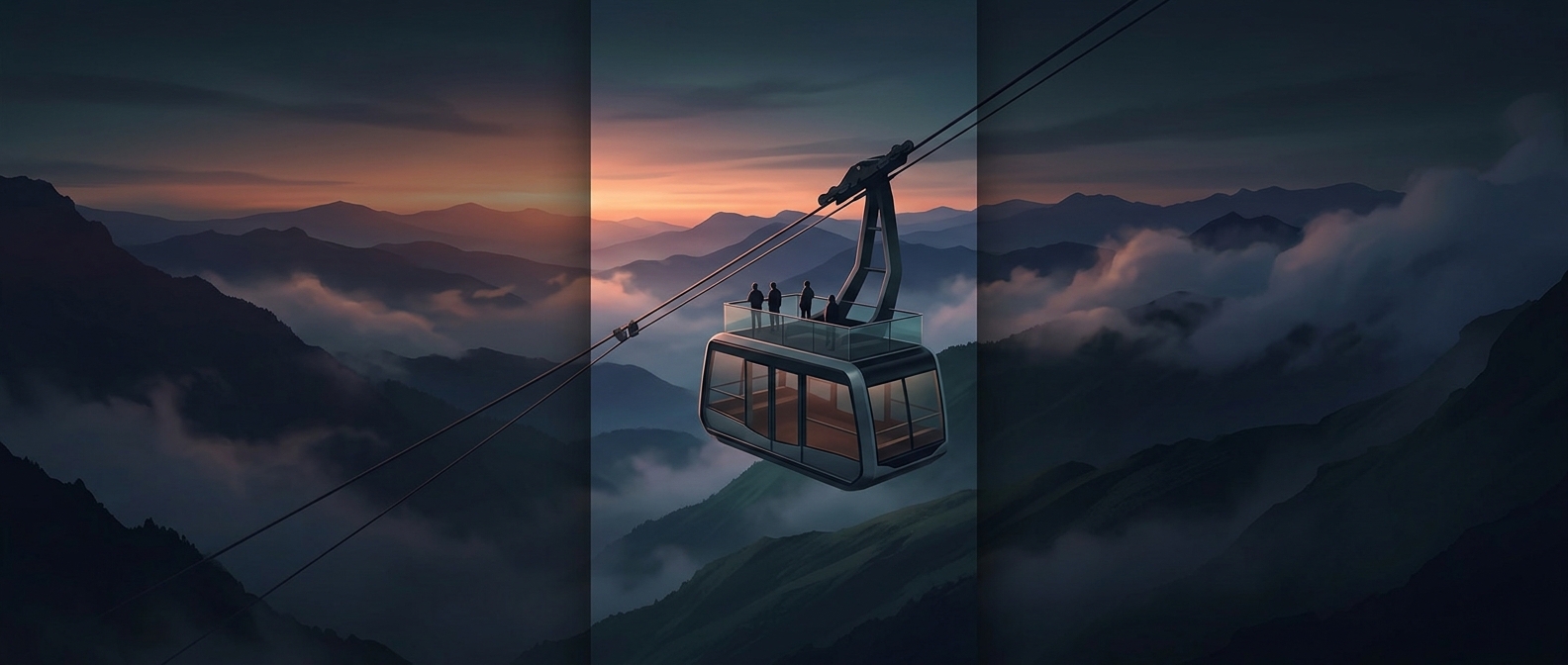
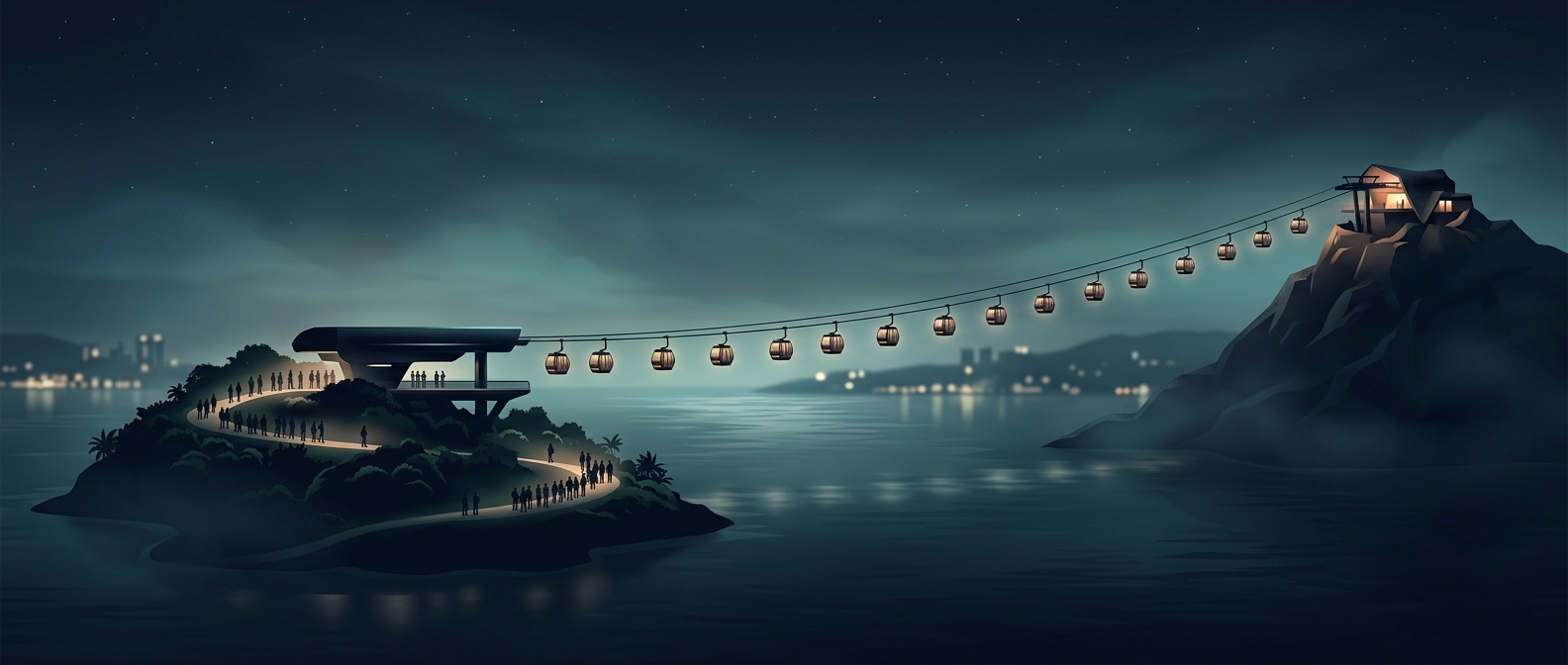
The Singapore Cable Car is an aerial gondola system: cabins hang from a cable loop that travels continuously between stations. Electric machinery pulls the loop, while towers support it across the span. Because the cabins travel above the water rather than along a road, the route can cross the harbor without needing a bridge or a road-level crossing.
At the stations, the cabins can slow for passengers to board and leave, then rejoin the faster-moving line. That arrangement lets the system keep circulating cabins instead of dispatching each one as a separate vehicle. The cable supplies both the route and the force that carries each cabin uphill and across the gap.
A connection shaped by the landscape
The ride links Mount Faber, on the mainland, with Sentosa, an island reached across the harbor. The steep rise and stretch of water make an elevated route especially useful: it connects two destinations while avoiding the turns and congestion that a vehicle route on the ground would face.
The tradeoff is that the cableway depends on its fixed line and stations, so it cannot reroute around a blockage the way road traffic can. In return, its cabins can carry a steady stream of passengers over the harbor, turning the climb and crossing itself into part of the journey.